
Beware of these 6 dangers of volcanic ash
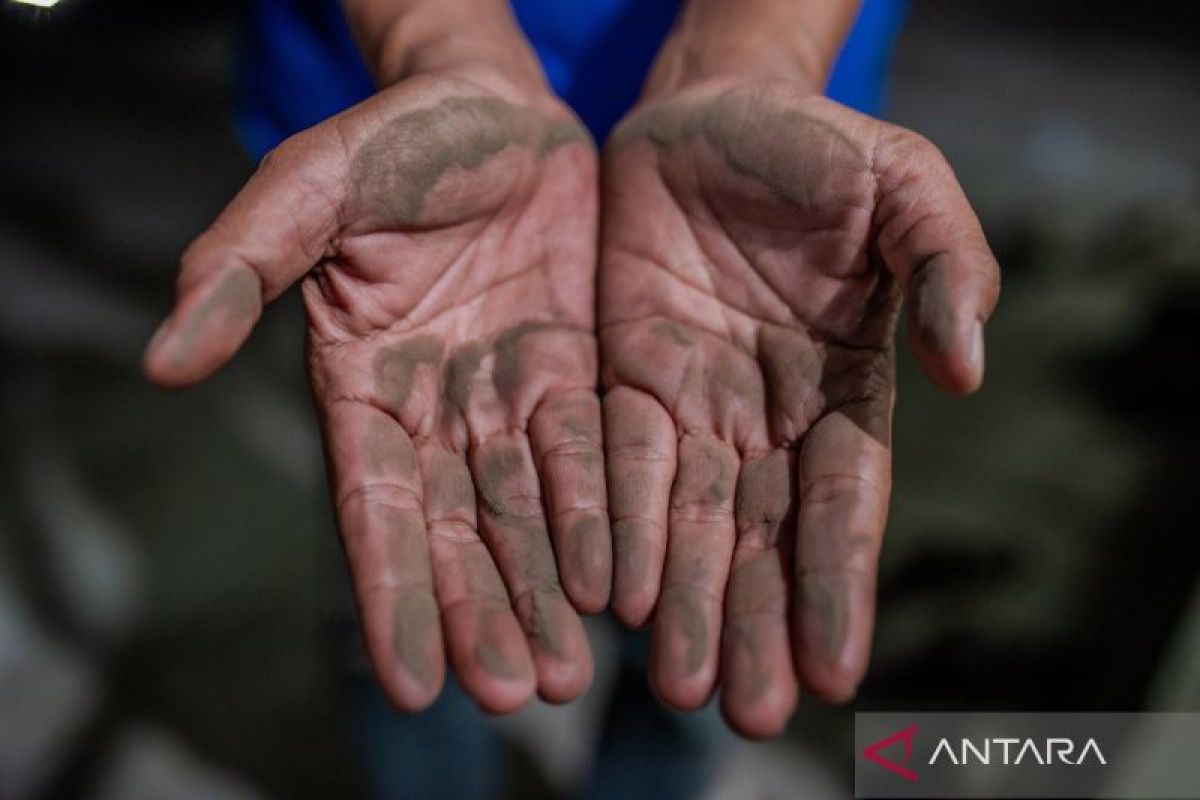
Jakarta (ANTARA) - Mount Anak Krakatau has erupted again, and the impact is being felt in several regions. On Sunday (6/9), the Meteorology, Climatology, and Geophysics Agency (BMKG) reported that the distribution of volcanic ash from the eruption of Mount Anak Krakatau has covered the areas of Banten, DKI Jakarta, West Java, and Bengkulu.
Based on BMKG satellite imagery analysis, volcanic ash is moving at various altitudes in different directions. At altitudes up to 20,000 feet, the ash is moving towards the northeast and south, covering parts of Jakarta, Banten, West Java, and the surrounding waters. Meanwhile, ash at higher altitudes has been observed moving towards the southwest and northwest.
Volcanic ash has also been reported to reach the Bogor to Sukabumi areas. This condition requires the public to be more vigilant, especially when they must engage in outdoor activities.
So, what are actually the dangers of volcanic ash to the body and the environment?
- Disrupting the respiratory tract
Volcanic ash is not merely ordinary dust. Very small particles can be inhaled and enter the respiratory tract. Exposure to ash can cause various complaints such as coughing, nasal and throat discomfort, and even difficulty breathing. The World Health Organisation (WHO) states that volcanic ash can cause both acute and chronic respiratory disorders, depending on the level and duration of exposure. People with existing respiratory problems also need to be more careful, as ash exposure can exacerbate existing conditions.
- Causing eye irritation and stinging
Eyes are also one of the body parts easily affected when volcanic ash is airborne. Ash particles can make the eyes feel stinging, itchy, red, or watery. The WHO also notes that volcanic activity can cause irritation to the eyes and skin. Therefore, when the air is filled with ash, it is advisable to avoid rubbing your eyes and to use eye protection if you must be outdoors.
- Skin irritation
Direct contact with volcanic ash can also cause skin irritation. Ash that adheres to the skin, especially in large quantities, should be cleaned immediately using safe methods. Reducing direct contact with ash is a simple step to prevent irritation. The CDC also suggests wearing clothing that covers the skin when one must be in an area affected by ash.
- Reducing visibility
Volcanic ash spreading in the air is not only a health problem but can also disrupt daily activities. Air conditions filled with ash can reduce visibility. This certainly poses a risk to drivers, especially motorcyclists, as roads become harder to see clearly. Additionally, ash can be kicked up again by the wind or by passing vehicles. Therefore, the public should reduce outdoor activities when ash conditions are quite thick.
- Dangerous for vehicles
Volcanic ash can also adhere to vehicles and enter various engine parts. Driving in the middle of heavy ashfall can also worsen visibility. The CDC advises the public to avoid driving when volcanic ash is thick because vehicles may experience malfunctions, and driving activities can cause the ash to become airborne again.
- Accumulating ash can burden roofs
The dangers of volcanic ash do not stop at human health. If it falls in large quantities and accumulates, the heavy ash can also place an additional load on building roofs. In certain conditions, ash accumulation can increase the risk of damage or even roof collapse. Therefore, the condition of buildings needs to be monitored if an area experiences heavy ashfall.
Epidemiologist from Griffith University Australia, Dicky Budiman, revealed the dangers of volcanic ash to the body and the proper cleaning methods. “This volcanic ash is very different from ordinary ash or dust because it contains silica, which is like sharp glass shards and can cause damage, particularly to the organs affected, including the eyes, nose, mouth, and skin,” Dicky told ANTARA in Jakarta on Sunday (6/9).
Dicky stated that exposure to volcanic ash can be hazardous to health as it causes irritation. In the eyes, it can cause redness, stinging, watering, and light sensitivity, up to causing abrasions. The eyes can also suffer from conjunctivitis, which causes redness, a burning sensation, and photosensitivity.
Regarding the respiratory tract, he stated that this can cause irritation to the nose and throat, a runny nose, a dry cough if exposed to high levels, and shortness of breath or chest pain.
How to protect yourself from volcanic ash
When your residential area is affected by volcanic ash, you should reduce outdoor activities and close doors and windows so that ash does not easily enter. If you must go out, use a mask or respirator capable of filtering particles well, along with eye protection. The CDC recommends N95 respirators to protect the respiratory tract from ash exposure when outdoors or when cleaning up ash.
After outdoor activities, clean your body and clothing that have been exposed to ash. Avoid rubbing your eyes if they feel stinging and seek medical assistance immediately if you experience respiratory disturbances or worsening symptoms. Most importantly, the public should follow official information from BMKG, the Geological Agency, PVMBG, and local governments. In an eruption situation, the distribution of ash can change following the wind direction, so the latest information is vital before deciding to travel or engage in outdoor activities.
Source: jawawa.id (https://jawawa.id/newsitem/beware-of-these-6-dangers-of-volcanic-ash-1788674253)
Originally published by Antara (Indonesian) (https://www.antaranews.com/berita/5728132/waspada-6-bahaya-abu-vulkanik-berikut-ini), translated from Indonesian