
Beware of the Threat of Heavy Metals Lurking in Seemingly Healthy Food
Jakarta (ANTARA) - Fresh vegetables are displayed on market shelves. Red chilies gleam, tomatoes look smooth without any signs of disease, while red onions are neatly arranged with their dry red skins. This scene makes us believe that the food on our tables is healthy and safe.
However, behind this seemingly healthy appearance, soil, health, and environmental scientists are beginning to ask questions that many people rarely think about: are there heavy metals in the agricultural products we consume?
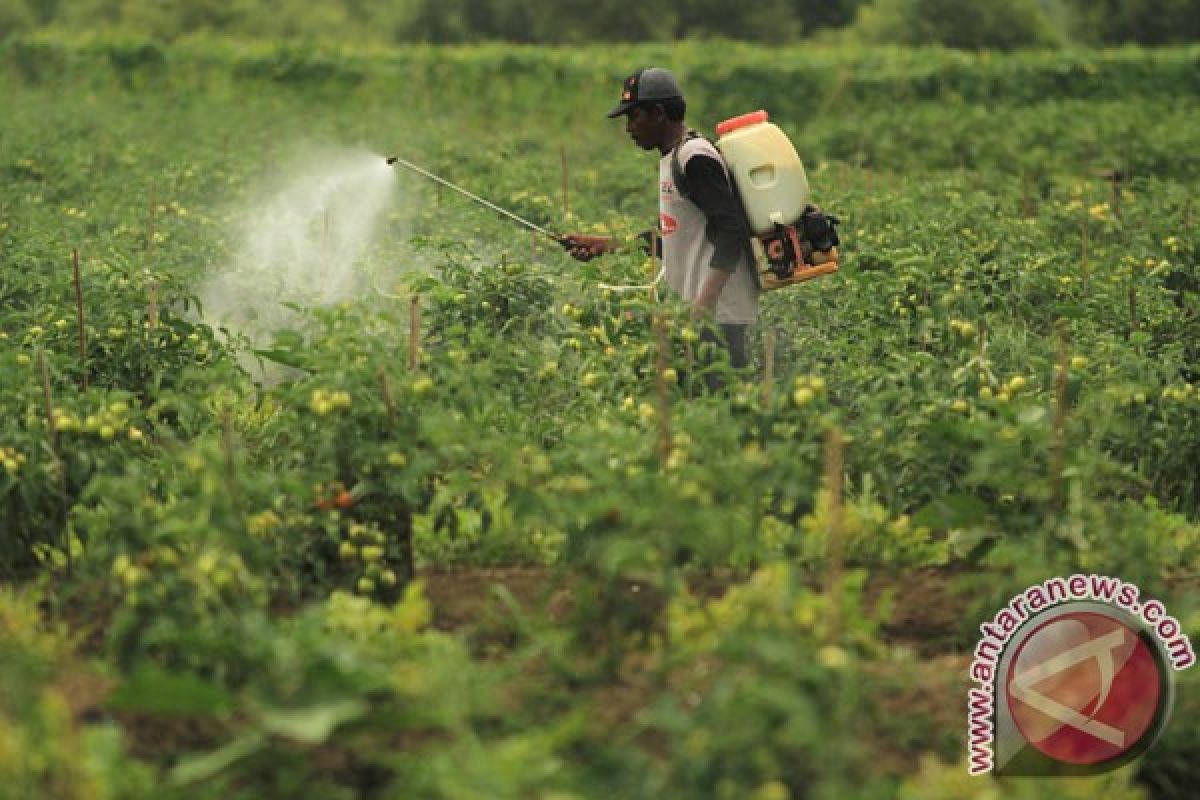
This question arises from observations in the field: farmers repeatedly spraying plants with pesticides. The high use of pesticides, herbicides, and fungicides raises concerns about the accumulation of heavy metals, such as Cu, Cd, Pb, and As in agricultural soils, especially in volcanic areas that have been cultivated intensively for a long time. Some of these heavy metals come from the active ingredients in agrochemical formulations.
Agrochemical content
The accumulation of heavy metals in the soil does not occur in a single growing season. It happens slowly, almost imperceptibly, following the repeated use of agrochemicals year after year. In many horticultural areas, the use of fertilizers and pesticides has become part of farmers’ daily routines to keep plants productive in the face of increasingly unpredictable pests, diseases, and weather.
Heavy metals, such as copper (Cu), cadmium (Cd), lead (Pb), arsenic (As), and mercury (Hg) can enter agricultural soils through fertilizers, pesticides, irrigation water, atmospheric deposition, and industrial waste. In small amounts, some of these elements are indeed needed by plants. But some others are toxic and can accumulate slowly in the soil and plant tissues.
Copper-based fungicides, for example, are widely used on chilies, tomatoes, potatoes, and red onions. Copper in fungicides works by damaging the cell and metabolic systems of fungi, so that plant diseases that attack leaves, stems, or fruit can be suppressed. However, in the long term, repeated use can lead to the accumulation of Cu in the top layer of soil.
In addition to fungicides, phosphate fertilizers are also known to contain natural impurities in the form of Cd and Pb. Unlike organic matter that can decompose, heavy metals can persist in the soil for decades, even hundreds of years. Some of the metals will bind to organic matter and soil minerals, but some will remain available and slowly be absorbed by plants.
The results of research by a team from Andalas University show that horticultural soils in the Gunung Talang and Gunung Marapi areas, West Sumatra, have experienced the accumulation of heavy metals related to the combination of volcanic material and intensive agricultural activities.
The Cu content is recorded as relatively high, ranging from about 0.06–0.15 percent, indicating the accumulation of copper due to the repeated use of Cu-based fungicides in the cultivation of highland horticulture such as chilies, red onions, tomatoes, and scallions.
Pb was found in a low range, about 0.001–0.005 percent, but it is still important to pay attention to because lead can accumulate in soil and leaf plants.
The As content is in the range of about 0.001–0.003 percent, which probably comes from residues of certain pesticides containing arsenic. Meanwhile, Cd was found in very low concentrations, about less than 0.001 percent, but it remains a concern because cadmium is very toxic and generally comes from phosphate fertilizers used intensively in horticultural systems.
Entering the plant
Plants are not entirely passive to toxic substances entering from the environment. Roots have the ability to limit some harmful substances, while plant cells can “store” some heavy metals in certain tissues so as not to directly damage their physiological processes. However, this natural ability is not always able to cope with the pressure of modern agriculture that receives continuous exposure to agrochemicals.
The problem is that some heavy metals have chemical properties that are similar to nutrients that plants actually need. Cadmium, for example, can “disguise” itself as zinc, while arsenate is similar to phosphate. Because of this similarity, plant roots sometimes cannot distinguish between nutrients and toxic metals, so some heavy metals are absorbed along with water and soil nutrients.
Some of the metals are then retained in the roots, but some slowly move to the leaves, fruit, and tubers. Leafy vegetables, such as spinach, water spinach, mustard greens, and lettuce, are among those that easily accumulate heavy metals because they grow quickly and have a large leaf surface.
In tomatoes and chilies, pesticide residues can enter through the leaves and then move to the fruit. Meanwhile, potatoes and red onions have their own vulnerabilities because the parts that are harvested develop very close to the soil, where residues of metals and pesticides slowly accumulate from season to season.
In horticultural plants, pesticide residues are not always gone before harvest. Some still stick to the leaves, chilies, tomatoes, and red onions when they are brought to market. In systemic pesticides, the active ingredient can even enter the plant tissue and is difficult to remove by washing, especially if the spraying is done too close to harvest.
Source: jawawa.id (https://jawawa.id/newsitem/beware-of-the-threat-of-heavy-metals-lurking-in-seemingly-healthy-food-1780612072)
Originally published by Antara (Indonesian) (https://www.antaranews.com/berita/5569440/mewaspadai-ancaman-logam-berat-di-balik-pangan-yang-tampak-sehat), translated from Indonesian