
Beware of the Decline in Rice Production
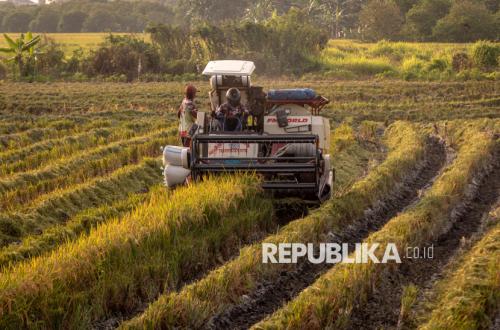
CNBC Indonesia recently released a statement from the Central Statistics Agency (BPS) estimating that national rice production from January to May 2026 will reach 16.57 million tonnes, a decrease of 0.38 million tonnes (2.22%) compared to the same period in 2025.
This decline occurs alongside weakening paddy (unhusked rice) production, influenced by a reduction in harvested area, as well as conditions related to the planting area at the beginning of the year. In detail, BPS recorded paddy production (dried milled grain/GKG) from January to May 2026 at 28.77 million tonnes, down 0.65 million tonnes or 2.22% from the same period the previous year.
In February 2026, paddy production temporarily increased to 5.05 million tonnes GKG, up 27.41% year-on-year. However, the future trend is expected to weaken. BPS estimates the potential paddy production for March to May 2026 at 20.68 million tonnes GKG, a 11.12% drop compared to the same period in 2025.
This decline is the main factor pressuring rice production during that period. A drop in production is certainly undesirable when the government aims to achieve sustainable rice self-sufficiency. Reduced production could have a significant impact on sustainable rice self-sufficiency.
Some of its impacts include, first, dependency on imports. If domestic rice production falls, Indonesia may need to import more rice to meet domestic needs, which could burden the state budget.
Second, price increases. A shortage of rice supply could cause prices to rise, affecting people’s purchasing power, especially those with low incomes.
Third, food vulnerability. A decline in rice production could threaten national food availability, particularly if there is insufficient stock.
Fourth, impact on farmers. Falling rice production could also affect farmers’ incomes, potentially influencing their welfare.
To maintain sustainable rice self-sufficiency, it is important to increase rice productivity and production through modern agricultural technology, good irrigation, and appropriate policy support.
There are several steps that can be taken to anticipate the decline in rice production. For example, increasing productivity. Use modern agricultural technology, such as superior paddy varieties, and more efficient farming practices.
Next, good water management. Ensure adequate irrigation and effective water management to optimise harvest yields.
Crop diversification can also be pursued. Encourage farmers to plant other crops besides rice, such as maize or soybeans, to reduce dependency on rice. Then, infrastructure improvement. Enhance agricultural infrastructure, such as roads, warehouses, and post-harvest processing facilities.
It can also be done through increased policy support. The government can provide incentives, subsidies, or other policies to support farmers and boost rice production, or through pest and disease control.
Conduct effective pest and disease control for crops to reduce harvest losses. Even other steps are needed, such as increasing farmers’ capacity. Provide training and guidance for farmers.
The aim is to enhance their ability to manage land and increase yields. With these steps, it is hoped that rice production will increase and sustainable rice self-sufficiency can be achieved.
In response to this, farmers’ attitudes in taking concrete actions in the field are very much needed. Farmers’ readiness to face the decline in rice production depends on several factors, such as first, access to technology.
Farmers who have access to modern agricultural technology, such as tractors, water pumps, and irrigation systems, are better prepared to face production challenges. Second, experience and knowledge. Farmers who are experienced and have knowledge of good farming practices are better able to cope with production changes.
Third, access to markets. Farmers with good market access can sell their harvests at better prices, thus being more prepared to face production declines. Fourth, finances. Farmers with stable finances can be better prepared to face production declines and take risks to increase production.
However, many farmers in Indonesia still face challenges such as limited capital. Smallholder farmers often have limited capital to purchase the necessary agricultural inputs.
Next, limited skills. Farmers may not have sufficient skills to cope with production changes. Another factor is dependency on weather.
Farmers are still heavily dependent on the weather, so climate change can affect production. To increase farmers’ readiness, efforts by the government and other parties are needed to provide support, such as training, access to technology, and financial assistance.
It is hoped that all this will serve as a collective reflection at a time when our nation is striving hard to achieve sustainable rice self-sufficiency.