
Beware of Mass Fish Deaths in Lake Toba
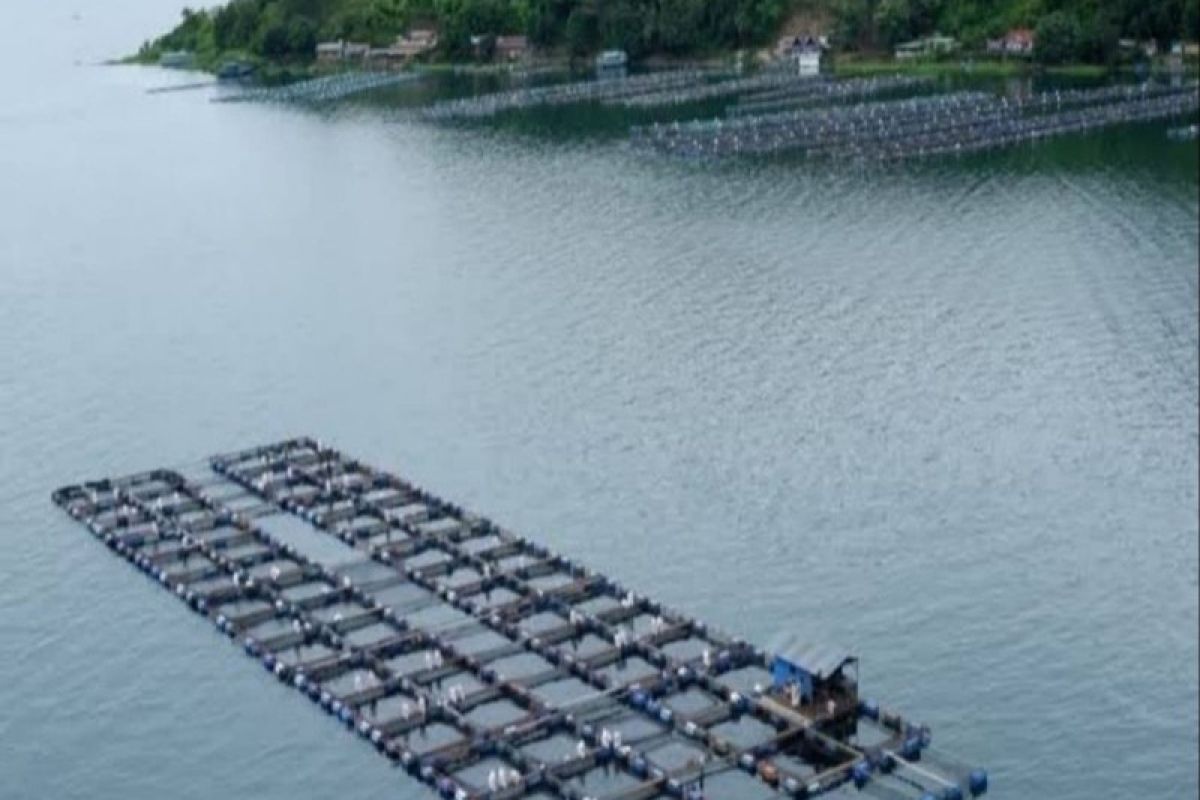
The declining water levels in Lake Toba are once again serving as a warning signal for the aquaculture sector, particularly floating net cages (KJA) in its waters.
The KJAs in Lake Toba have always been a focal point due to their numbers, which run into the thousands and have even reached tens of thousands in the past. These cages form the primary source of livelihood for fishermen around Lake Toba.
The drop in the lake’s water level does not only negatively impact the fisheries sector but also agriculture and one of Indonesia’s largest hydroelectric power industries, managed by PT Indonesia Asahan Aluminium (INALUM).
Satellite altimetry data indicates that from June 2025 to March 2026, the lake’s water level has continuously declined by around 1.6 metres. If the dry season persists, the water level could potentially drop further by up to 2 metres, threatening various activities around Lake Toba.
This condition is not merely an ordinary hydrological phenomenon. The BMKG predicts the possibility of El Niño and a positive phase Indian Ocean Dipole (IOD) occurring simultaneously in 2026. This combination is known to trigger prolonged dry seasons in Indonesia, including the Lake Toba region, which ultimately accelerates the shrinkage of the lake’s water volume and could lead to mass fish deaths in the KJAs.
Past experiences show that drops in the lake’s water level are often associated with mass fish death incidents in KJAs. The year 2016 was the most tragic disaster: when the water level receded by around 2 metres, thousands of tonnes of fish in KJAs died, causing losses to KJA fishermen of up to tens of billions of rupiah. Similar events, albeit on a smaller scale, also occurred in 2018, 2020, and 2023 when water levels were relatively low.
However, it is important to understand that the drop in water level is not the direct cause of fish deaths. The real threat arises when this condition coincides with extreme weather factors, particularly strong winds. In such situations, there is mixing of water masses and stirring up of sediments from the bottom of the waters—an area that has long been a site of accumulation of organic waste from aquaculture and domestic activities.
The incident in Pangururan in 2025 serves as a real example. Although the drop in water level was not very significant, the relatively shallow water conditions combined with strong winds triggered vertical mixing. Fine sediments were lifted to the surface and could clog fish gills. At the same time, oxygen-poor water from the lower layers rose to the top, causing a drastic decrease in dissolved oxygen levels, resulting in the death of fish in the KJAs.
The problems do not stop there. At the bottom of the lake, organic waste such as leftover feed, fish faeces, and household waste continues to accumulate. Under normal conditions, this material is broken down by bacteria with the aid of oxygen. However, when oxygen is depleted, the decomposition process occurs anaerobically, producing toxic gases such as hydrogen sulphide and methane.
Hydrogen sulphide can damage the fish respiratory system, while methane further degrades water quality. The combination of low oxygen, high levels of toxic gases, and increased water turbidity becomes the cause of mass fish deaths in KJAs.
Vigilance