
Beware of Greenwashing: CSR Shouldn't Be Just About Reputation
Corporate Social Responsibility (CSR) initiatives should not be viewed merely as philanthropy or corporate image-building, but as part of a business strategy to support sustainable development and ensure the longevity of the company itself.
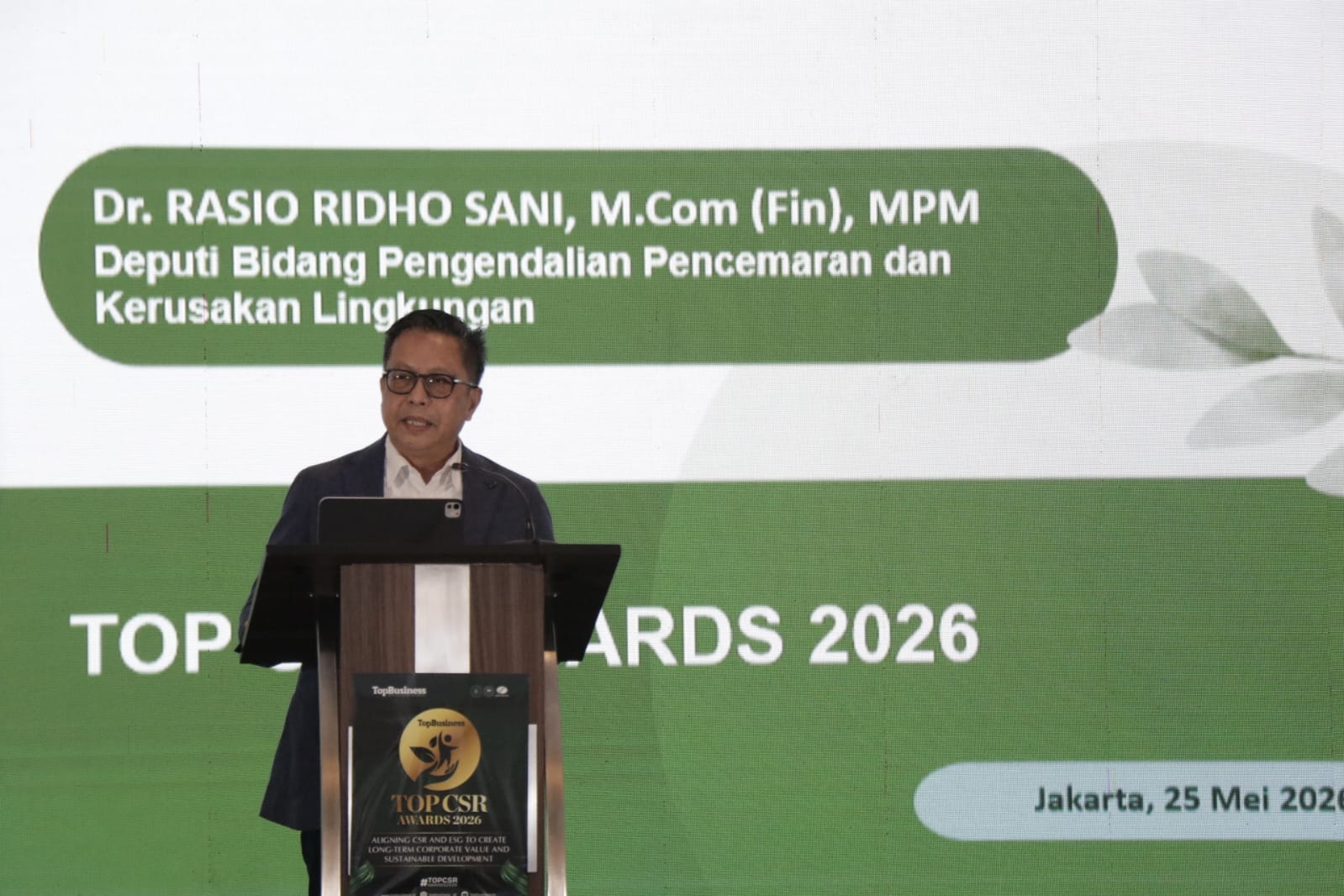
‘The government and business sector share the same goal of achieving sustainable development. The 3P principle – profit, planet, and people – which has long been the foundation of corporate CSR aligns with the three pillars of sustainable development: economic, social, and environmental,’ said Rasio Ridho Sani, Deputy for Pollution Control and Environmental Damage at the Ministry of Environment, during the TOP CSR Awards 2026 in Jakarta on Monday, 25 May.
Rasio stressed that development must cater not only to the current generation but also future ones. Businesses must not operate solely for short-term gains but ensure long-term sustainability.
‘While corporate awareness of CSR’s importance is growing, CSR must not be pursued merely for reputation without compliance with regulations and environmental responsibilities. If a company focuses solely on CSR without fulfilling its environmental duties, that is greenwashing for PR purposes only,’ he stressed.
Rasio explained that the government views companies’ responsibilities in stages: first economic responsibility to remain profitable; second legal compliance with all regulations; third ethical responsibility in operations. Only then can companies strengthen philanthropy and CSR.
He noted that the Environmental Performance Rating Programme (PROPER), developed by the Ministry since 1995, incorporates community relations and empowerment as key elements. ‘Long before CSR became a major issue, we were already developing this instrument,’ he said.
PROPER encourages companies to exceed regulatory requirements. It uses five colour ratings: black, red, blue, green, and gold. Black-rated companies have serious pollution and poor environmental management; red for those making efforts but not meeting all criteria; blue for meeting basic standards. Green and gold ratings are for companies implementing beyond-compliance measures, including environmental innovations and impactful CSR programmes.
‘Companies cannot achieve a green rating without proper CSR. Gold requires strong social innovation and community empowerment,’ he said. To attain green, companies must first meet all basic requirements for a blue rating, then demonstrate community empowerment and social innovation. Gold requires positive social return on investment and tangible community benefits.
‘Corporate recognition serves as a reputational incentive, motivating businesses to improve governance and sustainability programmes. Such awards drive innovation, as companies are spurred to develop CSR and social innovations to gain recognition and reputational benefits,’ Rasio added.
Currently, the ministry assesses 5,476 companies, aiming to expand to 10,000. Only 39 have gold ratings and 183 green, indicating few companies truly exceed compliance. ‘We continue pushing for better adherence and innovation,’ he said.
The ministry is also developing big data and artificial intelligence to improve PROPER evaluations. Beyond environmental monitoring, PROPER helps shareholders and investors objectively assess companies’ environmental performance, compliance levels, and business risks.
Rasio added that PROPER has spurred around 25,966 company innovations linked to the Sustainable Development Goals (SDGs), including eco and social innovations. ‘We hope Indonesian businesses can become world-class companies, which requires adhering to good environmental and social responsibility practices,’ he said.