
Beware of Anak Krakatau Volcanic Ash Exposure: How to Protect Yourself
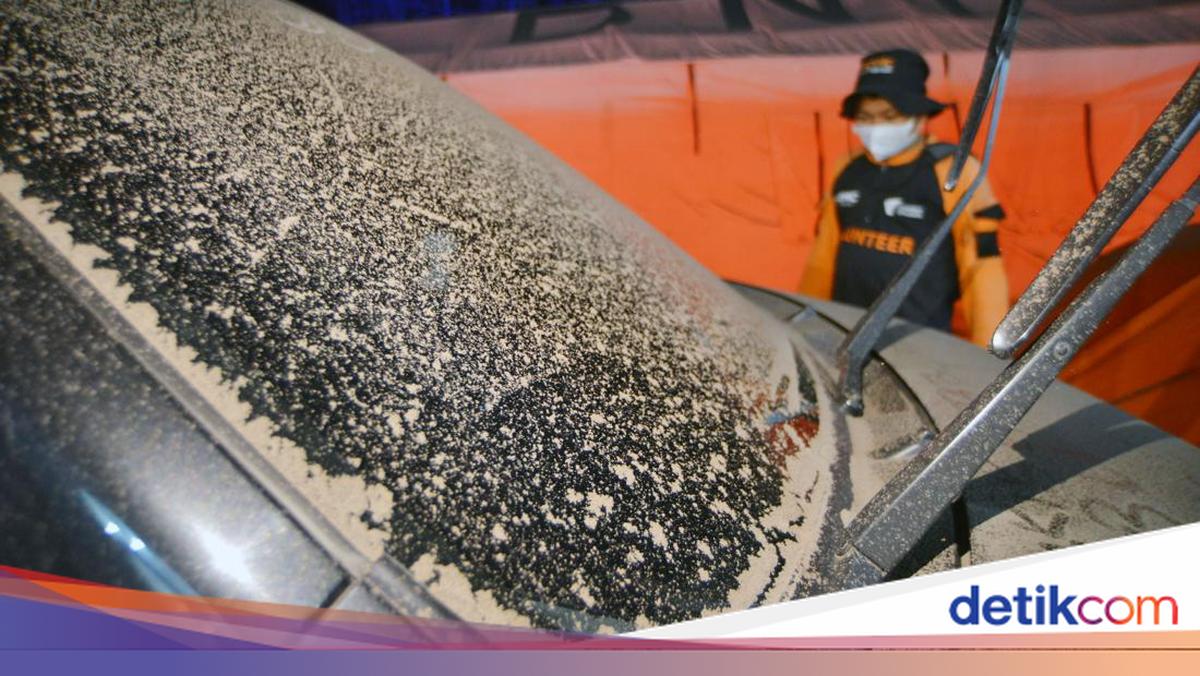
The activity of Mount Anak Krakatau in the Sunda Strait waters remains a major concern following recent eruptions. Volcanic ash from this activity has been observed spreading across several regions.
Communities in affected areas need to increase vigilance against exposure to volcanic ash. The question remains: which areas are affected, and what steps should be taken to protect oneself?
Anak Krakataus Activity Still Under Monitoring
According to a report from the Geological Agency of the Ministry of Energy and Mineral Resources on Sunday (6/9/2026), Mount Anak Krakatau remains at Level III (Alert) status. Strombolian-type eruptions, which produce incandescent rock fragments and volcanic ash, are still ongoing.
Previously, Mount Anak Krakatau recorded an eruption on 4 September 2026 at 22:03 WIB. The eruption was captured on a seismogram with a maximum amplitude of 19 mm and lasted approximately 29 seconds.
The Geological Agency subsequently reported continuous eruptions on 5 September 2026. This activity was accompanied by rumbling sounds and red eruption plumes visible from the Krakatau Pasauran Volcano Observation Post (PGA). Monitoring of volcanic activity is being conducted intensively alongside relevant agencies.
The Geological Agency has urged the public, visitors, tourists, and hikers not to enter or conduct activities within a 3-kilometre radius of the centre of Mount Anak Krakatau’s activity. Residents in the coastal areas of Banten and Lampung are also asked to remain calm and follow the directions of their local Regional Disaster Management Agency (BPBD).
What is Volcanic Ash?
Volcanic ash consists of very small particles produced during a volcanic eruption. This material can be carried by the wind and spread far from the eruption source.
Inhaling ash particles can disrupt the respiratory tract, and the ash can also cause irritation if it comes into contact with the eyes.
Therefore, individuals in areas exposed to volcanic ash should reduce outdoor activities and use personal protection.
Areas Affected by Volcanic Ash Spread
Based on BMKG’s analysis of satellite imagery on Sunday (6/9/2026) at 08:00 WIB, there are two clusters of volcanic ash spread from Mount Anak Krakatau covering the regions of Banten, DKI Jakarta, West Java, and Bengkulu.
At altitudes up to 20,000 feet, the ash is moving northeast to south, covering parts of DKI Jakarta, Banten, West Java, and the surrounding waters. Meanwhile, at altitudes up to 50,000 feet, the ash is moving southwest to northwest, covering parts of Banten, Lampung, Bengkulu, the southern Sunda Strait, and the Indian Ocean.
BMKG is intensifying 2-hour monitoring of the eruption’s development, including its impact on the atmosphere and aviation. The public is requested to follow official information from BMKG, the Geological Agency/PVMBG, and local governments.
Advice During Volcanic Ash Exposure
The Jakarta BPBD has also informed the public in affected areas that several steps can be taken to reduce the risk of volcanic ash exposure, including:
Use a mask when outdoors to reduce inhaled ash.
Reduce outdoor activities if there is no urgent need.
Close doors, windows, and ventilation to prevent ash from easily entering the house.
Cover food and drinks to prevent ash contamination.
Use protective eyewear to reduce the risk of eye irritation.
If eyes are exposed to ash, do not rub them; rinse immediately with clean water.
Drivers, especially motorcyclists, need to be more cautious as ash can reduce visibility and make roads slippery.
Monitor official information from BMHM, PVMBG, BPBD, and local governments.
The ‘5M’ Steps to Reduce Volcanic Ash Exposure
In educational materials released by the Jakarta Provincial Government regarding protection from volcanic ash, the public is also encouraged to implement the ‘5M’ steps, namely:
Wearing a mask, especially when outdoors.
Closing access points, such as doors, windows, ventilation, and any entry points for ash into the house.
Limiting activities, particularly outdoor activities, while the ash spread is ongoing.
Cleaning ash using a damp cloth. Avoid sweeping ash while dry, as this can cause particles to become airborne again.
Monitoring official information from the government and relevant agencies and not spreading unverified information.
Vulnerable Groups and Health Conditions
Groups that require extra attention during volcanic ash exposure include infants and children, the elderly, pregnant women, sufferers of asthma, COPD, and other lung diseases, as well as those with heart disease. Workers who spend a lot of time outdoors are also at a higher risk of exposure.
Seek medical services or visit a health facility immediately if you experience shortness of breath, severe eye irritation, or other health complaints after exposure to volcanic ash.