
Berau Shifts Focus from Mining to Sustainable Sectors for Long-Term Economic Strength
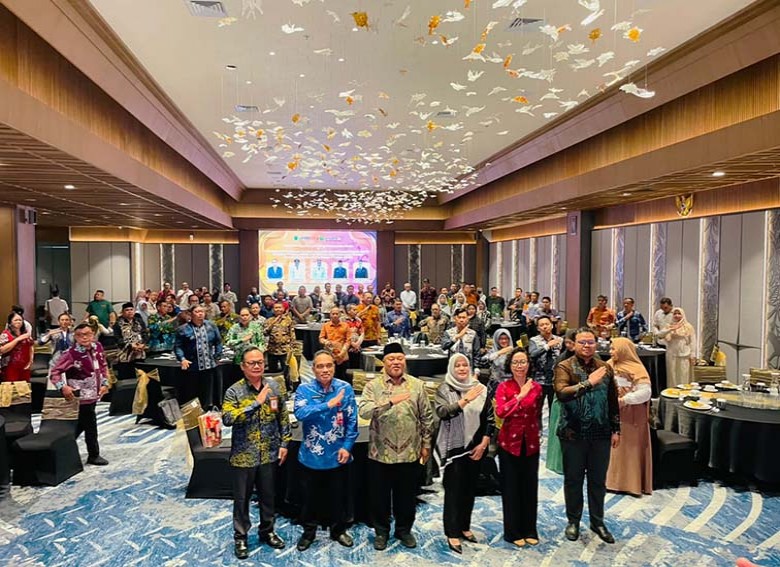
Berau Regency is sending strong signals about a new direction for its economic development. Amid high investment achievements and years of dominance by the mining sector, the local government is now shifting focus towards a more sustainable economy by opening wider opportunities for Micro, Small, and Medium Enterprises (MSMEs), agriculture, fisheries, and tourism. This move is not merely rhetoric. Recent data shows changes in the economic structure are beginning to appear, alongside continuously increasing investment and a downstreaming strategy directed at providing greater benefits to the local community. The commitment was affirmed by the Berau Regency Government during a recent Investment Partnership Facilitation and Socialisation event for the Minister of Investment and Downstreaming/Head of the Investment Coordinating Board (BKPM) Regulation Number 3 of 2025, held jointly with the Ministry of Investment/BKPM and the East Kalimantan Provincial Investment and One-Stop Integrated Services Office (DPMPTSP). Berau Deputy Regent Gamalis stated that future regional economic development will no longer be measured solely by the amount of incoming investment, but by the extent to which that investment can create a multiplier effect for the community and local business actors. “In our view, partnerships between investors and MSMEs are one of the main strategies so that regional economic growth is not only enjoyed by certain groups, but is able to create new business opportunities, jobs, and strengthen the economy at the grassroots level,” he explained. He also expressed hope for continued support from the Ministry of Investment and Downstreaming and the East Kalimantan Provincial DPMPTSP to strengthen the regional investment ecosystem and provide greater growth space for MSME players. “Especially now that MSME empowerment is placed as one of the national development priorities. Besides being the backbone of the regional economy, this sector is considered to have an important role in expanding job opportunities, increasing community productivity, and strengthening national economic resilience,” he said. According to Gamalis, this spirit is also aligned with the national development direction towards Golden Indonesia 2045 through the eight Asta Cita missions emphasising advanced, independent, sovereign, and sustainable economic growth. One instrument expected to accelerate this transformation is the implementation of Minister of Investment and Downstreaming/Head of BKPM Regulation Number 3 of 2025. The regulation is expected to strengthen partnership patterns between large enterprises and MSMEs through more effective, transparent, and equitable mechanisms. “Through this regulation, partnership relationships are expected to become increasingly mutually beneficial so that local business actors are not just spectators, but are able to move up a class and take a greater role in the investment value chain,” he said. Amid these transformation efforts, Berau’s investment achievements show a fairly aggressive trend. Throughout 2025, regional investment realisation was recorded at IDR 8.76 trillion, equivalent to 194.71 percent of the set target of IDR 4.5 trillion. This achievement is one indicator of increasing investor confidence in the business climate in Berau. Meanwhile, for 2026, the investment target has been raised to IDR 8 trillion, and by the first quarter, IDR 1.2 trillion had already been realised. However, more interesting than just the investment figures is the changing face of Berau’s economy that is beginning to show. If previously the mining and quarrying sector was the main backbone of the regional economy, its contribution is now starting to decline. Berau Regency Government data shows the mining sector’s contribution to the Gross Regional Domestic Product (GRDP) fell from 58.8 percent in 2024 to 48.11 percent in 2025. This nearly 10 percent decline is considered an important momentum for the region to strengthen other, more sustainable productive sectors. At the same time, the agriculture and fisheries sector is beginning to show an increasingly significant role, with a contribution reaching 13.47 percent of the regional economic structure. Additionally, the tourism sector is also being pushed to become a new source of growth capable of creating broader added value for the community. This change of direction signals that Berau is building a long-term economic foundation, shifting from dependence on natural resources towards a more diverse, inclusive, and globally resilient economy. In his closing remarks, Gamalis invited all attending business actors and MSMEs to use the socialisation momentum as a space to expand networks, strengthen business capacity, and seize open partnership opportunities. He argued that the future of Berau’s economy is determined not only by the amount of incoming investment, but also by the extent to which the local community can grow and become part of that change.