
Bentley Remains ‘British’ Despite Now Being Owned by Volkswagen
Jakarta (ANTARA) – Bentley is known as a British luxury car brand combining high performance with traditional craftsmanship, but its status remains a subject of debate, particularly since its ownership changed nearly 30 years ago.
Founded in 1919, Bentley built its reputation on high-performance luxury cars and victories at the Le Mans 24 Hours in the 1920s. However, the Great Depression following the Wall Street Crash of 1929 brought the company to its knees, and it was taken over by rival Rolls-Royce, Carscoops reported on Saturday (17 October), local time.
For the next six decades, Bentley cars used Rolls-Royce chassis and engines. Nevertheless, Bentley continued to develop its own identity, including with the 1952 R-Type Continental, which inspired today’s Continental GT.
In 1998, Vickers, then the owner of Rolls-Royce and Bentley, decided to sell both brands. BMW, which had been supplying V12 engines, offered £340 million (Rp8.18 trillion) to acquire them. However, another German carmaker, Volkswagen, also had plans for the two British luxury brands.
Volkswagen bid £430 million (Rp10.3 trillion), outbidding BMW to take over the factory in Crewe, England, along with the cars of both brands, the Spirit of Ecstasy mascot and Rolls-Royce’s iconic grille.
BMW, however, had already reached an agreement with Rolls-Royce plc, the aircraft-engine company, to obtain a licence to use the Rolls-Royce name for £40 million (Rp962.4 billion).
The two German companies eventually agreed to divide the assets. BMW took over Rolls-Royce and built a new factory in Goodwood, while Volkswagen operated Bentley from the old plant in Crewe.
Bentleys have continued to be made at the Pyms Lane facility in England rather than being moved to Germany. To this day, all Bentley models, from the Bentayga SUV to the Batur Convertible, are produced there.
There is one exception. Strong demand for the Flying Spur following its launch in 2005, and a renewed surge in demand in 2013, led Bentley to produce a small number of cars at Volkswagen’s factory in Dresden, Germany, to fulfil orders.
Modern Bentleys still use a great deal of German technology. The Bentayga shares its platform with the Porsche Cayenne, while the Continental GT and Flying Spur use the same architecture as the Porsche Panamera.
The 6.75-litre V8 engine, a Bentley hallmark since the Rolls-Royce era, was discontinued in 2020. Bentley now uses Volkswagen 3.0-litre V6 and 4.0-litre V8 engines made in mainland Europe. Its body structures are also imported from Germany, with some previously produced in Slovakia.
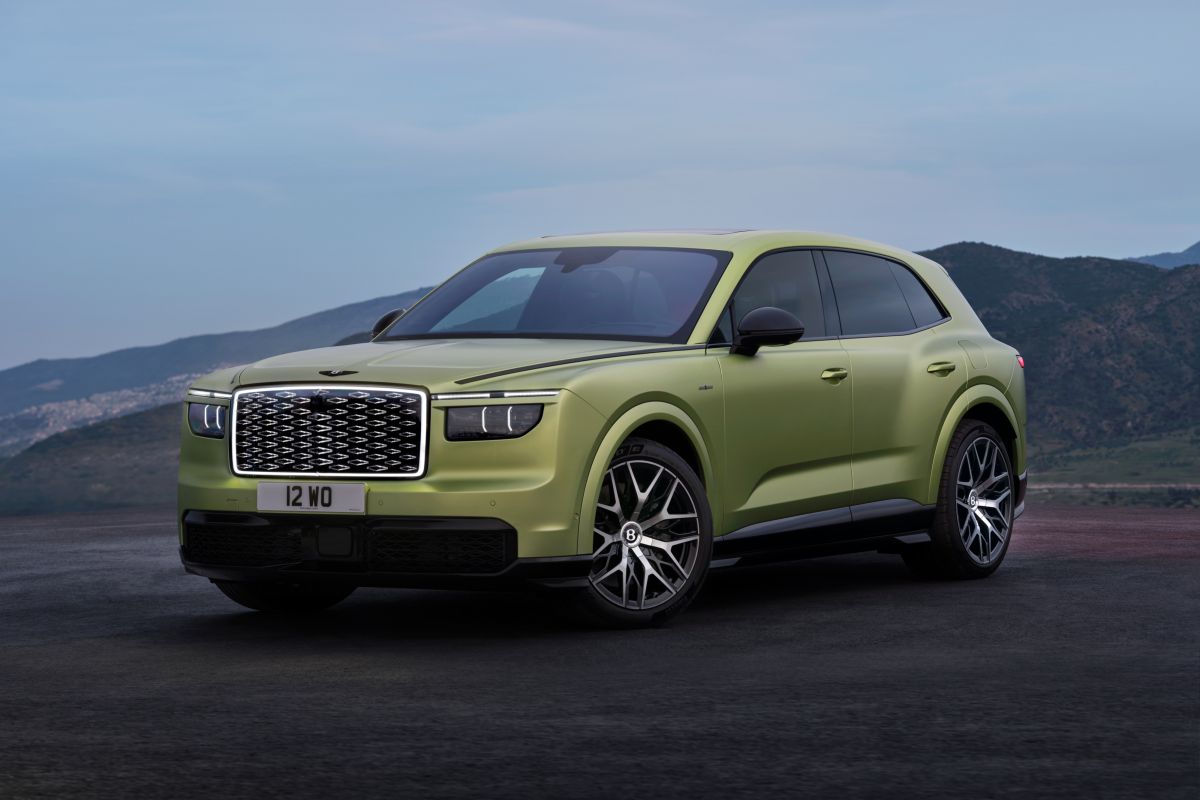
Even so, Bentley’s distinctive character is evident in its paintwork, trim and Mulliner personalisation. Following an investment of £350 million (Rp8.4 trillion), the Crewe plant now has a modern paint facility, a new engineering technical centre and a production line for the Torcal, Bentley’s first electric car.
Since 2021, Bentley has been under Audi’s control as part of Volkswagen’s Progressive division. Nevertheless, it continues to maintain its production base and British roots.