
Bengkulu Turtle Conservation Centre Hatches Up to 3,000 Hatchlings Annually
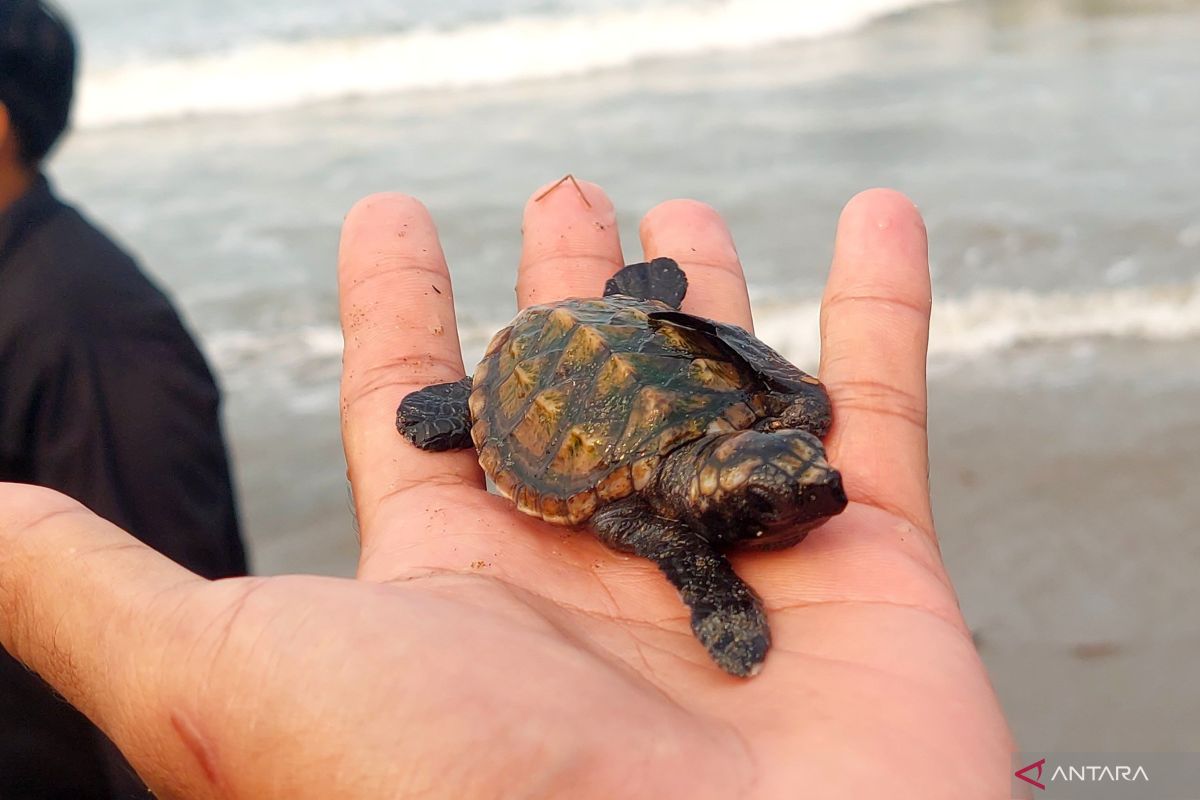
Bengkulu — The Alun Utara Turtle Conservation Community House in Central Bengkulu Regency, Bengkulu Province, is capable of hatching approximately 2,000 to 3,000 hatchlings per year from turtle eggs collected through conservation activities.
“In previous years, we have been able to reach thousands. On a monthly basis, we can see around 200 to 300 turtles hatching,” said Zul Karnedi, a turtle conservationist at the Alun Utara Turtle Conservation Community House in Bengkulu, on Tuesday.
Zul stated that the hatching activities are conducted to ensure the sustainability of the turtle population in the coastal areas of Bengkulu. The turtles hatched at the conservation centre originate from eggs found across various coastal regions.
According to him, the species currently under conservation at the facility include hawksbill, green, and olive ridley turtles. Once hatched, the turtles are cared for before being released into the wild, depending on their condition and conservation requirements.
He noted that the presence of the conservation house also helps reduce the risk of turtle eggs being used for consumption. This is because some members of the community still find turtle eggs and sell them due to a lack of understanding regarding the importance of protecting these animals.
“Some egg hunters, who lack awareness, still use the eggs for personal consumption,” he added.
Zul explained that his organisation accepts turtle eggs found by the public for hatching. For community members who hand over eggs, the management provides compensation to cover the costs incurred during the discovery and delivery of the eggs, rather than through a commercial buying and selling mechanism.
“According to the regulations, they cannot be traded. However, since they are the ones who find them, we provide compensation costs,” he said.
Zul mentioned that the eggs received by the conservation house do not only come from the Alun Utara area. Some eggs also originate from Pulau Tikus and Teluk Sepang in Bengkulu City, handed over by community members who have developed an awareness of turtle protection.
He stated that the turtle population in the Bengkulu region is showing signs of improvement compared to previous years. Monitoring is also conducted alongside fishermen operating near the coastal areas.
“In the past, the turtle population was indeed declining, but now it has increased significantly. Previously, turtles were not found on the reefs near the conservation house, but now they are abundant on the reefs,” said Zul.
In addition to the conservation house, fishermen in the coastal area have established a zone they call ‘Turtle Reef’ in front of Malabero Beach as part of their commitment to turtle preservation.
Zul emphasised that strengthening the conservation house facilities is necessary to ensure that hatching and hatchling care activities can run optimally. Previously, several buildings used for conservation activities were damaged due to abrasion.
“Previously, we received assistance from an automotive company, but due to natural disasters, many of those donated buildings were destroyed. Now, we have received assistance from PT Pelindo,” he said.
He expressed hope that the assistance for the construction of the conservation house would be utilised effectively to support turtle preservation activities, including egg hatching and the care of hatchlings before their release.