
Bengkulu Coffee SMEs Aiming for Global Markets
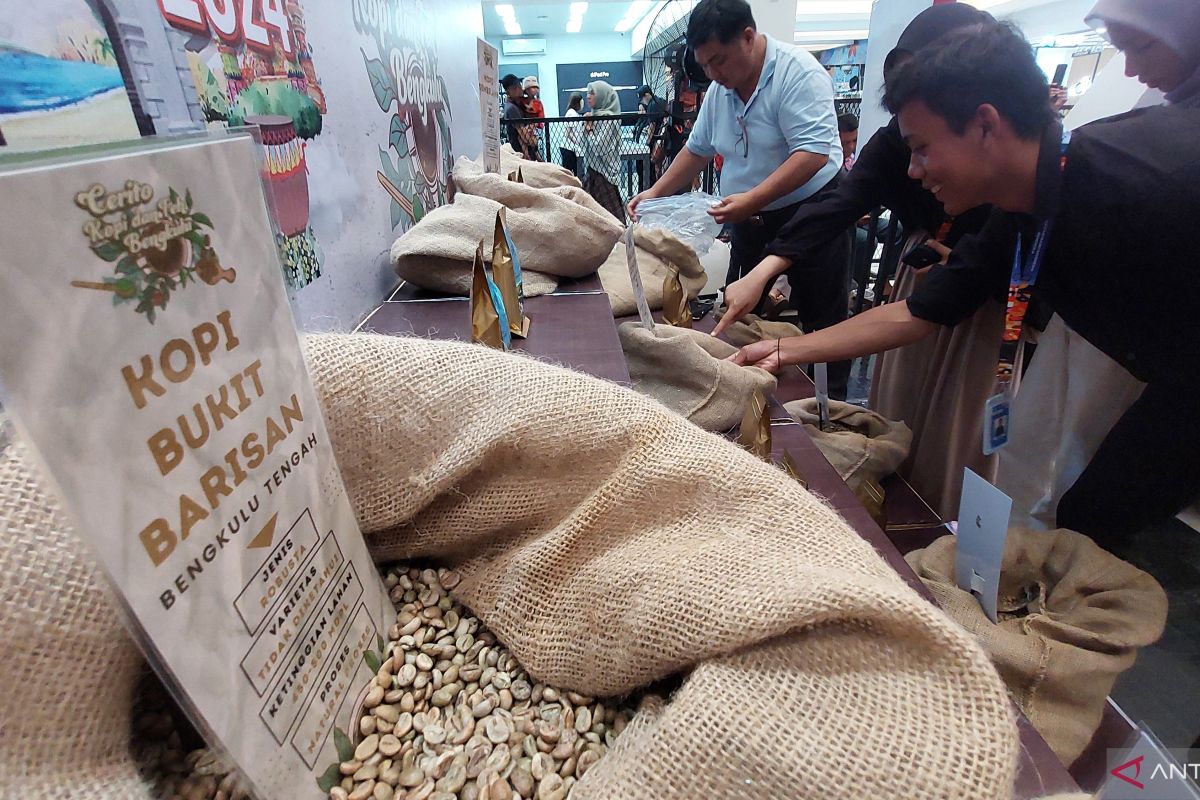
Bengkulu-based coffee SMEs are experiencing firsthand that the process of exporting their plantation produce is not as simple as merely packing coffee and shipping it to various destination countries.
To meet global market demand, numerous criteria must be met, ranging from the initial planting and maintenance to harvesting and post-harvest processing. All these steps are essential to ensure that the exported coffee products adhere to the quality standards desired by the market.
Saiful Ansori, a coffee farmer in Kepahiang Regency and owner of the SME Rodaba Coffee, dreams of his production being recognised beyond domestic coffee business circles. He aims to establish a presence in the global market as the pinnacle of his broader professional achievements.
This ambition is supported by the fact that Bengkulu Province is ranked among the top five national producers of coffee. In terms of supply volume, the province, now nicknamed ‘Bumi Merah Putih’, is unlikely to face difficulties in meeting demand.
Regarding flavour quality, the leading commodities—known as Sintaro (Sindang Dataran Robusta), an original variety from Rejang Lebong Regency, and Sehasen from Bumi Sehasen, Kepahiang Regency—are already widely recognised. These two varieties frequently win awards at various coffee festivals, proving that Bengkulu coffee has been tested for its flavour quality.
However, flavour quality and quantity alone are insufficient to meet global market demands. There are several other requirements that must be fulfilled before the product can enter an export cargo container.
Saiful explained that the requirements demanded by the global market are diverse. International buyers request detailed information regarding the coffee type, picking periods and methods, examples of red cherry picking, moisture content levels, and several other standards. Even the uniformity of coffee bean diameters is a consideration for overseas buyers. Furthermore, administrative completeness and commodity identity must also be satisfied.
These requirements certainly cannot be met using only traditional farming methods or rudimentary tools and infrastructure. At the plantation development level, farmers require comprehensive coffee knowledge, ranging from seedlings, planting methods, and treatments to fertilisers, topographical and geographical conditions, and weather patterns to ensure that the harvested coffee is of exportable quality.
From the farmers’ perspective, years of experience in tending to coffee plants serve as a significant asset. The remaining challenge is to supplement this experience with enhanced knowledge and technical support so that harvests can meet market demands.
The local government recognises that improving the quality of Bengkulu coffee cannot rely solely on farmers’ experience. Coffee farmers need strengthened knowledge and support from the initial development of the plants until they produce fruit that meets market standards.
Strengthening farmers is seen as a vital part of improving coffee quality directly from the plantation. This initiative is being implemented through ‘coffee school’ programmes, which have been attended by dozens of farmer groups, alongside the preparation of grafted coffee seedlings for thousands of hectares of farmland and efforts to ensure the availability of fertiliser.