
BEM UI Hires 24 Kopaja Buses for Protest at Hotel Indonesia Roundabout, None Arrive as Drivers Allegedly Intimidated
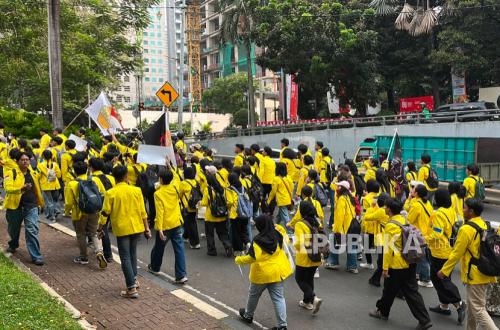
Students from the University of Indonesia’s student executive body (BEM UI) held a protest at the Hotel Indonesia (HI) roundabout on Tuesday (18/8/2026) but faced transport difficulties. Field coordinator Hafidz Hernanda said dozens of Kopaja buses hired by the group failed to arrive.
“For the UI contingent itself, there are around 500 to 700 protesters. But unfortunately, it is true that many of our Kopaja buses were co-opted by various institutions. Various institutions have been telephoning the drivers. Imagine, we booked a total of 24 Kopaja buses. All 24 Kopaja buses could not come because they were intimidated—they could be dismissed,” Hafidz said on Tuesday.
“This is very regrettable. We do not blame the drivers because they live within a system that forces them to work like this,” he added.
When asked about the form of intimidation, Hafidz said the drivers were reportedly forbidden from coming to transport the protesters. “That is correct—they were not allowed to come here. If any of them set off, they would be dismissed. So they were told to come up with a thousand and one excuses so they could not pick us up,” he said.
He said the problem was also experienced by student executive bodies from several other universities. “And this is not only happening to BEM UI, friends. Many of our friends from other BEMs, from other university student executive bodies, are also looking for Kopaja buses, but they are all being held back. None of the Kopaja drivers are willing,” he said.
Hafidz then linked the issue to freedom of expression in a democracy. “The question is simple. Is Indonesia supposedly a democratic country? Is our freedom of expression supposedly protected under the Constitution? But in reality, government institutions are now actively stopping us from participating in democracy,” he said.
He also claimed there was intimidation against several student executive bodies. “Honestly, I am very sad to hear it. They were intimidated—told that KIP-K scholarship recipients could have their scholarships revoked, that they could be removed from their positions, that other students could be threatened with something anarchic. This is excessive,” he said.
Hafidz said the post-Reformasi generation of students understands democracy as part of national life. “As a young generation, we live in the post-Reformasi era, which we know as democracy. Unless, of course, we were living under the New Order. But unfortunately, we see that things like this are continuously eroding our independence. That is why today our protest is about reclaiming independence,” Hafidz said.