
Beloyot: From a Narrow Cave to the Future of Berau Tourism
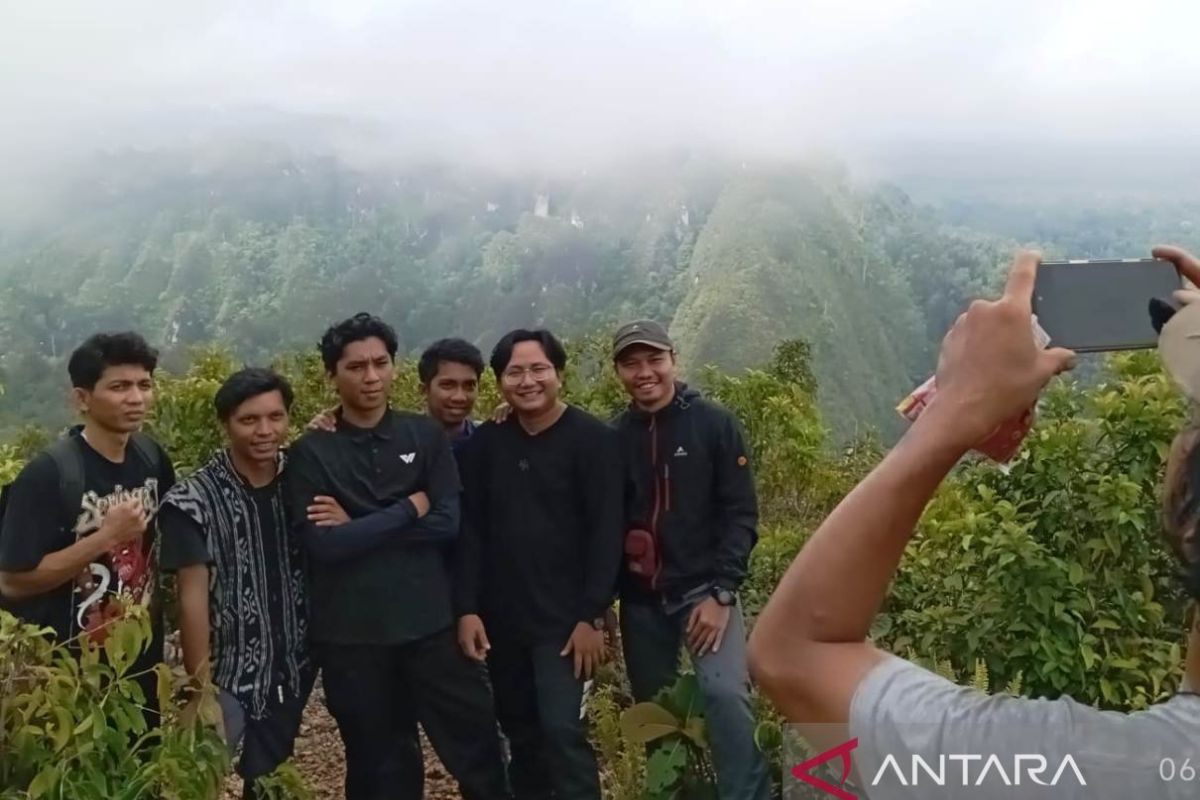
Behind a sprawling valley and a row of towering karst hills like a natural palace, a space is hidden among the dense foliage and millions of sturdy tree trunks. This space holds the story of civilisation from thousands of years ago. Here, Beloyot Cave stands majestically, preserving ancient handprints and drawings that stand as silent witnesses to how prehistoric humans lived, created, and held beliefs long before written historical records. Now, this place, which has long been a secret of nature, is slowly opening up, not just to be admired, but to become a new path for Berau Regency, East Kalimantan, towards a more sustainable economic transformation. The journey to Beloyot Cave begins most directly from Merabu Village, a settlement surrounded by dense tropical forest and clear, small streams. The distance is about 5 kilometres, and almost half of the route must be traversed by following the valley floor, which is often flooded with shallow water. Along the left and right of the footpath, many edible white mushrooms can be seen. Step by step, the sound of trickling water blends with the chirping of birds and the sound of wind blowing through the gaps in the trees. Upon nearing the cave mouth, the atmosphere turns silent. Sunlight can only partially penetrate the dense leaves, accompanied by a thin gust of wind, creating shadows that seem to dance erotically on the stone walls. Once inside the cave, after a strenuous journey through a narrow passage, irregular volumes, and steep inclines, exiting the first cave door and entering the next cave mouth in a continuously ascending position, one finally arrives at the important part of this natural palace. In the midst of breathlessness, after climbing the stairs to the main cave, a miracle is visible. On the walls and ceiling of the cave are painted handprints, figures, and ancient symbols estimated to be between 10,000 and 40,000 years old. There are 26 types of images in the room, dominated by human handprints. These markings are not just remnants. They are proof that thousands of years ago, the prehistoric humans who inhabited this region already knew art, developed culture, and possessed a worldview and spiritual beliefs. For them, this cave may have been a dwelling, a gathering place, and a place to seek protection from the natural forces they considered the Creator. Today, these traces are priceless assets, as well as foundational capital for Berau to step towards a different kind of development. For decades, Berau’s economy has been heavily dependent on the mining sector. The wealth extracted from the earth brought progress, but it carries the risk that mineral resources will one day be exhausted. Recognising this, the local government is determined to make a major change, carrying out a gradual economic transformation from relying on what is extracted from the earth to what can be preserved and utilised continuously, namely natural wealth and cultural heritage. This strategic step is embodied in the preparation of the Regional Action Plan for the Management of the Berau Geopark for the 2026–2032 period. Data collection activities and the presentation of the preliminary report were held on Friday, 19 June 2026, at the Regional Planning, Research and Development Agency of the Berau Regency Government. The event served as an initial milestone, attended by regional apparatus, the Sangkulirang-Mangkalihat Geopark management team, and an academic team from the Centre for Tourism Studies at Gadjah Mada University. The Head of Bapelitbang Berau, Endah Ernani Triariani, affirmed that this study is part of the long-term vision outlined in the Regional Long-Term Development Plan. The Berau Regency Government intends to change the direction of development, no longer solely dependent on mining products, but beginning to rely on the potential of tourism and environmental services that can be enjoyed by current and future generations.