
Belle Époque: When the World Celebrated
Belle Époque, in French, means the Beautiful Era. Interestingly, it began with an act of insolence. In January 1871, Otto von Bismarck was not satisfied with seeing France defeated in war. Germany, which for centuries had existed only as a collection of kingdoms, duchies, and cities, was finally unified. However, its birthplace was chosen with a cruel geopolitical sense of humour: the Palace of Versailles.
In the Hall of Mirrors, the heart of French grandeur, Wilhelm I was proclaimed German Emperor. France was humiliated, and Germany was born. Strangely, from that very wound, Europe entered one of the most beautiful periods in memory.
Bismarck returned, and the French Third Republic was born. War between the great powers of Europe subsided, and the Belle Éوعه began. Paris rose to become the capital of modern life. There, art, fashion, cafés, electricity, the underground, and all manner of pleasures taught the world how a new century should feel.
Berlin also transformed. Once a quiet garrison town, it grew into a global metropolis, a ‘Weltstadt’, filled with factories, universities, banks, stations, theatres, and new people who believed that hard work and science could overcome the past. Optimism spread rapidly; new innovations, science, and exploration became everyday stories.
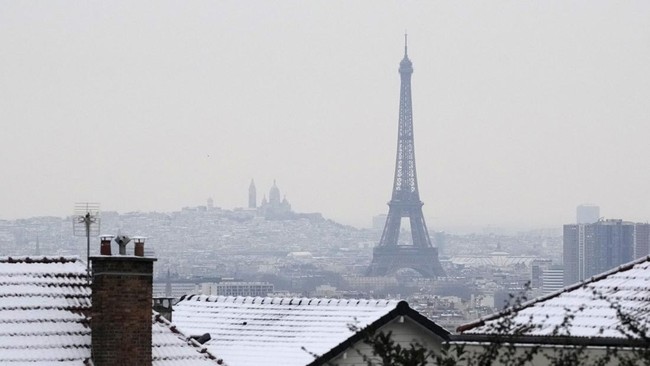
However, it was Paris that was most skilled at turning progress into a spectacle. In 1889, at the Champ de Mars, a three-hundred-metre iron tower stood challenging the sky. Many Parisian artists hated it. They regarded it as a giant factory chimney that ruined the city’s elegance.
But Gustave Eiffel did not hide its framework. The ironwork was left exposed, as if the new era no longer felt the need to cover its bones. The tower was originally planned to be temporary. Perhaps the future always arrives in such a manner: initially considered an eyesore, then becoming the view itself.
Eleven years later, Paris hosted a massive celebration. In April 1900, the Exposition Universelle opened. For seven months, over fifty million visitors flooded the city. People came not just to see France, but to witness what the future was believed to look like.
Paris was like a city that refused to sleep. The Grand Palais stood under its giant glass roof, and the Petit Palais opened its doors. The Pont Alexandre III stretched out with statues, lights, winged horses, and grandeur over the River Seine. Gare d’Orsay received the trains that brought visitors directly into the heart of the festivities.
The first Paris Métro lines began operating. Their entrances were designed with curves reminiscent of plant stems, as if even the portals to the underground had to be beautiful. At night, the Palais de l’Électricité glowed like a palace that no longer required the sun. Thousands of lights reflected on the water. Generators hummed behind the walls. For the first time, many began to believe that night was no longer a natural limit; night was merely a matter of engineering.
Elsewhere, there were ‘trottoirs roulants’—moving pavements, the roads of the future. People stood upon them, losing their balance, clutching onto strangers, and then laughing together. They could move without taking a single step. Eventually, such things would become commonplace in airports, but in 1900, the moving ground beneath one’s feet felt like magic.
There were giant wheels, escalators, electric cars, diesel engines, voice recorders, and moving images. Every object carried the same promise: whatever is considered impossible today may simply have not yet found its engineer.
After viewing the machinery, people filled the cafés, restaurants, parks, and theatres. Women walked wearing their finest dresses and wide-brimmed hats. Colourful posters filled the city walls. Bicycles passed along the boulevards. Music drifted from café-concerts. In Montmartre, the Moulin Rouge made the night feel shorter than the day.
Painters, singers, merchants, nobles, tourists, inventors, and swindlers mingled in the same crowd. Everyone wanted to see, and everyone wanted to be seen.
Then, modern humanity found its new place of worship: the department store.
At Le Bon Marché, Printemps, and later Galeries Lafayette and other large Parisian stores, goods were no longer hidden behind counters. Everything was displayed under the light, behind glass, in arrangements that made needs and wants increasingly difficult to distinguish.
People could enter without promising to buy. Prices were no longer whispered like family secrets. Middle-class women could walk alone amongst fabrics, perfumes, umbrellas, toys, and clothing from lands they had never visited. The Belle Époque did not just create more goods; it created more reasons to desire them.
However, this grandeur did not belong to Europe alone. Along the Seine stood pavilions from all over the world. The Dutch East Indies was present with temples, Javanese carvings, tropical produce, and ‘rumah gadang’ houses. To Parisians, the Dutch East Indies was a distant land that could be visited after lunch and left before…
Source: jawawa.id (https://jawawa.id/newsitem/belle-epoque-when-the-world-celebrated-1789358065)
Originally published by CNBC Indonesia (https://www.cnbcindonesia.com/opini/20260914093317-14-767604/belle-epoque-ketika-dunia-berpesta), translated from Indonesian