
Bekasi Women Transform Plastic Waste into Fuel
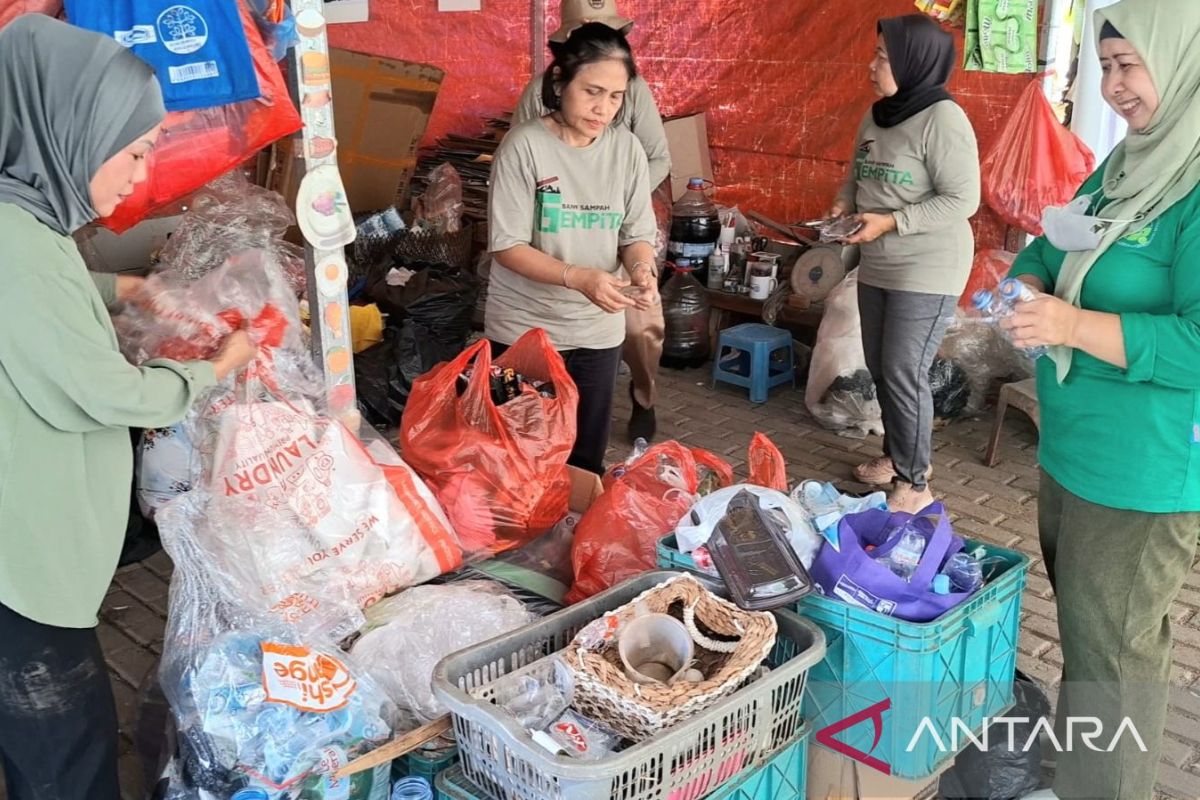
Bekasi, West Java — At 06:30 AM, as the sun began to rise, Hesti Warih MR and seven other resilient women prepared themselves at the Gempita Waste Bank Unit (BSU) in Bekasi, West Java.
Some were cleaning the waste bank area, while others prepared used jerrycans, collection baskets, water, and three-kilogram LPG cylinders. Others were busy preparing the pyrolysis machine, the primary equipment used for the distillation process of processing plastic waste.
In a corner of the Puri Gading complex in Jatimelati, Pondok Melati, these ‘Kartinis’ of Bekasi are no longer merely fighting for emancipation. They have evolved into environmental warriors, self-reliance drivers, and ecological architects.
Their primary mission is to combat low-value plastic waste that is difficult to recycle conventionally, such as plastic bags, styrofoam packaging, and bubble wrap. Furthermore, they also process organic waste.
Two hours later, as the sun rose higher, the expected waste supplies arrived. One by one, rickshaw drivers and three-wheeled motorcycle riders arrived, carrying sorted waste brought by local residents.
Their activities focus on processing waste according to its type: organic waste is converted into compost and maggot cultivation media, while plastic waste is processed once a week into handicrafts and liquid fuel (BBM).
The motivation for these women is driven by a classic national issue: suboptimal waste management. According to data from researchers at the National Research and Innovation Agency (BRIN), Indonesia is projected to produce 38 million tonnes of waste in 2024, with 19–20 per cent of that being plastic waste.
The National Waste Management Information System (SIPSN) of the Ministry of Environment and Forestry recorded that Indonesia’s total waste generation reached between 24.8 million and 25.14 million tonnes throughout 2025.
Indonesia still faces a significant challenge: only about 34.55 per cent of waste is managed effectively. The remaining 65.45 per cent is not handled optimally, leading to accumulation in landfills or environmental pollution.
While the processing activities at the Gempita Waste Bank Unit in Bekasi are small-scale, they carry a message for the younger generation to continue innovating and contributing positively to the nation through sustainable efforts to reduce waste volume.