
Bekasi Waste-to-Energy Plant to Process Over 500,000 Tonnes of Rubbish Annually
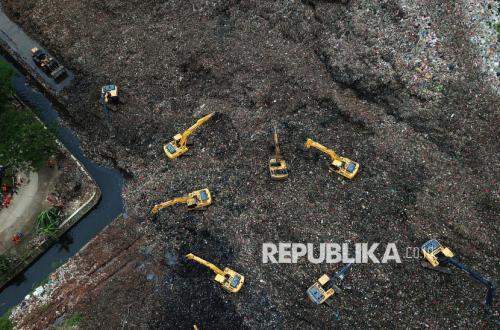
The Bekasi Waste-to-Energy Plant (PSEL) is projected to process more than 500,000 tonnes of rubbish each year. This capacity is equivalent to around 70 per cent of the waste generated in Bekasi City. The project is part of efforts to accelerate waste management while converting rubbish into an energy source. The Bekasi PSEL is also projected to reduce the land required for final processing sites (TPA) by up to 90 per cent.
“Today’s groundbreaking of the PSEL marks the arrival of a concrete solution to address the waste emergency in Indonesia, particularly in Bekasi City,” said Danantara Indonesia Chief Investment Officer Pandu Sjahrir during the groundbreaking ceremony for the Bekasi PSEL, as quoted on Friday (28/8/2026).
Pandu said the project is expected to create environmental, energy, and economic value for surrounding communities. The Bekasi PSEL is also projected to generate nearly 1,000 green jobs and provide clean energy for tens of thousands of households.
The project, valued at around Rp3 trillion, is also targeted to reduce carbon emissions by approximately 640,000 tonnes of carbon dioxide equivalent (CO2) each year. The construction of the PSEL is the result of collaboration between the central government, regional government, Danantara Indonesia, PT PLN (Persero), and a number of stakeholders.
From an energy perspective, the Bekasi PSEL has a net capacity of 27.4 megawatts (MW). The facility is projected to produce around 223,584 megawatt hours (MWh) of electricity per year, equivalent to the electricity needs of around 55,000 households with 450 volt-ampere (VA) power connections.
PLN President Director Darmawan Prasodjo said the electricity generated from waste processing will be channelled back to meet the electricity needs of Bekasi residents. PLN has signed a Sponsors Agreement and a Power Purchase Agreement (PJBL) to support the project’s development.
“Electricity demand in Bekasi is quite high. So, we are dedicating the electricity from the Bekasi PSEL to the people of Bekasi. Waste from Bekasi City comes in here, and the electricity produced is supplied back to Bekasi City,” said Darmawan.
According to the PLN President Director, the construction of the PSEL is not solely oriented towards electricity production. The main objective of the project is to help solve the waste problem and create a cleaner environment.
Coordinating Minister for Food Zulkifli Hasan said the acceleration of waste-to-energy projects previously faced complicated regulatory and licensing issues. The government is now streamlining various regulations to speed up the implementation of waste-to-energy projects.
“If we cannot manage our rubbish, how can we manage bigger things? That is the President’s instruction,” said Zulkifli, who is familiarly known as Zulhas.
West Java Governor Dedi Mulyadi expressed hope that the construction of the Bekasi PSEL can proceed promptly and meet the community’s need for a better waste management system. He also stressed the importance of changing public behaviour so that the waste problem can be addressed from upstream to downstream.
The Bekasi PSEL is expected not only to reduce the hundreds of thousands of tonnes of waste that have long been a problem, but also to convert it into energy that can be reused by the community. With processing capacity of more than 500,000 tonnes of waste per year, this project represents a step towards reducing dependence on landfills while creating a cleaner environment.
Source: jawawa.id (https://jawawa.id/newsitem/bekasi-waste-to-energy-plant-to-process-over-500-000-tonnes-of-rubbish-annually-1787903506)
Originally published by Republika (https://esgnow.republika.co.id/berita/tkgvky423/lebih-dari-500-ribu-ton-sampah-per-tahun-akan-diolah-di-psel-bekasi), translated from Indonesian