
Bekasi Regency's PSEL Project Claimed to Save Rp125 Billion Annually
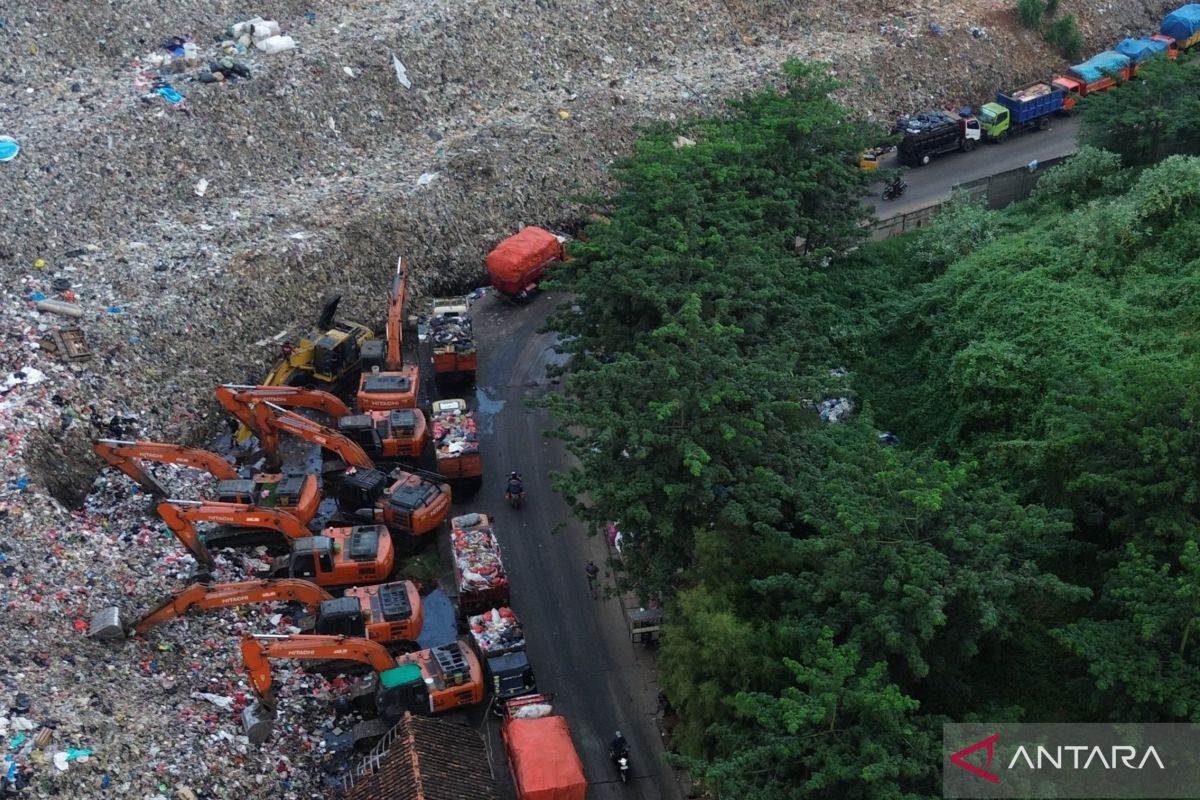
Bekasi Regency (ANTARA) - The national strategic project to build a Waste-to-Energy (PSEL) facility in Bekasi Regency, West Java, is claimed to be able to save the regional budget by up to Rp125 billion each year, while also offering a solution to the waste problem.
Head of the Bekasi Regency Environmental Agency Syafri Donny Sirait said the PSEL, which has a capacity of 1,000 tonnes of waste per day, was considered to bring a positive impact on the region’s finances because it does not impose tipping fees on the Bekasi Regency Government.
“If we use a cooperation scheme with a business entity, as in several other regions, waste processing costs reach Rp350,000 to Rp500,000 per tonne. With this PSEL, the regional government does not bear that cost,” he said in Cikarang on Saturday.
He explained that using the lowest tariff assumption of Rp350,000 per tonne, processing 1,000 tonnes of waste per day would cost around Rp350 million per day, equivalent to Rp125 billion calculated over one year.
According to him, waste processing through the PSEL scheme represents a major leap in efforts to resolve the waste problem in Bekasi Regency through a national strategic project without significantly burdening the regional budget (APBD).
“This is a blessing for the Bekasi Regency Government and its people, because we are getting a modern waste management solution with a far lighter budget burden,” he said.
Syafri also expressed pride that Bekasi Regency was selected as one of the regions to receive the PSEL project. This success was inseparable from the regional government’s readiness in preparing documents, a waste management roadmap, and land provision as requirements for building the facility.
The Burangkeng landfill also met the requirements because it has the water source needed for the cooling system of the waste processing machinery. Even so, the PSEL will only be able to process 1,000 tonnes out of the region’s total waste production of 2,200-2,300 tonnes per day.
The regional government is addressing the remaining waste pile through cooperation with a private company, PT Asiana, to process waste into Refuse Derived Fuel (RDF) as a coal substitute fuel for the cement industry.
Like the PSEL, this cooperation also does not impose tipping fees on the regional government. The company is even renting government-owned land at the Burangkeng landfill to build the RDF facility.
“So in addition to not incurring processing costs, the regional government also earns revenue from land rental. Asiana is currently completing the licensing process, and they are targeted to begin operations in September 2026,” he said.