
Bekasi Regency Prepares Digital Alarm to Prevent Basic Commodity Price Volatility
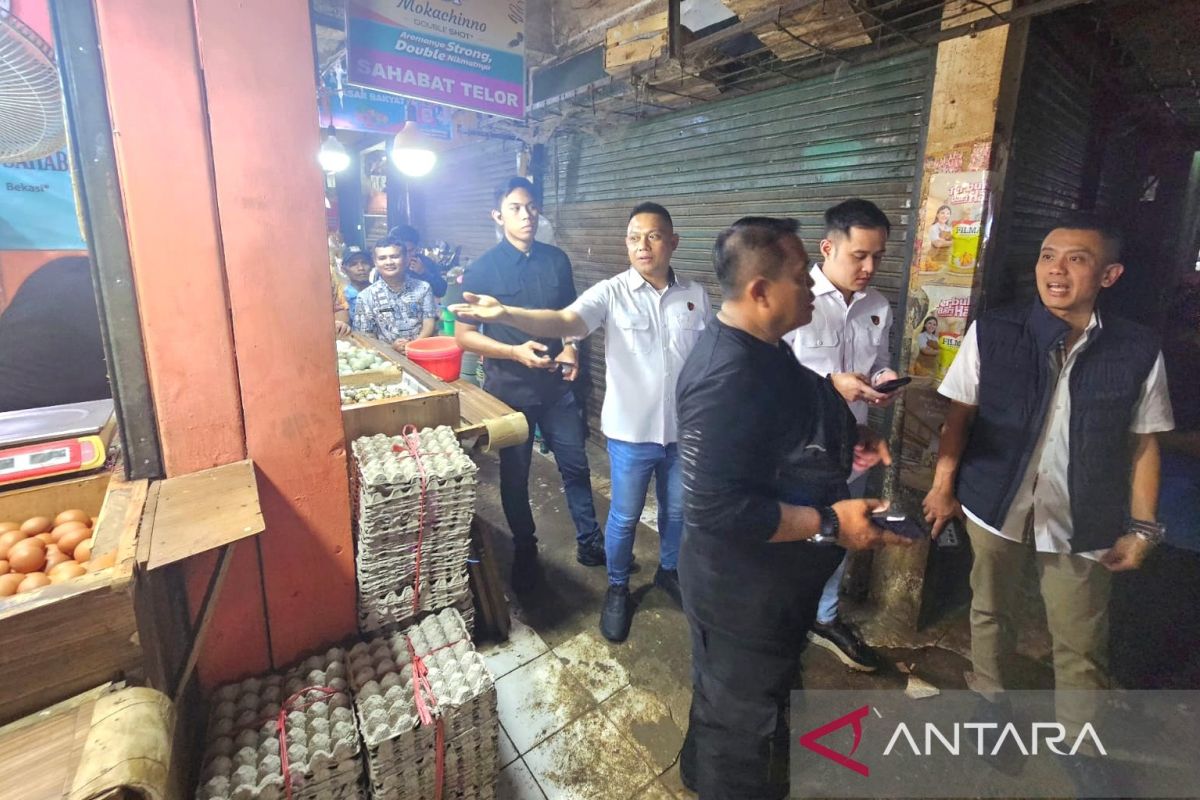
The Bekasi Regency Government, West Java, is preparing a digital-based monitoring system as an early detection tool or alarm to prevent volatility in basic commodity prices, with the aim of controlling the regional inflation rate.
The system is being developed to establish an inflation early warning system capable of reading price changes as well as the stock conditions of essential goods at the distributor level.
“This is an improvement on the system that has been implemented since 2018. We are now developing it further so that price monitoring and inflation control can be carried out more quickly and in an integrated manner,” said Helmy Yenti, Head of the Basic and Essential Commodities Division of the Bekasi Regency Trade Office, in Cikarang, Bekasi Regency, on Monday.
He explained that the system works by integrating price monitoring data from markets with distributor stock report data, allowing the local government to detect potential shortages that could trigger price increases at an early stage.
When a decrease in stock occurs, the system can provide an early indication of potential price hikes. This enables the government to take anticipatory measures without having to wait until prices have already risen.
He admitted that the testing of the digital monitoring system integration has currently reached 8ly% completion. Several refinements are ongoing, including feedback from consultants, with a target for full operation within the next two months.
Helmy described this digital system as containing all daily monitoring worksheets conducted by Regional Technical Implementation Units (UPTD) from Regions 1 to 9, as an effort to ensure every piece of field data can be documented and accounted for.
“UPTD officers conduct monitoring every day. That data is then entered into the system to be verified before being published. Thus, the data reaching the public is truly based on the results of field monitoring,” he explained.
The system consists of two main integrated modules. The first module is a public price monitoring module that can be accessed by the community via an online website, while the second module consists of distributor stock reports, which are internal and confidential.
“Distributor stock data is a trade secret and must not be published. We still integrate that data for internal analysis needs, whereas price information can be accessed by the public,” he said.
Through this system, the department aims to significantly reduce response times regarding price and availability issues. Whereas previously it took approximately six days, the system can provide a response in just two days.
“This speed is important because the government must be able to perform market interventions as quickly as possible when there are indications of disruptions to the price or availability of essential goods,” he said.
The system is also expected to be utilised by the public as a guide for up-to-date and more accurate price information. The availability of official information will also help reduce the spread of misinformation and prevent panic during issues of price increases or commodity shortages.
The Bekasi Regency Trade Office is also working to ensure that the price monitoring module is available via the Play Store so that the public can access price information more easily through mobile devices.
“The hope is that the public will find it increasingly easy to obtain official and up-to-date price information. We want this system to truly provide benefits and serve as one of the government’s instruments in maintaining price stability,” he said.