
Bekasi Regency Government Implements Modern Agriculture to Shift from Conventional Patterns
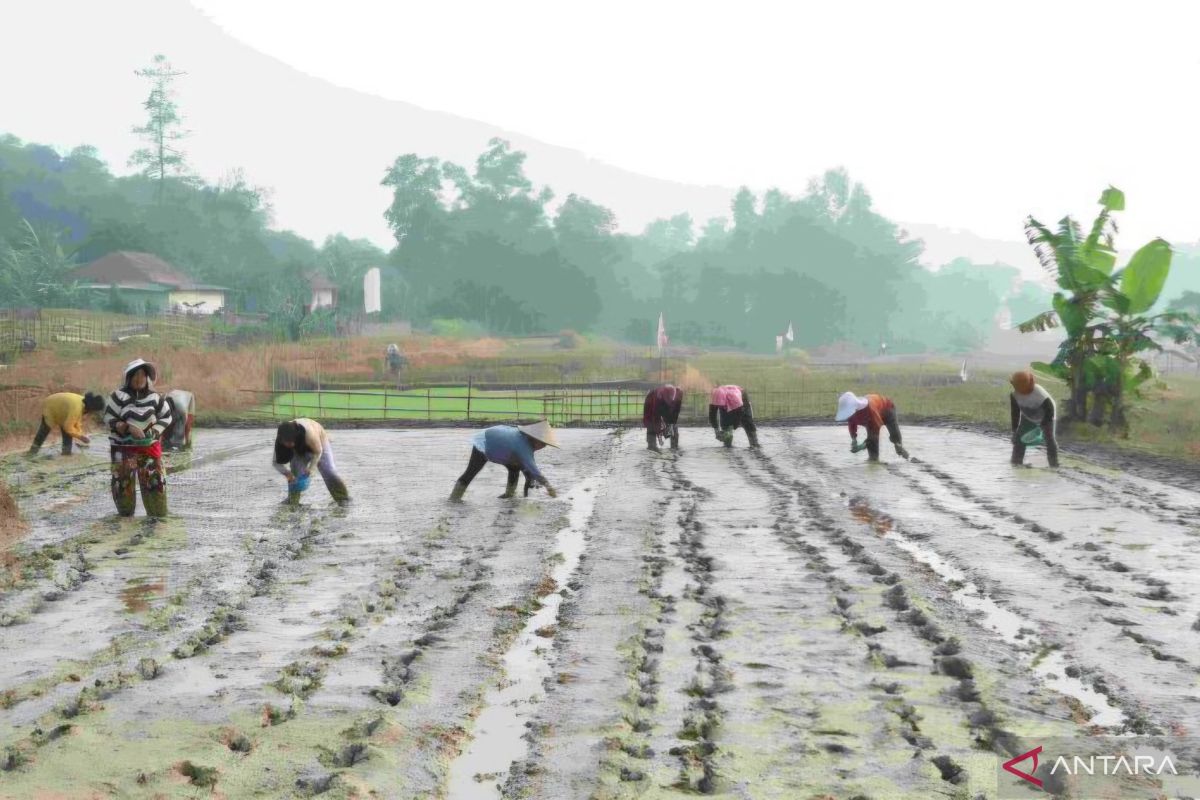
The Bekasi Regency Government in West Java has begun implementing a modern agricultural system as a transition from conventional rice planting patterns through the Modern Agriculture-Advance Agriculture System (PM-AAS) programme using a direct seeding scheme known as Tabela.
“For the trial and demonstration, this system is being applied on a 4,000-square-metre plot owned by the Warudoyong I Farmers Group in Sukabungah Village, Bojongmangu District, as the initial stage of rice cultivation modernisation,” said Head of the Bekasi Regency Agriculture Office Abdillah Majid in Cikarang on Sunday.
He explained that PM-AAS is an agricultural modernisation innovation carried out together with extension workers and farmer groups to increase productivity and efficiency in rice farming.
Through this modern farming programme, farmers are introduced to more measurable cultivation practices, from land preparation and soil pH testing to fertiliser application according to recommended dosages and weed control before planting.
“In the initial stage, this programme uses the Inpari 33 rice variety with around 15 kilograms of seed, targeting a yield of at least four tonnes of grain at harvest,” he said.
Bojongmangu District Agricultural Extension Coordinator Ubuh Buhori said that before planting, extension workers and farmers tested the soil acidity level. The test results showed a soil pH of 5.5, requiring the application of 500–1,000 kilograms of dolomite lime per hectare to improve soil conditions.
“For the 4,000-square-metre demonstration plot, around 500 kilograms of dolomite was applied in two stages: during initial soil preparation and three days before planting. In addition, one day before planting, herbicide was sprayed to control weeds,” he said.
Ubuh explained that this modern agricultural system also changes farmers’ water management habits. After the seeds are planted, the field must not be flooded for the first five days to prevent the seeds from rotting and to avoid disease attacks.
“Plant growth monitoring is then carried out, followed by the first fertiliser application at around 10 days of age according to technical recommendations,” he said.
According to him, fertiliser requirements under the PM-AAS system are higher than conventional planting patterns because it uses closer planting spacing. However, the technology is considered capable of significantly increasing productivity.
His office is targeting rice productivity through this system to reach 10 tonnes per hectare, even though the average harvest yield in the area is still around five tonnes per hectare.
The Bojongmangu land has been deliberately designed as a demonstration plot so that farmers can see firsthand the difference between traditional cultivation systems and modern technology.
“The hope is that each village will eventually have at least two hectares of demonstration land so that more farmers are encouraged to abandon conventional patterns and switch to modern agricultural systems,” he said.
Meanwhile, Chairman of the Warudoyong I Farmers Group Yusup Saepuloh welcomed the programme, calling it an important first step towards changing farming methods that have long relied on inherited practices.
“We hope the results of this trial can serve as a reference before being applied more widely to all members of the farmer group. Through the application of technology, we hope harvest yields will increase significantly,” he said.