
Bekasi RDF Plant to Process 1,250 Tonnes of Waste Per Day, Operations Set for Early 2027
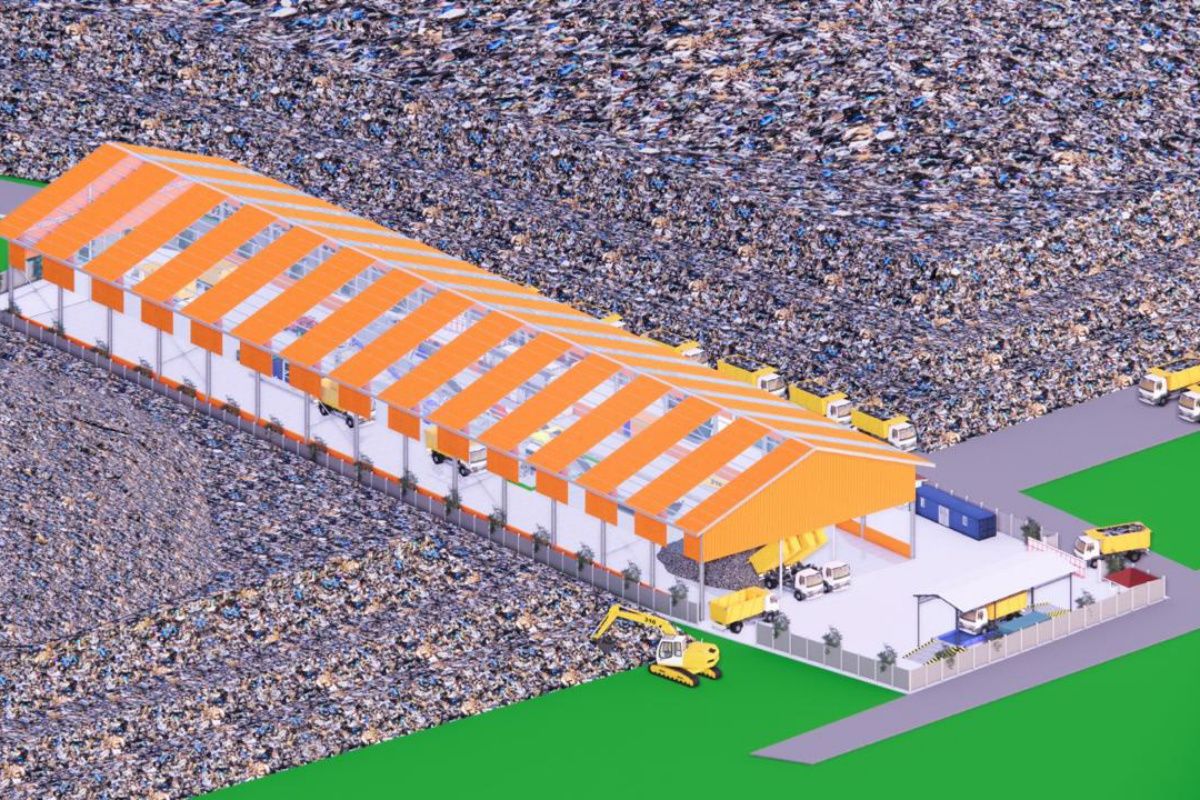
The Refuse Derived Fuel (RDF) processing plant in Bekasi Regency, West Java, is targeted to process 1,250 tonnes of waste per day and is scheduled to begin production in early January 2027.
“Securing an offtaker is one of the critical factors in developing waste-to-fuel processing facilities,” said Poltak Sitinjak, Founder of Asiana Technologies, in a statement in Jakarta on Monday.
Poltak stated that the RDF processing plant in Bekasi Regency is currently in the construction phase and will utilise waste from the Burangkeng Landfill as raw material. The facility is expected to process 1,2pend50 tonnes of landfill waste, producing 650 tonnes of RDF per day. PT Indocement Tunggal Prakarsa Tbk has been identified as the offtaker for the RDF production.
“We have signed a cooperation agreement with the Bekasi Regency Government and Indocement as the offtaker,” said Poltak.
He noted that the development of the RDF facility is part of an effort to expand the use of waste as an alternative fuel. Asiana Technologies also plans to build similar facilities at several other landfills to supply RDF to the cement and steam power plant (PLTU) industries.
He mentioned that the ‘Waste to Fuel’ model can be developed through a business-to-business scheme without government subsidies. For a processing capacity of 1,000 tonnes of waste per day, Poltak estimates an investment requirement of approximately Rp450 billion.
“Waste to Fuel is the future of Indonesia’s energy,” he added.
Poltak also expressed hope that operating cement and steam power industries could increase RDF utilisation, either through co-firing schemes or as a direct replacement for coal. In the Waste to Fuel scheme, waste that has undergone sorting and processing can produce alternative fuels such as RDF. This product can then be used by industries as a partial substitute for fossil fuels, meaning the energy produced does not necessarily need to be converted into electricity first.
Under this model, economic benefits arise not only from the reduction in waste volume but also from the value of the resulting fuel product. If RDF can replace a portion of coal or other fossil fuel usage in suitable industries, there is potential for benefits in reducing conventional fuel consumption.
In contrast, Waste-to-Energy (PSEL) plants use waste as fuel to generate electricity. This model requires combustion facilities, power plants, emission control systems, and other supporting infrastructure. Consequently, investment requirements and financing models are key aspects compared when determining waste processing technology.
The Danantara Indonesia Investment Management Agency noted that the investment required for waste-to-energy (PSEL) projects is between Rp3 trillion and Rp3.5 trillion. This level of investment is required for every unit processing 1,000 tonnes of waste, as PSEL investment involves both facility costs and electricity purchasing mechanisms involving PLN.
Source: jawawa.id (https://jawawa.id/newsitem/bekasi-rdf-plant-to-process-1-250-tonnes-of-waste-per-day-operations-set-for-early-2027-1790002804)
Originally published by Antara (Indonesian) (https://www.antaranews.com/berita/5751701/rdf-bekasi-olah-sampah-1250-ton-per-hari-awal-tahun-beroperasi), translated from Indonesian