
Bekasi Indeed Different! Electricity from Waste Processing to Flow to Residents
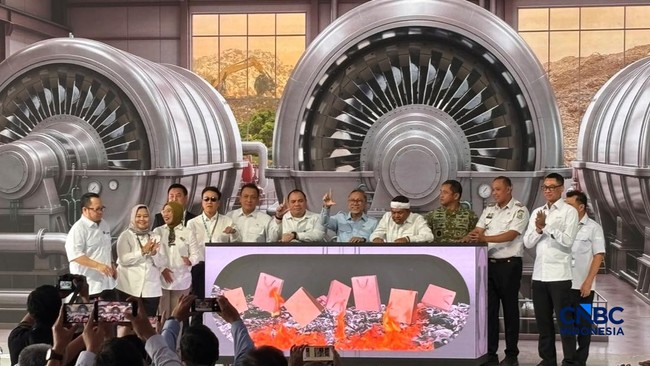
The Daya Anagata Nusantara Investment Management Agency (BPI Danantara) has inaugurated the construction of a waste-to-energy processing facility (PSEL) in Bekasi City. Its processing capacity is projected to reach 500,000 tonnes of waste per year. Danantara Chief Investment Officer Pandu Sjahrir said the infrastructure development will have a positive impact on waste management and the local economy in Bekasi. The electricity generated will also be channelled to meet household electricity needs in Bekasi City. “This project is targeted to manage more than 500,000 tonnes of waste per year, or around 70% of processed waste generation in Bekasi City,” he said at the groundbreaking ceremony for the Ciketing Udik PSEL project in Bekasi on Wednesday (26/8/2026). The project, worth Rp 3 trillion in investment, is capable of supplying electricity for 55,000 households. In addition to generating electricity, the facility’s operations are also targeted to reduce the use of final disposal site (TPA) land by up to 90%. “This initiative will produce green energy that can supply the needs of 55,000 homes in Bekasi City. And this initiative, worth Rp 3 trillion from an investment perspective, is estimated to create around 1,000 green jobs,” he said.
In line with that, PLN President Director Darmawan Prasodjo has allocated all electricity generated from the waste processing specifically to meet the energy needs of Bekasi residents. PLN has prepared a substation 5 kilometres from the project site to distribute 27 Mega Watts (MW) of electricity from a total installed capacity of 36 MW. The distribution infrastructure development is focused on maintaining the reliability of energy supply in the Bekasi area, which is recorded as having a high electricity load. “It turns out the electricity load in Bekasi is high, so we are dedicating the electricity from the Bekasi PSEL to Bekasi City. We are building a substation that is only 5 kilometres from here. Because this is only 27 megawatts with 36 installed, this uses ordinary electricity poles to a substation that is specifically dedicated to Bekasi City,” he said on the same occasion.
The signing of the Power Purchase Agreement (PJBL) was completed faster thanks to coordination and technical discussions that began at an early stage. The step is considered effective in cutting the time needed to complete administrative documents, which usually takes up to 90 days in PLN’s operational history. “Here we can convey that the main product is not electricity, but the main product is a clean environment. Electricity is only a by-product of this programme,” he added.
Danantara, through PT Danantara Investment Management (DIM) and PT Daya Energi Bersih Nusantara (Denera), is collaborating with the Project Implementation Business Entity (BUPP) PT Wangneng Bekasi Environment Nusantara in developing the project. The Bekasi PSEL is projected to absorb 1,000 workers and reduce carbon emissions by 640,000 tonnes of CO2 equivalent per year. The inauguration of the second PSEL construction is part of Danantara’s efforts to carry out its mandate for urban waste management through environmentally friendly technology as stipulated in Presidential Regulation No. 109 of 2025.
The facility in Bekasi City is the second project to begin construction after the start of the Denpasar Raya PSEL in July 2026. The waste to be managed will come from the Sumurbatu Final Disposal Site (TPA), which is a TPA specifically accommodating waste from Bekasi City. The Bekasi City PSEL is targeted to operate in mid-2028. Under Presidential Regulation No. 109 of 2025, the electricity generated will be purchased and distributed to PLN.
During the inauguration series for the Bekasi City PSEL, a Power Purchase Agreement (PJBL/PPA) was also signed with PT PLN (Persero). The agreement serves as the commercial basis for the absorption of electricity generated from the Bekasi City PSEL facility into the PLN grid, providing certainty of offtake and long-term operational sustainability for the project. The Power Purchase Agreement will be entered into between PLN and each BUPP of all PSELs at a purchase price of US$ 0.20 per kWh for all capacities. The facility in Bekasi City will process up to 1,500 tonnes of waste per day into clean energy in the form of electricity.
The Bekasi PSEL facility is targeted to process 70% of total waste generation in the area while reducing landfill land use by up to 90%. The Bekasi PSEL will synergise with pyrolysis waste management technology, in which accumulated waste can be processed into renewable energy in the form of fuel oil. The separate pyrolysis waste management project is managed by the Indonesian Army.