
Bekasi City Government urges residents to help resolve waste problem
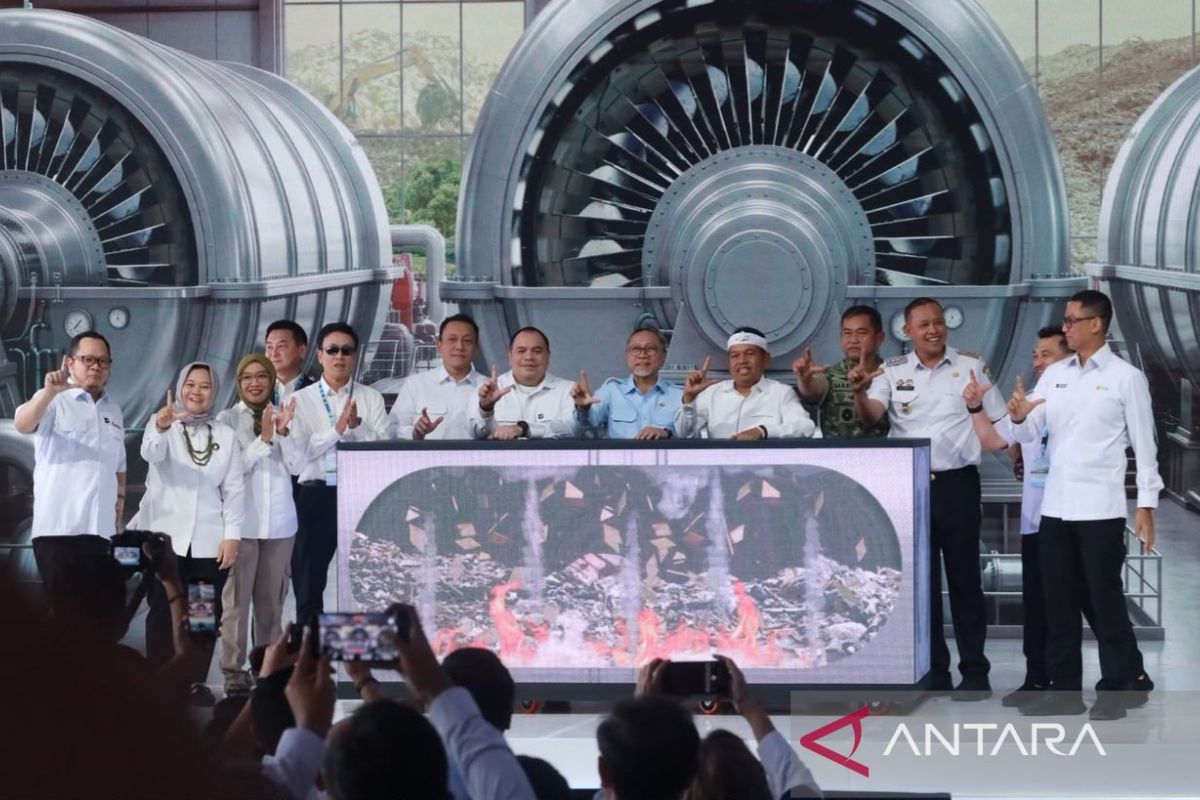
The Bekasi City Government in West Java has urged all residents to help resolve the waste problem as additional support for the construction of the Waste-to-Energy (PSEL) facility in Ciketing Udik, Bantargebang District.
Bekasi Mayor Tri Adhianto Tjahyono stated that the PSEL facility, inaugurated today with a target to operate within the next 18 months and a waste processing capacity of 1,500 tonnes per day, is not yet sufficient to resolve the community’s waste production problem.
“The presence of PSEL is one of the important steps in addressing the waste problem in Bekasi City. However, this capacity is not yet fully able to solve the waste problem generated every day. There is still around 300 tonnes of waste that we must resolve together,” he said in Bekasi on Wednesday.
According to him, resolving the waste problem cannot rely solely on the construction of the PSEL facility. The community must also be involved through the habit of sorting waste at the source, especially from their own homes.
“As conveyed by the Coordinating Minister for Food, this does not mean the waste problem is solved. It still needs to be supported by sorting from our own homes. If we start sorting from our respective residences, it will certainly reduce the problem of 300 tonnes of waste every day,” he said.
Tri emphasised that efforts to resolve the waste problem must be carried out collectively and not only at the household level. Waste sorting also needs to be implemented in schools, shopping centres, offices, trading areas and among traders.
West Java Governor Dedi Mulyadi also expressed hope that waste development and management in the Greater Bekasi, Greater Bogor and Greater Bandung areas can become a momentum to increase public awareness. The waste problem is considered to require not only technology but also behavioural change so that people no longer litter.
Meanwhile, Coordinating Minister for Food Zulkifli Hasan said that the development of large-scale PSEL technology is one of the government’s important instruments in addressing the accumulation of urban waste that has exceeded capacity.
The government is targeting the acceleration of PSEL construction in 40 major cities experiencing waste emergency conditions to be completed by 2027 to 2028. “Those that are in emergency and large-scale, above 1,000 tonnes, we will build PSEL or Waste to Energy,” he said.
Zulkifli also targets the national waste problem to be addressed by 70-80 percent by 2029. Meanwhile, around 20 percent of other problems are at the household level and require education and changes in community habits.
Therefore, waste sorting at the source is an important part of the government’s strategy. Organic and inorganic waste is expected to be sorted from the kitchen so that not everything is mixed and ends up becoming a burden at disposal sites.