
Beijing Responds to US Fact Sheet on Xi-Trump Meeting Outcomes
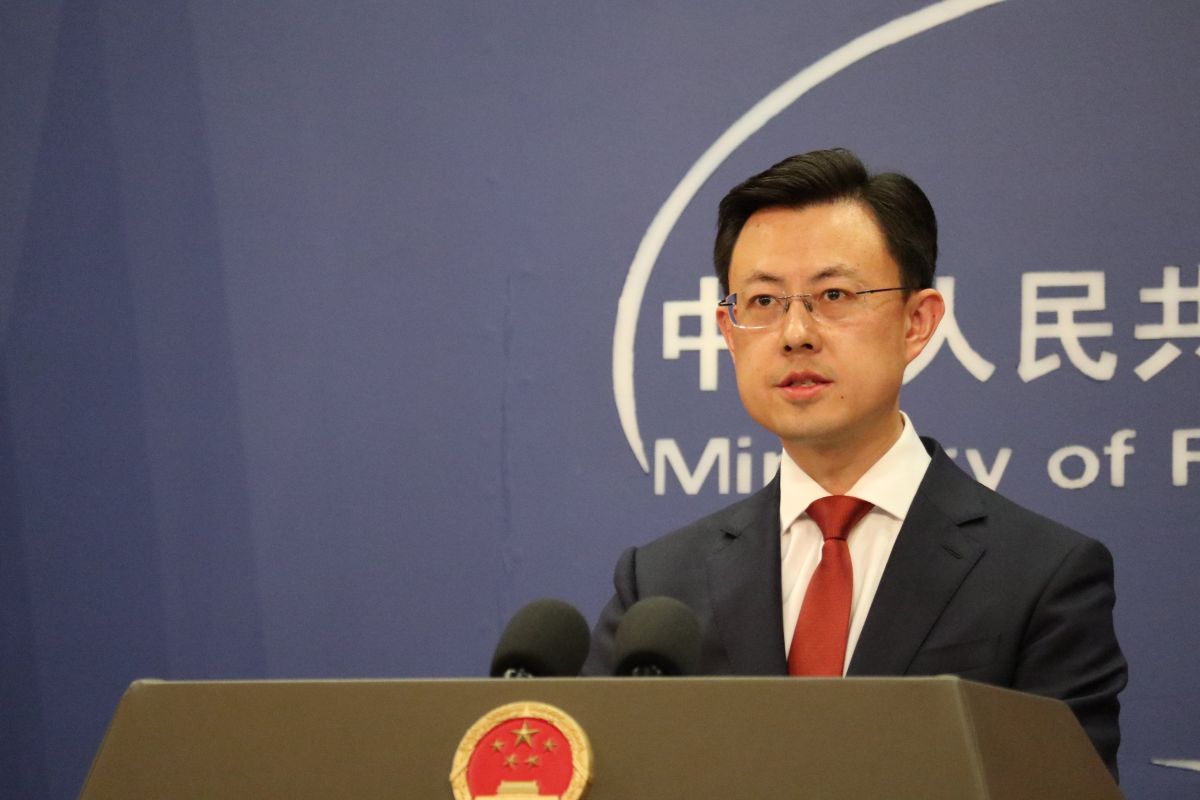
Beijing’s Ministry of Foreign Affairs responded to the White House’s statement describing a number of agreements as the outcome of the meeting between President Xi Jinping of China and President Donald Trump of the United States. “During President Trump’s visit to China, the two presidents held in-depth discussions on China-US economic and trade relations, signalling direction and providing safeguards for economic and trade cooperation between the two countries,” Foreign Ministry spokesperson Guo Jiakun said at a press conference in Beijing on Wednesday. He made the remarks in response to journalists’ questions about the White House statement claiming that China agreed to buy US agricultural products worth $17 billion annually through 2028, excluding soybeans. “Guided by the shared understanding of the two presidents, China and the US will soon lock in negotiations and work together to ensure their implementation, providing greater certainty and stability for bilateral and global economic and trade cooperation,” added Guo Jiakun. The White House had previously issued a “Fact Sheet” stating that President Donald Trump had secured a historic agreement with China, delivering benefits to workers, farmers, and industry in America. The document said that the US and China would form two new bodies to optimise bilateral economic relations: the US-China Trade Agency to manage bilateral trade across all non-sensitive goods, and the US-China Investment Agency as an intergovernmental forum to discuss investment-related issues. China would also respond to US concerns about restrictions on the sale of equipment and technology for production and processing of rare earth metals. China then agreed to an initial purchase of 200 Boeing aircraft for Chinese carriers. China would also buy at least $17 billion per year of US agricultural products during 2026-2028, in addition to the soybean purchase commitment made in October 2025. China would restore market access for US beef by updating the list of more than 400 US beef facilities and adding new facilities, and lifting all suspensions on US beef facilities. China would continue importing poultry from US states certified as free of avian flu. On international issues, Trump and Xi were said to agree that Iran must not have nuclear weapons, call for reopening the Hormuz Strait, and agree that no country or organisation should be allowed to levy tolls. President Trump and President Xi also reaffirmed their shared goal of denuclearising North Korea. “China has clearly stated its consistent position on Iran, on the nuclear issue on the Korean Peninsula, and on other issues, and urged the US to respond seriously to the legitimate concerns of the parties involved and to remain committed to dialogue and negotiations for peaceful settlement,” Guo Jiakun added. The two countries’ economic and trade teams, Guo Jiakun said, held talks in a spirit of equality, respect, and mutual benefit, producing outcomes that stabilise China-US economic and trade relations and address each side’s concerns appropriately. “China is ready to cooperate with the US to fully and accurately implement the understandings reached between the two presidents, enhance dialogue, broaden cooperation, address differences and sensitive issues appropriately, adding a new dimension to the vision of building a constructive and strategically stable China-US relationship, and to promote the development of a stable, healthy, and sustainable China-US relationship,” Guo Jiakun said. Regarding the situation on the Korean Peninsula, Guo Jiakun stressed that China’s position remains consistent. “China has played a constructive role in its own way in advancing a political settlement of the issue. We are committed to urging the parties involved to address the root causes and core issues of the Korean Peninsula and to take constructive steps to ease tensions,” Guo Jiakun added. On the AI issue, Guo Jiakun said both China and the US need to work together to promote development and strengthen governance of AI to ensure that AI contributes more to social progress and the welfare of the international community. “During President Trump’s visit to China, the two heads of state held constructive exchanges on AI and agreed to launch intergovernmental dialogue on AI,” Guo Jiakun said.