
Beijing Fumes as Chinese Giants Are Placed on US Blacklist
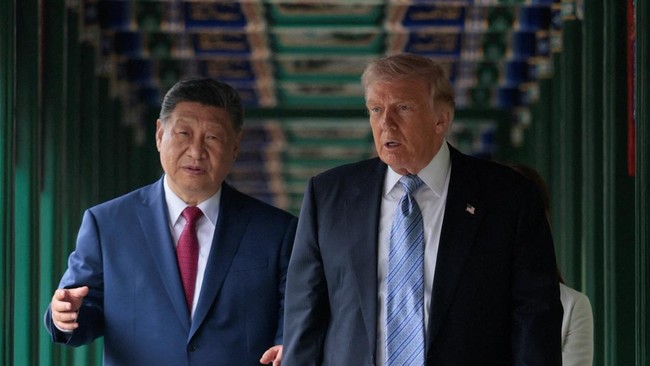
Several Chinese technology giants have been placed on a new United States ‘blacklist’, with the likes of Alibaba, Baidu, BYD, and Nio named as entities deemed to be assisting the Beijing military. This move threatens to further sharpen geopolitical tensions between the world’s two largest economies, less than a month after President Donald Trump and President Xi Jinping met in Beijing to extend the US-China trade truce.
This brings an increasing number of Chinese firms, particularly in the technology sector, onto the US blacklist. It highlights Washington’s broadening national security concerns amid intensifying geopolitical competition with China. The updated list, known as the 1260H or CMC list, was originally uploaded by the Pentagon in February 2026 during a postponed Trump visit to China but was subsequently removed with scant public explanation.
The latest version, published on Monday, shows names similar to those written in the February 2026 list, including two Chinese memory chip giants, CXMT and YMTC. Other Chinese firms on the list include the biotechnology company WuXi AppTec, AI-based robot maker RoboSense Technology, and Unitree, a veteran Chinese robotics and humanoid company.
Alibaba stated there was no basis for the US government to place it on the list. ‘Alibaba is not a Chinese military company or part of a military strategy. We will take all legal actions to fight this,’ the company said. WuXi AppTec responded that the listing was erroneous and also intends to take legal action to oppose the US government provision. Baidu issued a similar statement, saying the perception that it is a military company is completely wrong. ‘We will not hesitate to use the various options available to remove our company from this list,’ Baidu said. BYD, CXMT, YMTC, RoboSense, Unitree, BOE Technology Group, Tianma Microelectronics, and TP-Link Technologies did not immediately respond to requests for comment.
The Chinese Embassy in Washington condemned the US government’s action, vowing to fight various discriminatory actions against Chinese companies and to observe local regulations and law. ‘The US should stop its wrong practices and creating an unfair and discriminatory climate for Chinese firms,’ an embassy spokesperson said in a statement. Although the list does not formally impose sanctions on the Chinese companies, under recent US law, the Department of Defense will be banned from the end of this month from directly contracting with entities on the list, and from purchasing their products or services through third parties from 2027.
In a filing to the Hong Kong stock exchange, electric vehicle maker Nio said it would not be affected by the procurement restrictions, whilst Alibaba said the listing would not affect its ability ‘to conduct business as usual in the US or anywhere in the world.’ The steps could impose material costs on the Chinese firms and their partners. Inclusion on the list also sends a potentially damaging message to Pentagon suppliers and other US government agencies about the military’s view of the companies. Craig Singleton, a China expert at the Foundation for Defense of Democracies in Washington, said the list’s publication serves as a post-summit reality check on the escalating US-China rivalry. ‘Washington is no longer treating these companies as isolated firms. They are treating the entire technology stack as something that is strategically contested,’ Singleton said.
Source: jawawa.id (https://jawawa.id/newsitem/beijing-fumes-as-chinese-giants-are-placed-on-us-blacklist-1780995255)
Originally published by CNBC Indonesia (https://www.cnbcindonesia.com/tech/20260609125215-37-741354/raksasa-china-ramai-ramai-masuk-daftar-hitam-beijing-ngamuk), translated from Indonesian