
BEI and OJK Can Learn from How the US, UK and India Protect Their Stock Markets
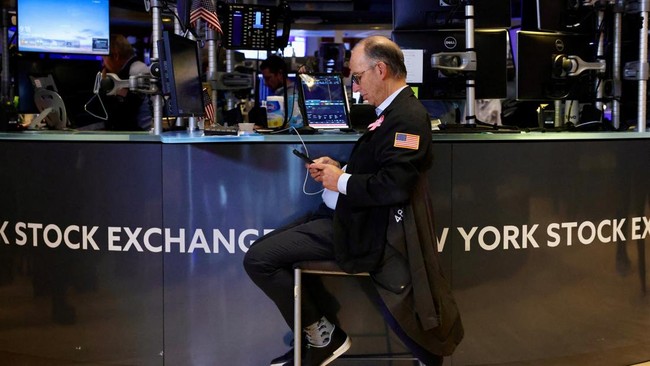
Jakarta, CNBC Indonesia – Changes to Indonesia’s capital market are broadening. Disclosure of shareholders with stakes above 1%, a minimum free float of 15%, tracing beneficial owners and plans to remove highly concentrated shares from the IDX Composite (IHSG) are among the adjustments.
Compared with the United States, the United Kingdom, Hong Kong, India and Singapore, Indonesia provides more detailed disclosure in certain areas. However, other markets also impose strict requirements, ranging from the value of shares held by the public and the number of shareholders to trading restrictions.
Indonesia: Ownership disclosed above 1%
Indonesia publishes information on shareholders with ownership of more than 1%. Affiliation information, added on 19 October, is intended to clarify shareholders’ relationships with controlling parties.
A UBO, or ultimate beneficial owner, is the party that ultimately benefits from or controls ownership.
Under rules explained by the Financial Services Authority (OJK), beneficial ownership information for shareholders with stakes of at least 10% is available through a specific access procedure; it is not all freely accessible to the public.
The 15% minimum free float has a transition period for compliance. Meanwhile, the 39 categories refer to the total classifications and investor types in KSEI ownership data. Their number cannot be directly equated with those of other countries because the structures and purposes of the classifications differ.
HSC, or high shareholding concentration, indicates that shares are concentrated among a small number of holders. The Indonesia Stock Exchange (BEI) has announced that it will remove HSC shares from the IHSG calculation. Removal from an index is different from delisting, and the announcement should be distinguished from its implementation.
For trading, the minimum price on the regular and cash markets has been lowered to Rp1. The 7% auto-rejection lower limit (ARB) caps daily declines according to the applicable price groups and periods. The Special Monitoring Board (PPK) has its own placement criteria and trading mechanism.
United States: At least US$40 million in publicly held shares
The US uses beneficial ownership reporting through Schedule 13D or 13G, generally triggered when ownership exceeds 5%. The assessment takes voting rights or investment authority into account.
Group filings relate to reporting by groups of owners. This mechanism differs from publishing affiliation information for all shareholders with stakes above 1%.
For the NYSE IPO or spin-off route used in this comparison, requirements include at least 1.1 million publicly held shares worth US$40 million, and 400 holders in North America, each owning at least 100 shares. The initial listing price must be at least US$4.
The requirements for the number and value of shares apply simultaneously. At a price of US$10, for example, 4 million publicly held shares would be needed to reach US$40 million. The percentage depends on the company’s total share count. The US$4 figure is an initial listing requirement, not a universal ban on transactions below that price.
For indices, the 10% figure refers to a minimum investable weight factor (IWF) of 0.10 for prospective S&P 500 constituents; other requirements still apply.
Limit Up-Limit Down (LULD) uses price bands based on a moving reference and can trigger a trading pause. This differs from a fixed daily decline limit such as ARB.
United Kingdom: Disclosure from 3%, public float of 10%
DTR 5, part of the Disclosure Guidance and Transparency Rules, governs notification of voting-right holdings. For UK issuers covered by this comparison, the threshold starts at 3%.
The rules cover direct and indirect voting rights, so their scope is not identical to Indonesia’s UBO requirements.
For the equity shares-commercial companies listing category, the minimum proportion of shares held by the public is 10%. FTSE UK also uses a 10% minimum free float for UK and non-UK companies from the June 2026 review, alongside other requirements.
Price monitoring checks price movements against tolerance limits. Certain breaches can temporarily halt regular trading or extend an auction.
Tick size is the smallest permitted price movement, not a minimum share price. The UK also has suspension mechanisms, but no board identical to Indonesia’s PPK.
Hong Kong: Tiered public float; HSC shares excluded from indices
Part XV of the Securities and Futures Ordinance governs the disclosure of interests in shares. For the major-interest holders covered by this comparison, the threshold starts at 5%.
The general public-float requirement for a Main Board listing is based on the market value of the class of shares being listed. For a value of up to HK$6 billion, the minimum public float is 25%.
For values above HK$6 billion and up to HK$30 billion, the public float must be at least 15% and worth at least HK$1.5 billion. For values above HK$30 billion, the requirement is at least 10% and a minimum value of HK$4.5 billion.
The rules also require at least 300 shareholders. The three largest public shareholders may not hold more than 50% of the public float at listing.
Hong Kong offers a direct comparison for HSC. Companies subject to an HSC announcement by the Securities and Futures Commission (SFC) are ineligible for inclusion in the Hang Seng index family. Existing constituents are removed at the next monthly rebalancing, in line with the guidelines.
A company may be considered for inclusion again after meeting the requirements for resolving the concentration and completing a 12-month observation period.
For volatility, the Volatility Control Mechanism (VCM) uses trigger thresholds of 10%, 15% or 20% for certain stocks, compared with the reference price five minutes earlier. A trigger starts a five-minute cooling-off period.
The HK$0.01 figure refers to the lowest price for a board lot. Smaller trades can take place on the odd-lot market.
India: Disclosure at 1%, tiered surveillance
India discloses the names of public shareholders with holdings of 1% or more in shareholding-pattern reports.
“Promoter group” is a category used to identify a group of promoters under the regulator’s definition. India also requires disclosure of significant beneficial ownership (SBO).
The minimum public shareholding is generally 25%, although initial offering requirements and deadlines for compliance may differ according to a company’s size and category.
For the Nifty index, float weighting uses the investible weight factor (IWF). Excluded strategic holdings do not receive the same weighting as public shares.
Price bands cap price movements. The National Stock Exchange of India (NSE) uses daily limits of 2%, 5%, 10% and 20%, with certain exceptions for stocks that have derivatives products.
The Additional Surveillance Measure (ASM) and Graded Surveillance Measure (GSM) are additional, tiered oversight tools. At certain GSM stages, margins can reach 100%, the price band can be 5% or lower, and trading can be restricted to once a week.
Singapore: IPOs require a 12–25% public float
Singapore uses a 5% threshold to identify substantial shareholders under the rules covered by this comparison.
“Deemed interest” means that an interest in shares can be attributed to someone under the law even if they are not the registered holder. This helps identify indirect ownership; it does not mean all UBO information is made public.
For an IPO on the SGX Mainboard, the minimum public float depends on market capitalisation. Companies with a market capitalisation below S$300 million need a public float of at least 25%. For capitalisations of S$300 million to less than S$400 million, the threshold is 20%.
For capitalisations of S$400 million to less than S$1 billion, the minimum public float is 15%. Companies with a capitalisation of S$1 billion or more are subject to a 12% threshold. Each category requires at least 500 shareholders.
After listing, Rule 723 requires at least 10% of shares to be held by the public. At index level, the Straits Times Index (STI) excludes companies with a free float of 15% or less. This means that eligibility for the STI requires a free float of more than 15%, in addition to other criteria.
For trading, low-priced shares within the specified range use a tick size of US$0.001. The circuit breaker applies a band of ±10% against the reference price and a five-minute cooling-off period for covered instruments.
Trade with Caution (TWC) is a warning for investors to exercise care. SGX also uses suspensions and other surveillance measures.
Singapore removed its Minimum Trading Price (MTP) rule for Mainboard issuers from 1 June 2020. However, MTP was a listing-eligibility framework, so its removal is not equivalent to lowering Indonesia’s Rp50 transaction-price floor.
The comparison shows that Indonesia has already made wide-ranging adjustments. However, ownership thresholds, the value of publicly held shares, the number of shareholders and trading restrictions measure different things. Any assessment of how strict a market is must consider both the figures and the scope of the rules.
Source: jawawa.id (https://jawawa.id/newsitem/bei-and-ojk-can-learn-from-how-the-us-uk-and-india-protect-their-stock-markets-1792489876)
Originally published by CNBC Indonesia (https://www.cnbcindonesia.com/research/20261020140828-128-777866/bei-ojk-bisa-belajar-ini-cara-as-inggris-india-selamatkan-pasar-saham), translated from Indonesian