
Behind the strengthening of the rupiah and the IHSG
After months dominated by anxiety, investor attention has begun to shift towards the long-term prospects conveyed directly by the government. Not through media reports or press conferences, but delivered directly by the top leadership.
The rupiah reached its weakest point in more than a quarter of a century at the close of trading on 8 June 2026. The Indonesian currency breached the psychological level of Rp18,000 per US dollar and closed at Rp18,188 per US dollar, surpassing the lowest point recorded during the 1998 monetary crisis, which was around Rp16,850 per US dollar.
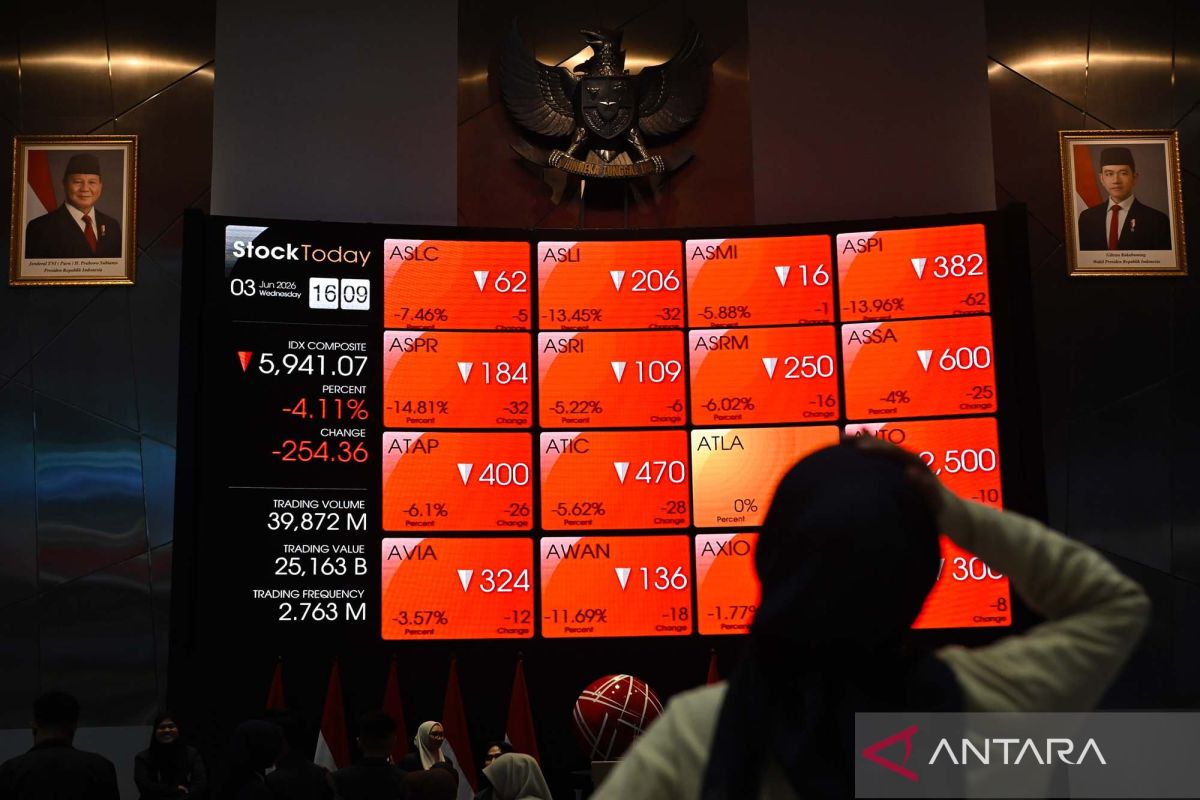
At the same time, the Indonesian stock market was also under severe pressure. After briefly hitting an all-time record high of 9,174 in January 2026, the Jakarta Composite Index (IHSG) lost nearly a third of its value in just a matter of months. Among major Asian bourses, the IHSG’s decline since the start of the year was the deepest.
Initial pressure did come from abroad. Conflict in the Middle East threatening energy shipping routes through the Strait of Hormuz pushed world oil prices soaring to the range of 93–94 US dollars per barrel, far above the 2026 state budget assumption of 70 US dollars. Simultaneously, the United States’ high interest rate policy maintained the dollar’s strength and pulled global capital flows back into dollar-denominated assets.
However, the market was not merely reacting to external factors. The rupiah’s depreciation, which was deeper than that of several neighbouring countries’ currencies, indicated that investors were also scrutinising domestic risks.
Capital outflow was the clearest cause of this process. Foreign investors sold off large amounts of shares and government bonds, then converted their funds into US dollars before moving them to other markets. By early June 2026, the net foreign outflow from the Indonesian stock market had exceeded Rp61 trillion.
The IHSG’s weakening was already severe when MSCI removed six Indonesian stocks from its benchmark index and simultaneously froze the addition of new issuers in January 2026. As if that were not enough, MSCI, which normally reviews its stock recommendations for global investors in May, did not conduct the review at all. This decision forced a number of global fund managers tracking the MSCI index to adjust their portfolios by selling the affected stocks without having the room to rebalance into other Indonesian issuers.
The weakening of the IHSG and the rupiah exchange rate triggered a swift response from authorities. On 9 June, Bank Indonesia took the rarely used step of raising the BI Rate outside its regular meeting schedule, from 5.25 percent to 5.50 percent. The impact was visible over the following two days, as the rupiah strengthened back to the range of Rp17,800–Rp17,900 per US dollar.
The IHSG also recorded a recovery of more than 10 percent, driven by coordinated buyback actions on state-owned banking stocks. This step was taken through an emergency mechanism without waiting for a General Meeting of Shareholders, based on regulatory direction from the relevant authorities.
The recovery occurred after Indonesian market valuations had undergone a very deep correction. Danantara CEO Rosan Roeslani stated that domestic share prices had reached extremely cheap levels after the market decline hit up to 40 percent in recent months.
For long-term investors, phases like this often change the perspective on risk. When asset prices fall much faster than changes in economic fundamentals, market attention begins to shift from the potential for losses towards opportunities for accumulation.
A similar view was expressed by Danantara COO Dony Oskaria. According to him, the market strengthening that was beginning to appear reflected growing investor confidence in Indonesia’s long-term prospects, which remain supported by strong economic foundations.