
Behind the Scenes of Digital Social Protection Making Welfare Assistance More Effective
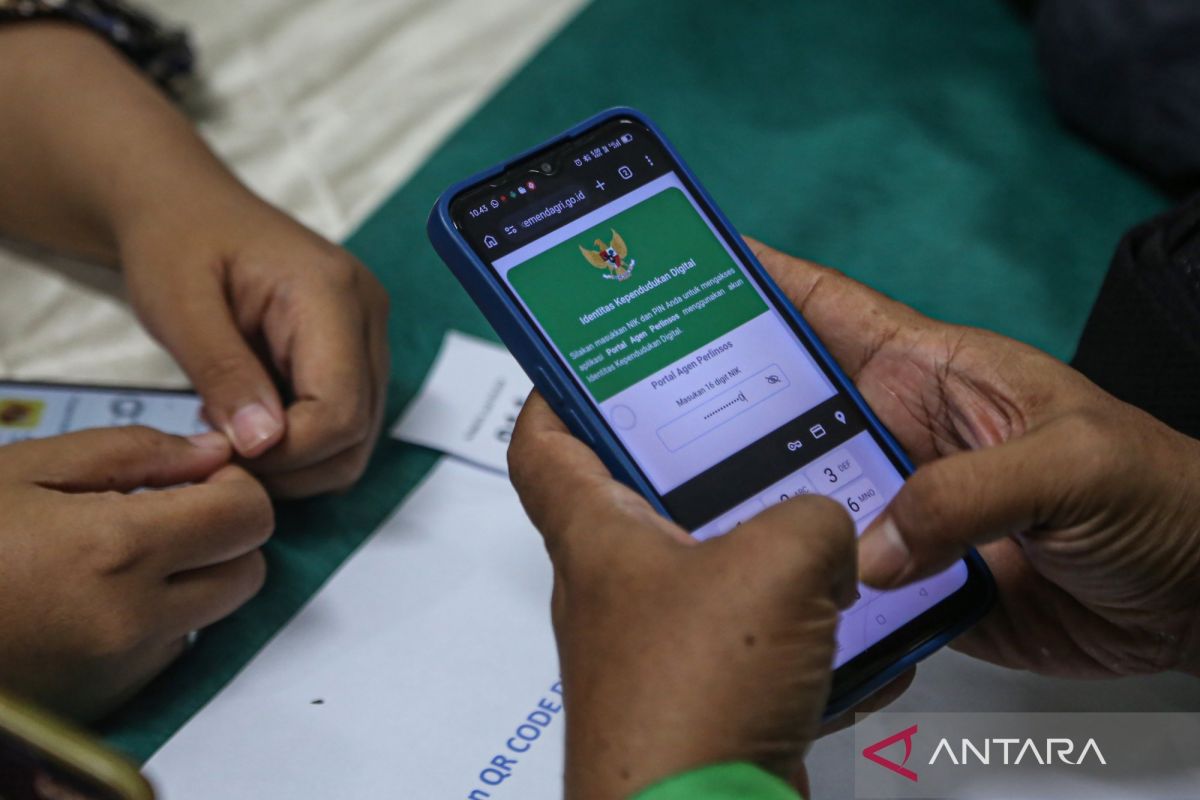
Jakarta (ANTARA) – The Government began piloting its digital Social Protection (Perlinsos) programme in early 2026.
The programme is not being run by the Social Affairs Ministry alone; it also involves several other ministries and agencies, with the shared goal of ensuring that social assistance reaches the right people.
By Thursday (5 November), the Social Affairs Ministry’s data showed that 18,213,466 households had been registered in the digital social protection system.
The smooth operation of the programme marks an important milestone: digital social protection is the Government’s first initiative to integrate data across ministries and agencies in order to provide the public with digital services that are straightforward and fast.
Through this integration, people no longer need to repeatedly navigate administrative procedures that were often a source of complaints before digitisation, as they could take considerable time and money.
In his state address at the 2026 Annual Session of the People’s Consultative Assembly (MPR) and the Joint Session of the House of Representatives (DPR) and Regional Representative Council (DPD) in August 2026, President Prabowo Subianto said that testing of the digital welfare assistance programme had shown recipient data could be verified in minutes, compared with the 75 to 200 days it could take previously.
The President also said that the programme had reduced costs, both financial and in time, and no longer burdened welfare recipients seeking assistance to which they were entitled.
So how does the integration behind the digital social protection programme work?
“Data highway”
The Communications and Digital Ministry (Kemkomdigi) plays an important role in integrating data from the ministries and agencies involved in the digitisation programme.
Through its Directorate General of Digital Government Technology (Ditjen TPD), Kemkomdigi has created a “data highway” to ensure that integration between ministries and agencies runs smoothly.
“It is essentially the backbone for data exchange, connecting the application systems of each ministry and agency so that data can flow and be standardised,” Yessi told reporters at a discussion on digital social protection.
All ministries and agencies connected to the programme can exchange information automatically without giving up ownership of their respective data.
In the Government’s pilot project, the system has linked data from the Social Affairs Ministry; the Directorate General of Population and Civil Registration (Ditjen Dukcapil) at the Home Affairs Ministry; the Ministry of Agrarian Affairs and Spatial Planning/National Land Agency (ATR/BPN); the Health Care and Social Security Agency (BPJS Kesehatan); the Workers’ Social Security Agency (BPJS Ketenagakerjaan); state electricity company PLN; the Indonesian National Police (Polri); and the National Civil Service Agency (BKN).
The Social Affairs Ministry matches data from these institutions to verify information about people who may receive social assistance.
This includes home and vehicle ownership as indicators of household assets, employment status to establish whether an applicant is a civil servant, and electricity consumption as an indicator of household conditions.
Taken together, the data exchange has improved the efficiency of social assistance distribution, helping ensure it reaches those who genuinely need it.
By the end of October 2026, Kemkomdigi recorded an average of 382,000 household registrations per day on the digital social protection service during the month.
The digital system also allows users to challenge or correct their data if it does not reflect their current circumstances. This is in line with the transparency principles underpinning the service.
The availability of the Government Service and Data Exchange System (SPLP) makes data sharing and integration easier, helping the digitisation process run smoothly.
“The goal is for the SPLP to become a national data-exchange platform that eliminates data fragmentation, safeguards security standards, transparency and governance, and improves bureaucratic efficiency,” Yessi said.
Regular testing
Kemkomdigi continues to test the system regularly to ensure it is ready for wider national access.
In the latest tests, conducted at the end of October 2026, the SPLP—the hub for exchanging data for digital welfare assistance—was found to be capable of serving 600,000 households in a single day.
Two testing methods are being used: stress testing and load testing. Testing will not stop after a single trial; it will be conducted regularly, including after the programme is rolled out more widely.
Capacity testing is crucial to maintaining a good user experience when people access the service.
If applications exceed the system’s maximum capacity, it is designed to avoid going down or displaying 404 or 504 error codes.
Instead, the system will automatically detect that it has reached its limit and display a warning asking people to try again later, much like a queueing system.
Yessi said regular testing is also needed to align the systems used by different ministries and agencies, so the Government can understand their limitations.
“I have said that ministries and agencies have different characteristics. Their governance differs, and so does the resilience of their systems. We need to bring them into line so that one system does not get stuck while another is operating at high or low capacity; we need to work out a solution,” she said.
The testing is also in line with guidance from Communications and Digital Minister Meutya Hafid, who said in September 2026 that system capacity was a top priority for ensuring the digital social protection programme ran smoothly.
“Services must be reliable. We know that around 50 million people may access this portal at the same time,” Meutya said after a coordination meeting on preparations for the national rollout of expanded digital social protection pilots at the National Economic Council office in Central Jakarta on Thursday (10 September).
Data accuracy and the readiness of the integration system are vital to digital social protection.
If successful, the programme could demonstrate that government services can be digitised on a wider scale and extended to more programmes.
It is therefore important to ensure that the programme runs smoothly and to support broader access to digital social protection services for everyone entitled to them.
Source: jawawa.id (https://jawawa.id/newsitem/behind-the-scenes-of-digital-social-protection-making-welfare-assistance-more-effective-1794293488)
Originally published by Antara (Indonesian) (https://www.antaranews.com/berita/5843567/mengenal-di-balik-layar-perlinsos-digital-yang-buat-bansos-efektif), translated from Indonesian