
Behind the Rupiah's Fluctuations: A Reflection of Indonesia's Economic Foundations
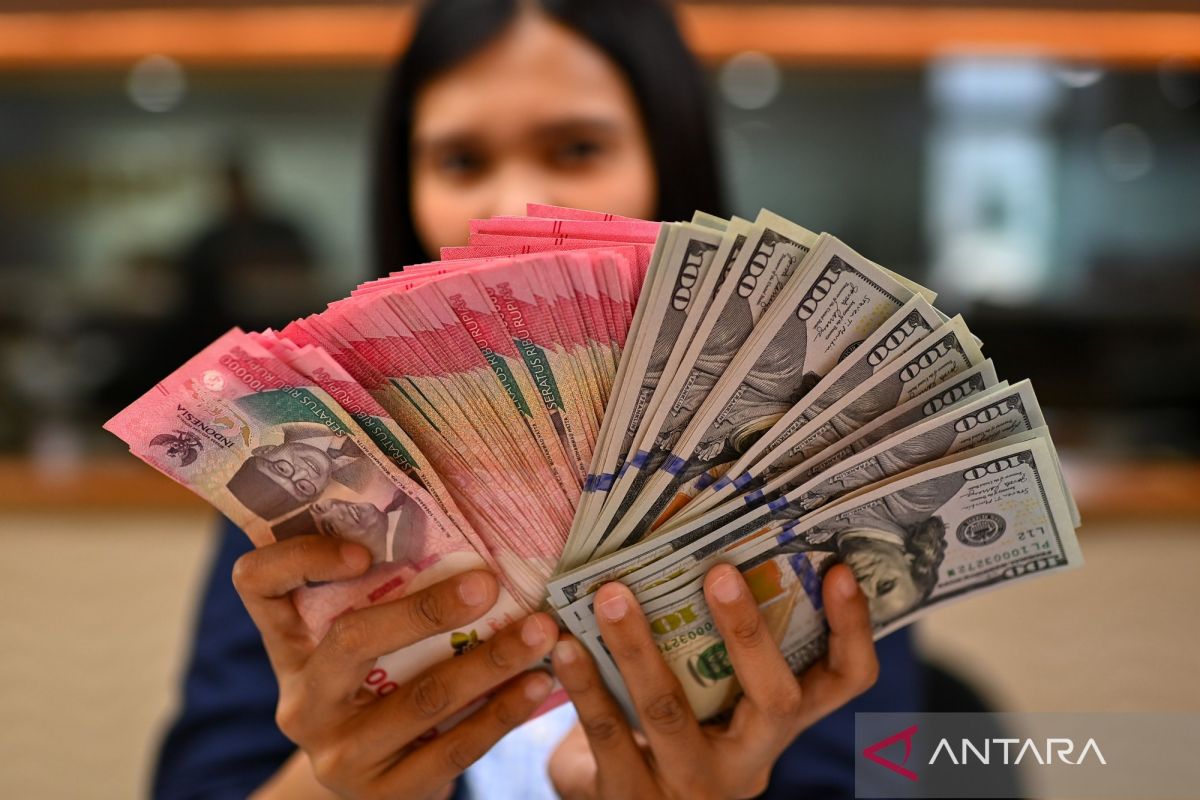
The weakening of the rupiah is more than just a figure on a foreign exchange trading screen; it is a signal inviting the nation to examine its economic condition more honestly and comprehensively. While exchange rates are often viewed as the domain of economists, bankers, or financial market participants, the movement of the rupiah actually touches the daily lives of the people. When the rupiah weakens, the price of imported goods increases, production costs rise, energy prices potentially climb higher, and the operational space for businesses becomes increasingly constrained.
Consequently, every time the rupiah records a new period of depreciation, the worthy question is not merely what is happening in the global market, but also what is occurring domestically. In the last two years, the rupiah has lost nearly 15 per cent of its value against the US dollar. From approximately Rp15,400 per US dollar at the end of 2023, the exchange rate breached Rp17,500 in mid-May 2026 and continued towards the Rp17,900 range by the end of May.
Each depreciation is typically explained through various external factors, ranging from high interest rate policies by the US central bank and geopolitical tensions in the Middle East to disruptions in global energy trade routes. While these explanations are well-founded, an equally important question remains: why does the same pressure often result in a greater impact on the rupiah compared to the currencies of several neighbouring countries?
This question leads to a more fundamental issue: the quality of the national economic foundation. The weakening of the exchange rate does not always merely reflect short-term volatility. In many cases, it also acts as a mirror reflecting various long-standing structural problems that have not yet been fully resolved. When global conditions worsen, previously hidden vulnerabilities become more visible.
One notable indicator to observe is the exchange rate assumption in the 2026 State Budget (APBN), which was set at Rp16,500 per US dollar. As market realisation moves far above this figure, questions arise regarding the accuracy of planning and the ability to interpret both global and domestic economic developments. A discrepancy of more than Rp1,400 per dollar is not merely a numerical difference in budget documents, but a signal that reality is moving faster than the projections used as the basis for policy.