
Behind the Questions of the 2026 Economic Census
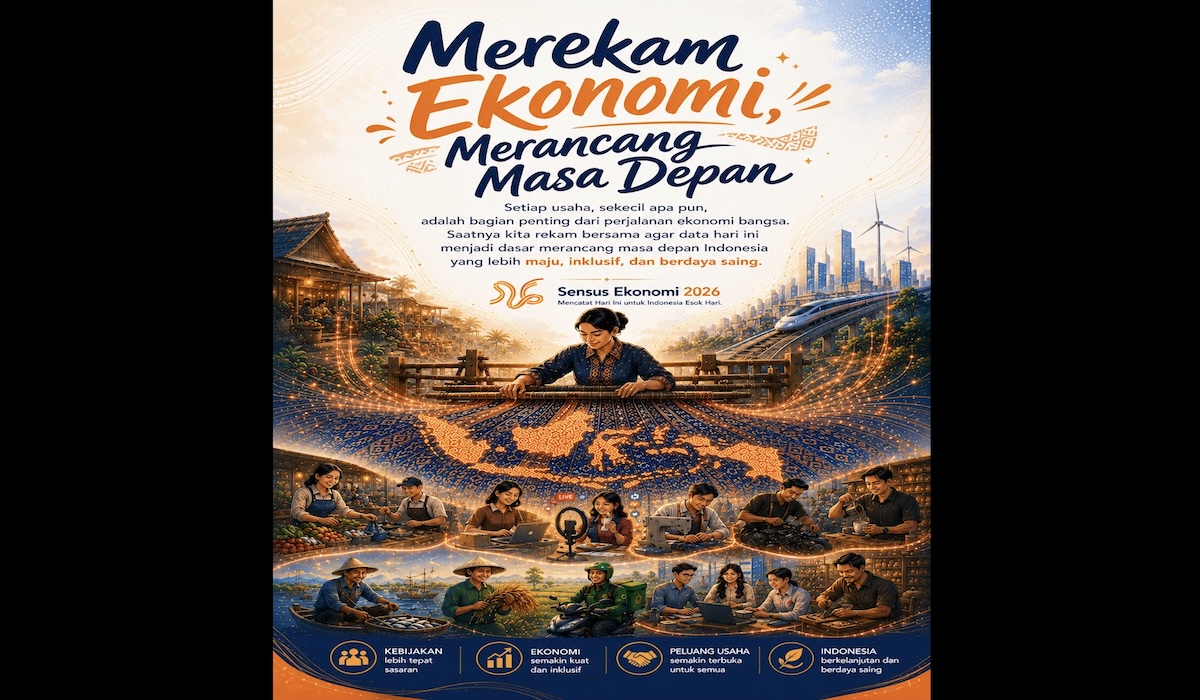
Many respondents have expressed concerns regarding the highly detailed nature of the questions in the 2026 Economic Census (SE2026). Respondents have questioned why officers need to know specific details such as business types, number of employees, production facilities, and assets. Some have even expressed fears that this information might be used for wealth assessment or taxation purposes.
These concerns are understandable. However, if the Economic Census only asked, “Do you have a business?”, the answer would confirm a business exists but fail to explain its nature. A business using a single sewing machine is fundamentally different from a garment factory employing dozens of workers. Similarly, a home-based shop differs from an online enterprise processing thousands of daily transactions via digital platforms. These distinctions are essential for statistics to accurately represent the business world.
This is why the Economic Census does not merely record the existence of a business but also gathers information to explain its characteristics and capacity. More detailed questions allow for the differentiation of businesses within the same sector. This granular data helps explain the scale, capacity, and specific characteristics of various enterprises.
The 2026 Economic Census is designed to be more comprehensive than previous iterations. In addition to documenting business actors, this census will also record the economic conditions of households as part of an effort to understand the Indonesian economy more holistically. The business sector and households influence one another; understanding both simultaneously provides a more complete picture of the national economic condition.
Furthermore, data regarding assets is not used to assess the personal economic standing of respondents nor as a basis for tax calculations. The focus remains on understanding the structure and capacity of businesses and households so that the resulting statistics provide an accurate characterisation.
The public need not worry about the confidentiality of the information provided. All respondent data is protected by law and is used solely for the compilation of official statistics. The BPS does not publish individual or specific business data.
As the way people conduct business continues to evolve—moving from traditional market stalls to marketplaces—the census must adapt. The BPS has officially launched the 2026 Economic Census (SE2026) with a new focus on the digital economy and the agricultural sector to capture the structure of the national economy.
Source: jawawa.id (https://jawawa.id/newsitem/behind-the-questions-of-the-2026-economic-census-1782478243)
Originally published by Media Indonesia (https://mediaindonesia.com/ekonomi/904751/di-balik-pertanyaan-sensus-ekonomi-2026), translated from Indonesian