
Behind the Pulse of 112 Surabaya
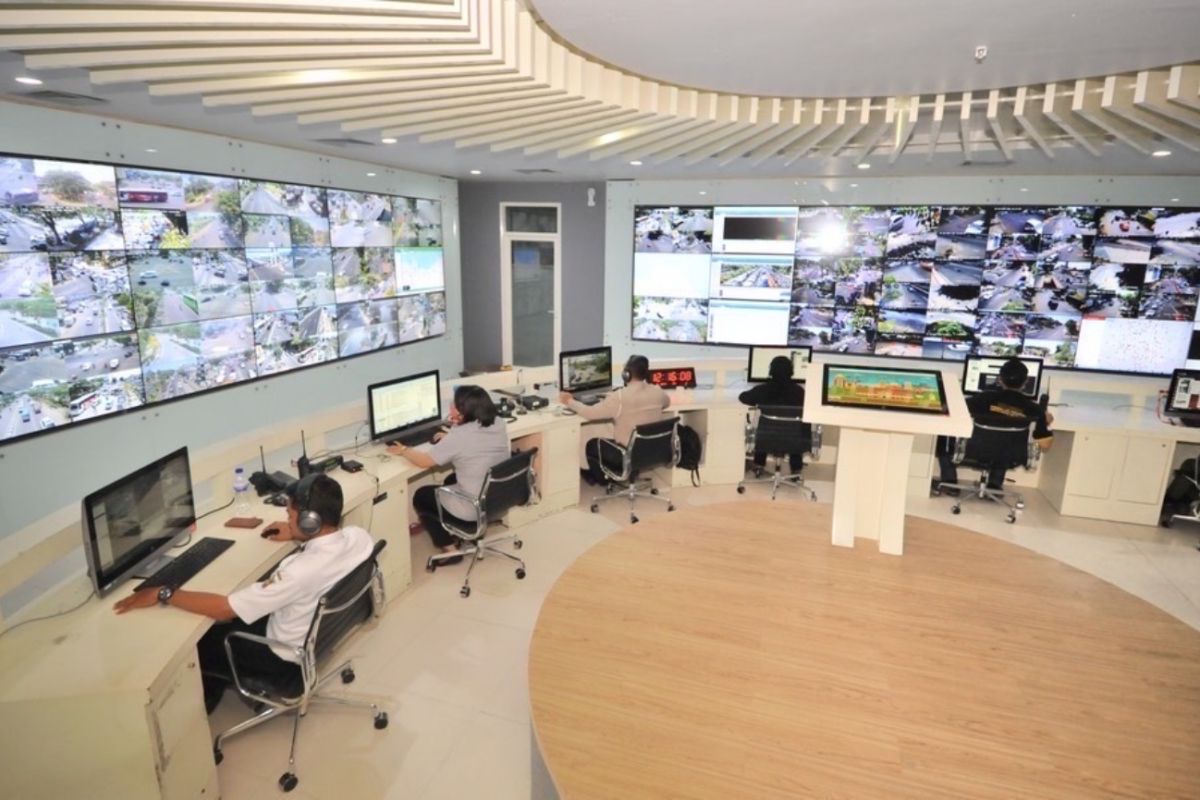
Surabaya — Large cities are never truly free from emergencies. Accidents can occur amidst heavy traffic, fires can break out in residential areas, and citizens may suddenly require medical assistance. Simultaneously, other reports may arrive from different locations with equally urgent needs.
In such situations, the Surabaya 112 Command Centre is tested not only by its ability to answer calls, but by how quickly reports are converted into decisions and how those decisions are translated into actual assistance. Inaugurated on 26 July 2016, the service was originally built to shorten the emergency reporting chain. After nearly a decade of operation, the measure of its success is no longer just the existence of the 112 number.
The next challenge is ensuring the entire underlying system becomes faster, more accurate, measurable, and capable of operating when multiple incidents occur simultaneously.
A Connected City
Institutionally, the Surabaya 11 and 2 Command Centre is more than just a call centre. Surabaya Mayor Regulation Number 20 of 2023 establishes it as an integrated control centre to receive information, reports, and public complaints, and to coordinate and manage their handling 24 hours a day.
This function is vital because emergencies almost always require more than one government element. A traffic accident may involve the Regional Disaster Management Agency (BPBD), medical personnel, the police, and traffic officers. A fire may require firefighters, ambulances, the police, and environmental management.
Therefore, the primary strength of 112 lies not just in its easy-to-remember number, but in its ability to connect various resources in a short period.
Based on the Surabaya City BPBD emergency dashboard accessed on 12 September 2026, there were recorded 643 medical emergencies, 312 traffic accidents, 286 incidents in other categories, 86 psychosocial cases, and 56 fires. These figures demonstrate that emergencies are a part of daily urban dynamics. Every report brings different needs, requiring operators to filter information, determine urgency levels, identify the nearest resources, and ensure that response efforts are actually underway.
The Surabaya City Government targets a maximum response time of seven minutes and approximately 6.5 minutes for fires. This target indicates that emergency services are moving from mere availability towards performance measurement.
However, speed should not stand alone. Officers who arrive quickly but bring resources that do not match the needs may not produce effective handling. In an emergency, the accuracy of the location, the type of incident, and the victim’s needs are just as important as the minutes elapsed.
Eyes and Movement
Technology serves as the eyes that help the control centre visualise the situation before officers arrive. Surabaya possesses thousands of CCTV cameras, 222 of which are monitored live through the 112 Command Centre room. Other cameras can be accessed when necessary to verify reports.
The value of CCTV lies not in the number of active screens, but in its ability to transform initial reports into a more complete picture. An accident report, for instance, can be supplemented with information regarding traffic congestion, vehicle positions, and the routes available for emergency vehicles to enter.
The same applies to fires. Visual information can help officers estimate initial conditions and determine resource requirements before personnel arrive on site.
The challenge remains that a city with many sensors is not automatically a safer city. Data is only valuable when it can accelerate decision-making. Consequently, Surabaya needs to move from being a city rich in devices to a city capable of processing information into action.