
Behind the Mecca Pact: Drones, Electronic Warfare, and Generals at the Command Centre
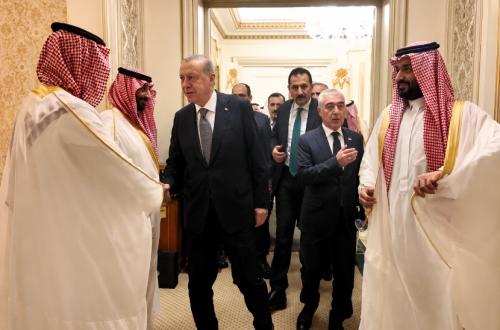
The deployment of Turkish and Pakistani troops to Saudi Arabia represents only one layer of the Mecca Pact. Behind this decision, three nations are building something far more complex: a joint political-military mechanism encompassing air defence, unmanned systems, electronic warfare, artificial intelligence, and joint weapons development.
Simultaneously, a permanent secretariat is being established in Riyadh. At the heart of this new structure is the retired Pakistani Lieutenant General Nauman Mahmood, an officer with a background in field command, intelligence, communication technology, and strategic military education.
Reuters has reported since August that Saudi Arabia, Turkey, and Pakistan are not designing the Mecca Joint Defence Agreement merely as a promise of mutual assistance in the event of an attack. The three nations are preparing a permanent mechanism that brings together foreign ministers, defence ministers, and military leaders to coordinate security policies.
The military agenda extends beyond troop deployment. According to Reuters, the cooperation plan includes joint exercises on land, sea, and air, air defence coordination, unmanned systems, electronic warfare, and the joint development and production of defence technology.
Artificial intelligence and autonomous systems are also part of the discussions. Consequently, the Mecca Pact is beginning to take shape as a defence ecosystem that integrates forces, technology, the weapons industry, and decision-making mechanisms.
Drones are a key component
Turkey holds a special position in this scheme. The NATO member has grown into one of the world’s significant exporters of military drones in recent years, while Saudi Arabia and Pakistan have both built close ties with Ankara’s defence industry.
Reports indicate that the Turkish company Baykar has sold drones to Saudi Arabia and is also involved in production within the Kingdom. Pakistan also operates Baykar-made drones and has built several warships based on Turkish designs.
This interconnectedness makes the Mecca Pact cooperation different from alliances that are just beginning to unify their weapon systems from scratch. Several industrial and technological cooperation channels among the members were already established before the trilateral agreement was signed.
Turkey also has significant economic interests in this expansion. The Turkish defence industry recorded exports worth approximately US$10.05 billion in the previous year, an increase of nearly half compared to 2024, with drones being one of its flagship products.
For Saudi Arabia, this technology has direct relevance. The Kingdom faces missile and drone threats from various directions, particularly after conflicts with the Houthis in Yemen escalated again.
The Associated Press reported that the Houthis have increased attacks in recent weeks using ballistic missiles, cruise missiles, and drones against Saudi oil facilities, airports, and military installations. Such threats make the integration of air defence and unmanned systems an operational necessity rather than merely a long-term project.
Electronic Warfare
Another component that is less frequently discussed is electronic warfare. Reuters explicitly included electronic warfare as one of the defence coordination sectors planned by the three nations.
Modern warfare no longer relies solely on the number of tanks, fighter jets, or missiles. The ability to disrupt enemy communications, disable drone navigation, detect radar emissions, and protect one’s own communication networks can determine whether weapon systems can function during an attack.
This is where the combination of the three nations’ capabilities becomes compelling. Turkey brings a base of technology and defence industry, Pakistan possesses military operational experience and a large armed forces structure, while Saudi Arabia provides both financial resources and an urgent need to protect its energy infrastructure, airports, cities, and strategic facilities.