
Behind the MBG Polemic: How Islam Regulates the Fulfilment of People's Basic Needs
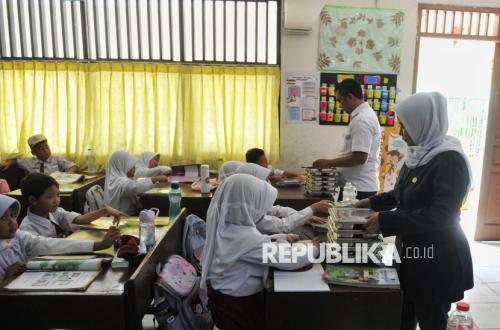
The Free Nutritious Meal (MBG) programme was born from a noble intention: to ensure Indonesian children receive adequate nutrition. However, in practice, this programme has instead generated various polemics. These range from allegations of corruption, mis-targeted beneficiaries, and distribution problems, to food safety incidents.
Criticism has come from various quarters, including students, academics, economists, and anti-corruption activists. These issues demonstrate that fulfilling the people’s basic needs is not sufficiently achieved merely by providing a super-sized budget.
The fundamental question is: How should the state fulfil the basic needs of its people?
From an Islamic perspective, the state is indeed obliged to guarantee the fulfilment of society’s basic needs. However, Islam possesses a paradigm different from the modern welfare state approach or the populist approach that has developed in post-1998 Reformasi Indonesia.
Islam views basic human needs as consisting of individual needs and collective needs. Individual needs include food, clothing, and shelter. Meanwhile, collective needs encompass security, education, health, and various public services that can only be organised by the state (An-Nabhani, 2001).
The state is obliged to ensure every citizen is able to meet their basic needs. Yet the mechanism pursued is not solely through direct aid provision, but first by creating an economic system that enables every head of family to obtain decent work and income. The Prophet Muhammad (PBUH) said: “The Imam (leader) is the guardian of the people, and he is responsible for the people under his care.” (Narrated by al-Bukhari and Muslim).
This hadith confirms that the state is not merely a regulator, but a ra’in (guardian) who is fully responsible for the welfare of society.
In the Islamic economic concept, wealth distribution becomes an important instrument. The state is obliged to open fair access to ownership, manage natural resources for the common good, and prevent the accumulation of wealth among a small group. The Qur’an states: “…so that it will not be a perpetual distribution among the rich from among you…” (QS. Al-Hasyr [59]: 7).
Therefore, if society has the opportunity to obtain decent work, stable food prices, and enjoy good health and education services, a family’s food needs can essentially be met independently.
Does this mean Islam rejects programmes like MBG? No! Islam provides room for the state to provide direct assistance to groups who are genuinely unable to meet their needs. Orphans, the poor, persons with disabilities, disaster victims, communities in conflict areas, and families who have lost their breadwinner are groups that the state must guarantee through the Baitul Mal.
However, such assistance is targeted, not universally applied. This principle aligns with the concept of distributive justice, which places resources according to need, rather than distributing them equally.
From this viewpoint, the MBG polemic provides an important lesson. The main problem lies not in the existence or absence of a free meal programme, but in the policy paradigm underlying it. When a social programme is run without an accurate database, transparent governance, and strong oversight, a noble goal easily turns into deviation, misappropriation, and wastefulness, or even squandering that is mubadzir.
Islam also heavily emphasises the integrity of public wealth managers. The Prophet Muhammad (PBUH) severely reprimanded officials who misused state trust. In a hadith regarding a zakat collector who received a gift, he said, “Why does he not just sit in his father’s or mother’s house, then see whether a gift will come to him?” (Narrated by al-Bukhari and Muslim). This hadith forms the basis for the prohibition of abusing office for personal gain.
Furthermore, public financial management in Islam is built upon the principles of trust (amanah), transparency, and strict enforcement. Caliph Umar bin Khattab was even known to frequently audit his officials and did not hesitate to dismiss governors deemed to be living in luxury or abusing power.
Another lesson to be drawn is the importance of building community self-reliance. Aid programmes should not stop at the consumption aspect but should also encourage economic productivity. Therefore, if the state purchases foodstuffs directly from local farmers, livestock breeders, fishermen, and MSMEs, the benefits would be far broader. The state would not only feed children but simultaneously drive the people’s economy.
Islam teaches that welfare is not built merely through the size of a budget, but through a just system, trustworthy governance, equitable wealth distribution, and leaders who truly view power as a trust, not an opportunity.
The current MBG turmoil should be a momentum to evaluate the way the state fulfils the people’s basic needs. Even the way the state organises itself as a whole! In the Islamic perspective, a government’s success is not measured by the number of aid programmes launched, but by the extent to which every citizen can live decently, obtain their rights, and experience genuine social justice.