
Behind the Immigrant Crisis in Ceuta, Allegations of US and Israeli Involvement Emerge
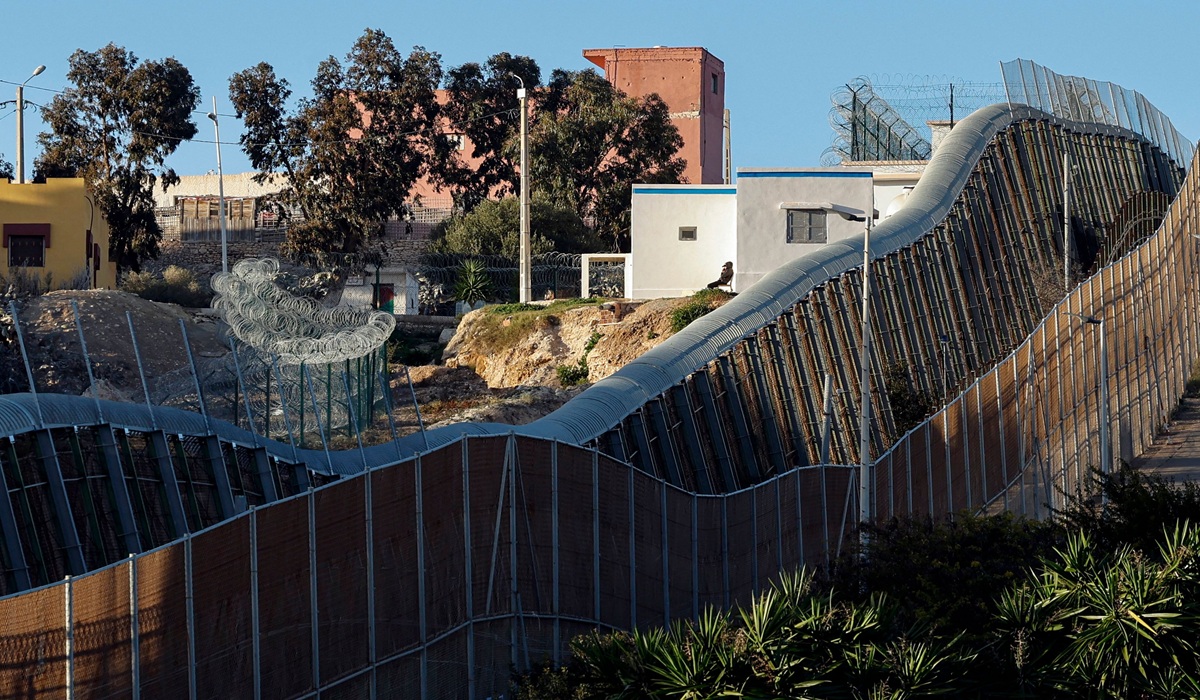
Amid the event of a massive migration wave from Morocco towards the Spanish autonomous territory of Ceuta in late July 2026, suspicions have emerged that the mass migratory flow was exploited to create chaos. A number of observers believe the situation was likely influenced by international political dynamics involving Israel and the United States.
“Some observers believe that Morocco indeed orchestrated the chaos, most likely they were pushed by another party, pointing to two leaders who hold a particular grudge against Spanish President Sanchez: US President Donald Trump and Israeli Prime Minister Benjamin Netanyahu,” according to an Al Jazeera report published on Monday (3/8).
Morocco is one of the majority-Muslim countries in Africa that established diplomatic relations with Israel in 2020 through the Abraham Accords mediated by US President Donald Trump. As part of the agreement, the Trump administration provided diplomatic backing to Morocco, including on the issue of Western Sahara.
“In return, the Trump administration has given Morocco significant support at the United Nations and through bilateral channels, bringing Rabat closer to securing greater control over Western Sahara,” the report continued.
Since normalising relations with Israel, Morocco has taken a stance considered friendlier towards Tel Aviv than Spain’s. Meanwhile, in 2024, the Spanish government refused to allow a US-flagged cargo ship carrying weapons for Israel to dock at the Port of Algeciras. The vessel was subsequently diverted to a port in Morocco.
In the same year, Moroccan authorities permitted an Israeli warship to call at the Port of Tangier to take on fuel and logistics whilst en route from the United States to Israel, after previously being turned away by Spain.
On the other hand, the Spanish government’s support for Palestine has drawn criticism from certain quarters in Israel. They consider Madrid’s stance at odds with the status of Ceuta and Melilla, which remain under Spanish administration despite being located on the North African coast.
In 2019, Yair Netanyahu, son of Israeli Prime Minister Benjamin Netanyahu, posted a map of Ceuta and Melilla on social media.
“To the honourable Arab and Muslim people. Want to liberate occupied Arab Islamic land? This is a good start!” he wrote.
Similar statements have also come from a number of observers known to support Israel.
“Moroccan citizens should gather, send bulldozers to the border, and then enter Ceuta and Melilla unarmed to raise their flag,” wrote Michael Rubin, a researcher at the American Enterprise Institute, in an article for the Middle East Forum.
Meanwhile, in April, Moroccan analyst Amine Ayoub argued in an article on the Israeli website Ynet News that US-Spanish tensions over NATO and Iran had created an opportunity for Morocco to press its claims over Ceuta and Melilla.
“With Israel positioned to support Rabat diplomatically in a US-led alliance that increasingly prioritises cooperative partners over European countries that still refuse,” he said.
In the midst of the migration crisis, Israeli and Spanish officials have also engaged in mutual sniping on social media. The debate erupted after Israel’s Ambassador to the United Nations, Danny Danon, touched on Spanish migration policy whilst questioning Ceuta’s status as Spanish territory.
Danon criticised the Madrid government, which has been vocal in condemning Israel’s military operations in Gaza, yet now has had to declare a state of emergency due to the migration crisis unfolding in Ceuta.
The number of people who died attempting to enter the Spanish enclave of Ceuta in North Africa from Morocco has been reported to have reached 90.
Thousands of migrants flooded into Ceuta, prompting Spain to declare a state of emergency. Statements by an Israeli diplomat sparked a polemic, although no direct evidence of involvement has emerged.
Spanish Foreign Minister Jose Manuel Albares asserted that migrants in Ceuta have returned to Morocco. Prime Minister Pedro Sanchez described the breach as a violation of territory.
Spain tightened its border after around 60,000 migrants from Morocco were reported to have forced their way into the city of Ceuta, the country’s enclave in North Africa.
The US Supreme Court struck down Donald Trump’s 2025 executive order limiting citizenship for the children of immigrants, upholding the 14th Amendment.
Morocco released initial data on the death toll from the mass crossing incident into Ceuta. See the discrepancy in the casualty figures with Spain and the causes here.
Ceuta is a Spanish enclave on the North African coast, situated on the border with Morocco.
France’s Interior Minister Laurent Nunez affirmed that Spain must not leave the Schengen Area despite the enormous migration pressure in Ceuta.