
Behind the Horn Lies Responsibility
Surabaya (ANTARA) – A prolonged horn blast on the road is often a sign of impatience. In heavy traffic, the sound can provoke anger and arguments, and even turn a minor issue into behaviour that compromises safety.
On roads shared by everyone, self-control is an essential part of driving skill.
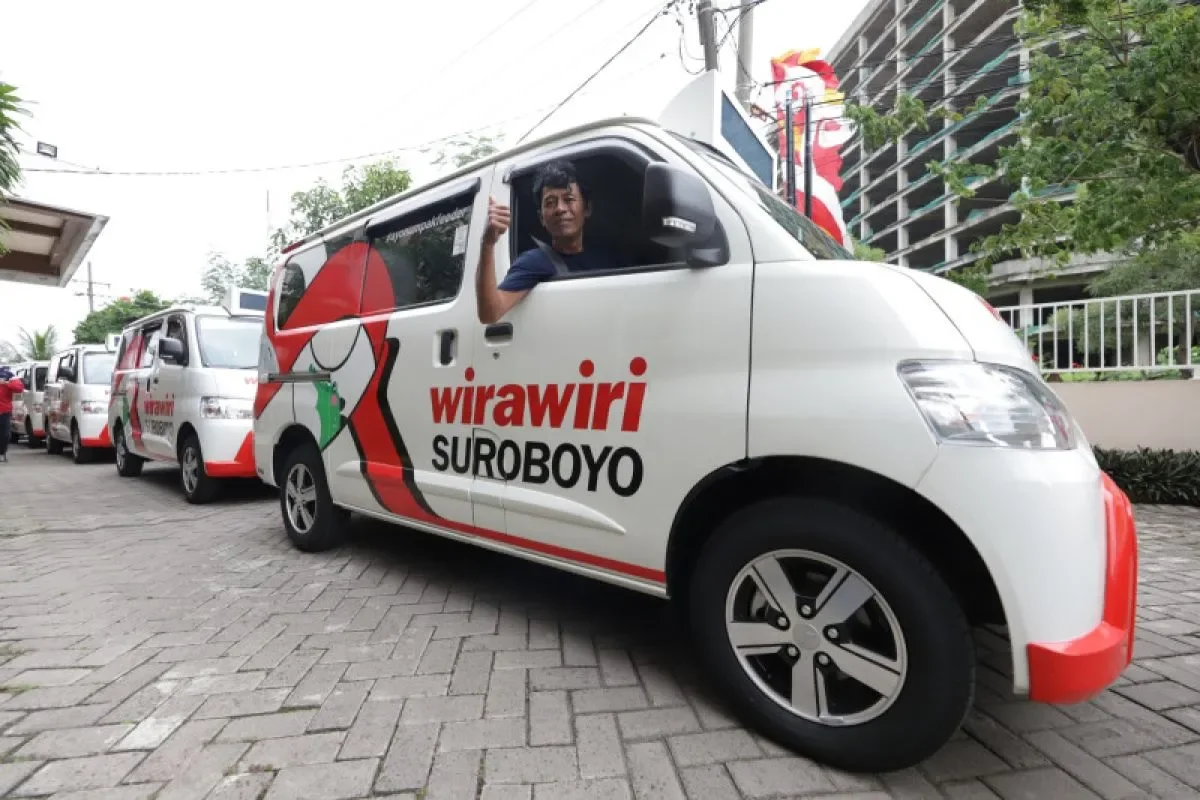
The issue has again drawn attention in Surabaya, East Java, after a Wirawiri Suroboyo driver was reported for conduct considered a breach of traffic order.
Surabaya City Transport Agency followed up on a public complaint, summoned the driver, Nasihin, for clarification and, through the operator, issued him with a second written warning (SP-2) on 7 October 2026. The agency also plans to review the placement of the bus stop where the incident occurred.
The incident is notable not merely because of one driver’s behaviour, but also because it concerns the responsibility of public transport providers. Wirawiri Suroboyo is part of a mobility service for residents, expected to offer affordable, orderly and safe journeys.
For that reason, a driver’s behaviour cannot be treated as a private matter that ends once the vehicle is back on the move.
A uniform and public-service identity carry professional obligations. Drivers do more than control vehicles: they also represent the quality of government services to the public.
Every action on the road can affect residents’ confidence in public transport, which is being developed as an alternative to private vehicles.
A test of patience
According to the clarification provided by the Surabaya City Government, Nasihin admitted that he had opened the vehicle window and spoken to another road user after hearing a prolonged horn blast.
He explained that he had already dropped off passengers, but there was little room to move the vehicle because the road was relatively narrow and a pick-up truck was alongside on the right.
That explanation provides context for the situation the driver faced. Narrow roads, queuing vehicles and limited room to manoeuvre are real challenges that can put drivers under pressure.
But context is not justification. Responding to pressure confrontationally can increase the risks on the road.
Public transport drivers should be able to control their emotions just as well as they can operate a vehicle.
When faced with a prolonged horn blast, the safe response is to check the vehicle’s position, prioritise the flow of traffic and avoid arguing with other road users. If it is not possible to move immediately, safety must remain the main consideration.
This principle is consistent with Law No. 22 of 2009 on Road Traffic and Transport. Article 105 requires every road user to behave in an orderly manner and refrain from actions that endanger traffic security and safety.
Article 106 requires drivers to operate vehicles reasonably and with full concentration, while prioritising the safety of pedestrians and cyclists.
These provisions apply to all road users, including private vehicle and public transport drivers. No one has the right to monopolise road space or use impatience as a reason to disregard safety.
Such vigilance is all the more important because road accidents remain a national concern.
The National Police Traffic Corps recorded 158,508 traffic accidents in 2025, up from 150,906 in 2024.
For road traffic and transport specifically, the National Transportation Safety Committee (KNKT) investigated nine accidents in 2025, resulting in 69 injuries. The KNKT’s investigation figures do not represent all road accidents, but they show that safety risks require serious attention.
This does not mean every dispute between a driver and another road user will lead to an accident. However, behaviour that distracts drivers, prolongs conflict or prompts unsafe manoeuvres should be prevented before it develops into a more serious incident.
This is where drivers’ professionalism is tested. Driving well is not simply about ensuring that a vehicle reaches its destination; it is also about ensuring the journey does not endanger others.
For public transport, success is measured not only by punctuality and passenger numbers, but also by safety and the quality of interactions with other road users.
Source: jawawa.id (https://jawawa.id/newsitem/behind-the-horn-lies-responsibility-1791510754)
Originally published by Antara (Indonesian) (https://www.antaranews.com/berita/5777930/di-balik-klakson-ada-tanggung-jawab), translated from Indonesian