
Behind the fearsome image of Nusakambangan Prison Island
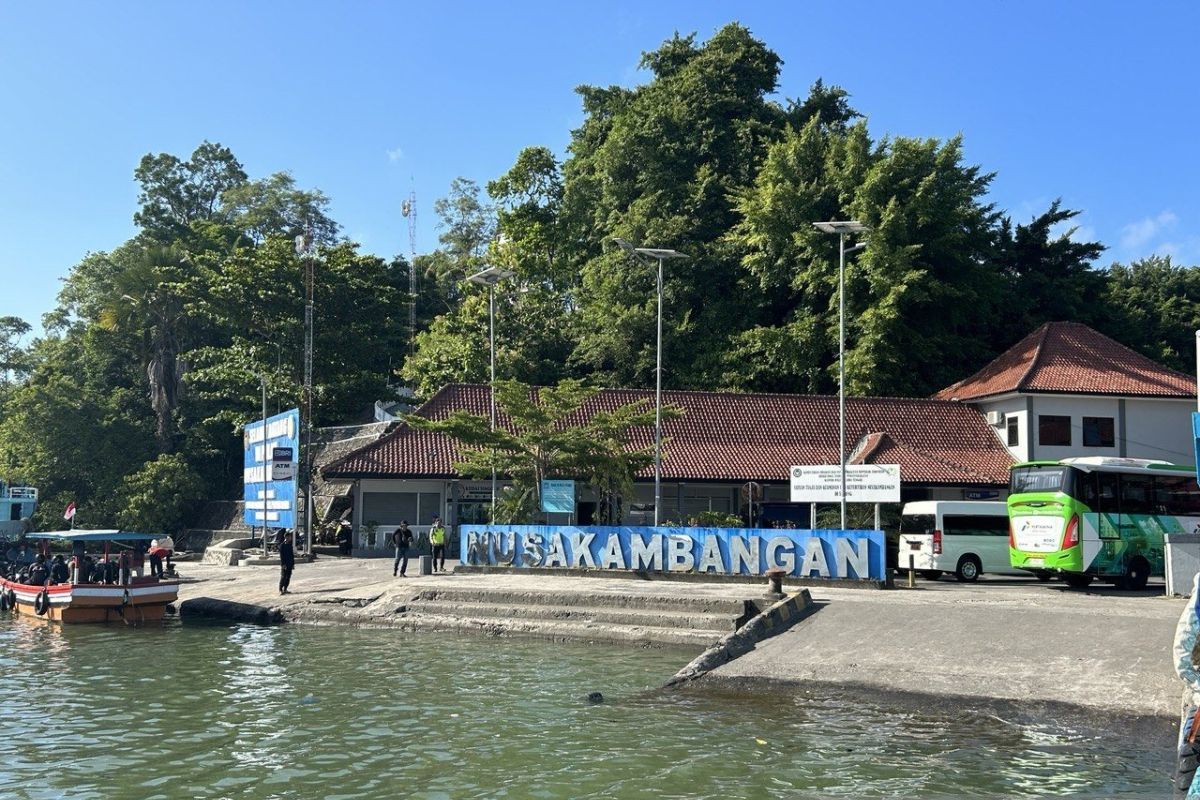
Jakarta (ANTARA) - At around 01.40 Western Indonesian Time on Monday (20 July), a corrections motor vessel docked at Sodong Port on Nusakambangan, Central Java, carrying 115 inmates transferred from Class I Surabaya Prison and Class IIB Maros Prison in South Sulawesi.
The prisoners were moved to the Super Maximum Security Prison on Nusakambangan Island because they are classified as high-risk inmates, comprising 79 from Maros and 36 from Surabaya.
The highest-security prison in Indonesia’s correctional system is designed to handle high-risk inmates such as international drug kingpins, terrorists and perpetrators of other extraordinary crimes.
In June 2026, 134 high-risk inmates from four regions were also transferred there: 36 from Riau, 33 from North Sumatra, 32 from Jambi and 33 from Lampung.
Inmates are transferred to Nusakambangan Prison Island almost every month. The Directorate General of Corrections stated that under the leadership of Minister of Immigration and Corrections Agus Adrianto, up to 20 July 2026, a total of 3,035 high-risk inmates have been transferred to Nusakambangan.
Nusakambangan Prison Island hosts 13 working units of the Directorate General of Corrections, comprising 12 prisons and one probation office (bapas). The 12 prisons are grouped into four security levels: super maximum security, maximum security, medium security and minimum security.
The Super Maximum Security Prisons house one inmate per cell, with 24-hour camera surveillance and minimal interaction. There are three super maximum security prisons on Nusakambangan: Class I Batu Prison, Class IIA Pasir Putih Prison and Special Class IIA Karanganyar Prison.
Inmates in Super Maximum Security Prisons are not allowed visitors. They are monitored around the clock, have no communication access, are guarded by officers specially trained to handle high-risk situations, and external security also involves the Indonesian National Armed Forces (TNI) and the National Police (Polri).
Maximum Security Prisons remain under strict supervision, with more than one inmate per cell, and offer limited rehabilitation programmes and interaction. They comprise four prisons: Class IIA Besi Prison, Class IIA Narcotics Prison, Class IIA Gladakan Prison and Class IIA Ngaseman Prison.
Medium Security Prisons are intended for inmates who have shown a reduction in their risk level, with numerous training and skills development programmes in agriculture, livestock and aquaculture. There are three medium security prisons on the island: Class IIA Kembang Kuning Prison, Class IIA Permisan Prison and Class IIA Kumbang Prison.
Finally, minimum security prisons are for inmates entering the assimilation phase or preparing to return to society. There are two such prisons: Class IIB Terbuka Prison and Class IIB Nirbaya Prison.
Inmates in minimum security prisons are directly involved in food security programmes and vocational training centres.
The transfer of inmates to Nusakambangan Prison Island forms part of a placement strategy based on risk levels. Each inmate is placed in a prison with a security level matching their risk profile, whilst also supporting a more effective rehabilitation process according to their respective risk levels.
This policy forms part of efforts to maintain security and order across all prisons and detention centres in Indonesia.
The Directorate General of Corrections is committed to realising a correctional system that is professional, adaptive and oriented towards security, rehabilitation and the protection of society.
Source: jawawa.id (https://jawawa.id/newsitem/behind-the-fearsome-image-of-nusakambangan-prison-island-1785117150)
Originally published by Antara (Indonesian) (https://www.antaranews.com/berita/5667107/di-balik-citra-seram-lapas-nusakambangan), translated from Indonesian