
Behind the Fatigue of the Night, Commuter Trains Take Workers Home
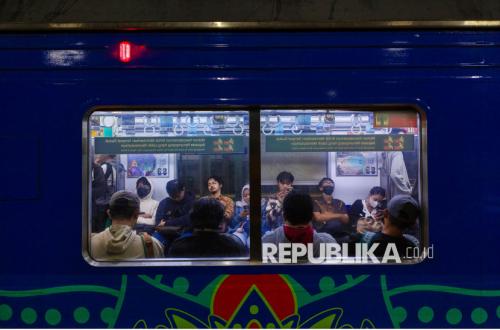
It is not yet very late when the electric commuter train (KRL) Commuter Line pulls into Tebet Station in Jakarta on Tuesday (20 October 2026). The doors open: passengers getting off hurry towards the exit, while those heading home step aboard and find space among the other passengers. Station announcements mingle with footsteps and brief conversations. On some passengers’ faces, the fatigue of a full day’s work is plain to see.
Inside the carriage, the atmosphere differs from the morning rush of people travelling to work. At night, passengers’ eyes begin to droop; some rest their heads against the train wall while still holding their phones. Some read messages from family, check onward travel schedules or simply close their eyes for a few minutes. For them, the journey home is not merely a move from one place to another, but a pause before they resume life at home.
For many workers in Jakarta and its satellite cities, the KRL is an essential part of daily life. It connects residential areas with office districts, commercial centres, industrial zones and workplaces.
After working hours, the same trains once again become their main way home. Some passengers arrive at the station in a hurry, having just left an office, shop, restaurant or another workplace. Work bags still hang from their shoulders, uniforms have not yet been changed, and some are still wearing their company identification badges. Many head straight for the travel information board as soon as they reach the platform.
For workers travelling home at night, time is precious. They must take account of train timetables, transfer times and the onward transport they will need to reach home. A delay of just a few minutes can mean a longer wait at the station or having to find another way to travel when transport options become limited.
For some workers, the journey is not over when they step onto the platform. They still need to continue by public transport, motorbike taxi or private vehicle. Some walk through residential alleyways, while others still face a considerable distance before they finally arrive home.
The night-time KRL reveals another side of urban life. As some business districts grow quiet and office lights come on, the city’s rhythm continues through workers who have only just finished their shifts. They are heading home from different jobs and towards different destinations, but share the same hope: to arrive safely and have time to rest.
The train continues through the night. One station after another passes, and passengers get off at their respective destinations. The carriage, initially crowded, gradually opens up before filling again with people also making their way home.
Amid the city’s seemingly unending pace, the night-time KRL bears witness to workers’ long journeys. They may not know one another, but for a while they share space, fatigue and a common destination. At the end of the journey, home awaits—a place to pause before another day begins.
Source: jawawa.id (https://jawawa.id/newsitem/behind-the-fatigue-of-the-night-commuter-trains-take-workers-home-1792543860)
Originally published by Republika (https://visual.republika.co.id/berita/tn7rsg375/di-balik-lelahnya-malam-krl-mengantar-pekerja-pulang), translated from Indonesian