
Behind the Decision to Renounce Indonesian Citizenship
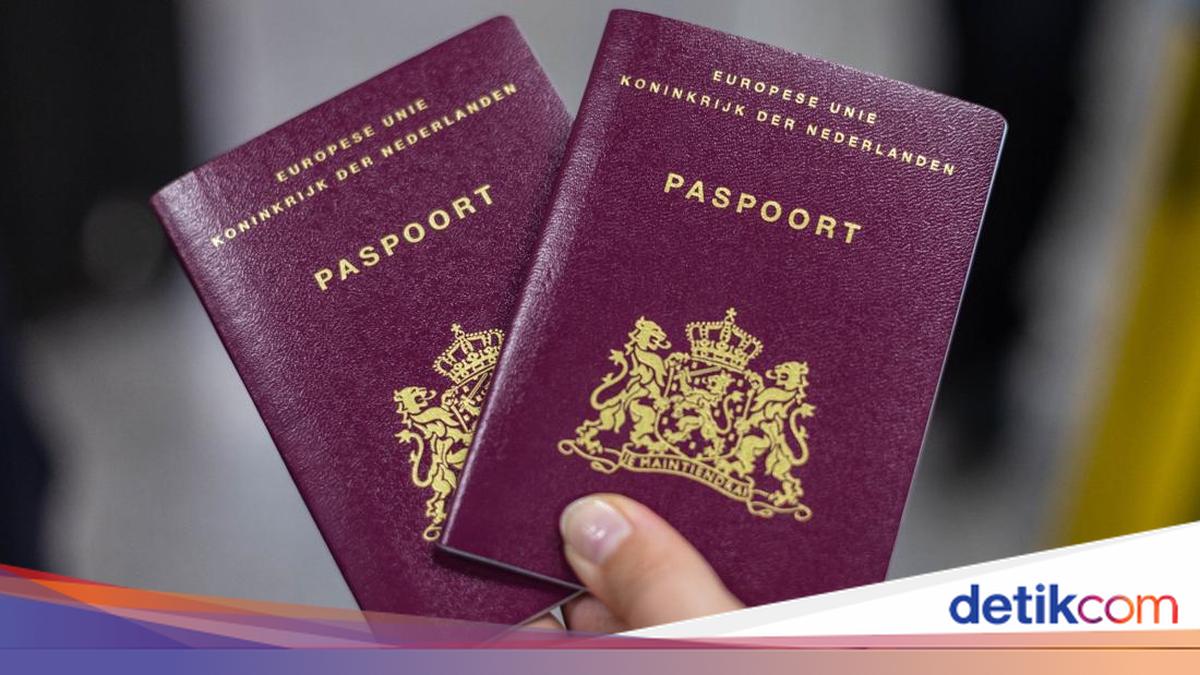
Human life can never be predicted. Its path often moves forward in directions never planned, carrying a person to places, decisions and identities once unimaginable.
In 2005, Merry, a woman from Bekasi, left her family and comfortable home for the first time. She moved to Venlo, a small town in the Netherlands bordering Germany, to follow her husband. In her new country, Merry started everything from scratch. Language was the first wall she had to face. Adaptation was not easy. Feelings of strangeness, loneliness and homesickness often came all at once.
Twenty years passed without her noticing. Now, dressed smartly and walking with confidence, Merry attends a naturalisation ceremony — an important moment in her life journey. She was not alone in that room. More than a dozen immigrants from various countries were present, each carrying long stories of migration, searching and hope for a more stable life.
Merry took the citizenship oath in Dutch, a language that once sounded so foreign to her ears. In that oath, she promised to obey the laws and values in force in the country. A burgemeester, or local mayor, then approached her, presenting flowers and warm greetings as a sign of acceptance and official recognition as part of Dutch society.
“At first it was sad to give up Indonesian citizenship. Because no matter what, I was born and raised in Indonesia. I enjoyed my childhood there, went to school there, have family there. So it felt heavy,” Merry told detikX.
The decision was not taken overnight. Merry admitted she had been thinking about it for almost a decade. Inner turmoil, considerations about the future and her own identity kept circling in her head. Finally, in November 2024, she submitted an application to change her status from permanent residence to Dutch citizen. The process went faster than she expected — by February 2025, everything was complete.
“I kept going back and forth, wondering whether to change or not,” she said. “But seeing the condition of Indonesia lately, I became increasingly sure about taking Dutch citizenship.” Merry said one of her considerations was disappointment with the social and political conditions she saw in Indonesia.
From a newcomer who once struggled to understand the local language and customs, Merry slowly found her place. In her daily life she works in sales at a multinational company dealing in food and beverage raw materials. At home, the 43-year-old also plays the role of mother to her two children.
As a mother, she experienced first-hand how the Dutch government supports families through various social facilities. One of the things that enabled her to endure was a way of life that, in her view, provides a sense of security, especially for families with children.
“What I feel as a mother is that we are calmer. We don’t stress too much about the children’s school fees,” she said. “We don’t live lavishly, we’re not rich. I work hard, I work as an employee. But I feel it’s enough.”
In the Netherlands, primary and secondary education receive state support. In addition, families receive various child allowances, such as the Kinderbijslag, paid periodically to help cover children’s needs.
“The child subsidy doesn’t look at whether parents are rich or poor. As long as you have children and meet the requirements, there’s help. Young children get it, and as they grow older there’s still support. Up to 18 years old there’s still support,” Merry explained.
According to her, this support allows parents to focus on their children’s growth and development rather than merely chasing income to cover basic needs.
“For me, that’s one of the things that makes living here comfortable. The state feels present. We still have to work, still pay high taxes, but we know there’s a system that helps if we have a family,” she said. For Merry, this sense of security became one of the reasons she began to see the Netherlands not merely as a temporary place to live, but as home.
The Old Home No Longer Feels the Same
Before finally deciding to change citizenship, Merry actually tried to find an answer to whether Indonesia could still be a place for her and her family to return to. She once sought that answer by returning to Indonesia. In 2017, Merry and her husband left the Netherlands and started a new life in her homeland.
At that time, the desire to return was not mere nostalgia. Merry and her husband genuinely imagined Indonesia as a place to spend their future. They wanted a more relaxed life, closer to family, while also trying to build a business of their own.
“At the time we thought, maybe we could stay in Indonesia for good. My husband had actually long been thinking about moving. He imagined a more slow-living life,” Merry recounted.
The plan was realised. They brought their children back to Bekasi and tried to live in Indonesia. Merry even prepared a plan to open a business using the savings they had accumulated while living in the Netherlands. But the reality they encountered was far different from what they had imagined.
“At first I thought, this is my own country. It should be easier because I was born and raised here. But when living in Indonesia again, I actually felt like a stranger,” she revealed.
Merry realised that the Indonesia she left in 2005 was no longer the same Indonesia she returned to more than a decade later. The change occurred not only in the environment but also within herself. “For holidays in Indonesia, I still enjoy it. I’m happy to come home, meet family, eat Indonesian food. But to live there again turned out to be different,” she said. After about a year of trying to endure, Merry and her husband finally made the difficult decision to return to the Netherlands.
Returning to the Netherlands also meant they had to rebuild the life they had left behind. But this time, Merry returned with a new understanding that home is not always where one is born, but where one has built a life.
“After experiencing living in Indonesia again, I became aware. My home is in the Netherlands. It doesn’t mean I’ve forgotten Indonesia, but my life is here now,” she said.
The experience of trying to return to Indonesia became an important turning point in Merry’s decision to change citizenship. After returning to the Netherlands, she began to see the future from a different perspective. She thought not only of herself, but also of her children, who have now grown up in the Netherlands.
“When I look at the children, their lives are here. Their friends are here, their schools are here, their futures are here too. I don’t want to be far from them when they’re grown up,” she said.
A New Passport, A More Open World
Besides family factors, there were other practical reasons that further pushed her to take Dutch citizenship. As someone who loves travelling, Merry often felt her Indonesian passport was an obstacle. For years, every time she wanted to visit certain countries, she had to go through a lengthy administrative process.
“Travelling is one of the reasons too. I love going places. In the Netherlands in summer we often do road trips by car. But when we want to leave the Netherlands, visa matters sometimes put me off,” she said.
Before becoming a Dutch citizen, every trip to certain countries required months of preparation. The documents that had to be prepared were not few. Even to arrange a visa, Merry had to set aside special time because many processes had to be done in The Hague.
“I live in Breda now. Going to The Hague is not just a short trip. I had to take leave from work, pay transport costs, and sometimes the process couldn’t be finished in one visit,” she said.
She gave the example of wanting to travel to the United Kingdom. In terms of distance, the country is very close to the Netherlands, but her status as an Indonesian passport holder meant she still had to go through the visa process.
“Imagine, the UK is so close from here. But with an Indonesian passport, I still had to apply for a visa. Sometimes the visa costs could be more expensive than the plane ticket,” Merry said.
After obtaining a Dutch passport, the difference has been enormous. “Recently we went to Japan and Korea, and it felt amazing. Just look at the tickets, fill in simpler requirements, no need to worry about visas. It feels freer,” she said. She experienced how the strength of a passport can open more opportunities for a person to move around.
Indonesian Identity on Dutch Soil
Increasingly, she sees the decision as not being about forgetting Indonesia, but about choosing the place that best fits the life she has built.
“For me, citizenship is just paper, documents. It doesn’t mean I forget my roots,” Merry said.
She even admitted feeling uncomfortable seeing members of the diaspora who, after switching citizenship, cut ties with their country of origin or feel superior to those still living in Indonesia.
“I don’t like it when people who have moved then speak badly of Indonesia. No matter what, I lived 20 years there. That’s part of me,” she said.
Therefore, although she is now a Dutch citizen, Merry’s ties with Indonesia have never truly been severed. She still follows Indonesian news, still enjoys Indonesian culture, and remains actively involved with the Indonesian community in the Netherlands.
In Breda, where she now lives, most of Merry’s social circle actually comes from fellow Indonesian diaspora members. They often hold gatherings, from shared meals and potlucks to celebrating birthdays and travelling together.
“I actually gather with Indonesians more often. We have similar stories. We all came from Indonesia, we all had to adapt here,” she said. “Sometimes we organise small events, each bringing food. Some cook rendang, nasi kuning, all sorts.”
For Merry, gathering with fellow members of the diaspora gives her a different kind of comfort. They understand the experience of living between two cultures, something not always easy to explain to others. “We all know what it feels like to arrive in a new country. There are moments of missing home, missing food, missing the atmosphere of Indonesia,” she said.
Even when it comes to food, Merry still regularly seeks out Indonesian flavours. One of her favourite spots is The Hague, an area known for its many Indonesian shops and restaurants.
“When I crave Padang food, I just go to The Hague. There’s a favourite restaurant of mine there. Sometimes I even feel the food is tastier than what I’ve eaten in Indonesia,” she said with a laugh.