
Behind the Appeal of Panda Bond Coupons
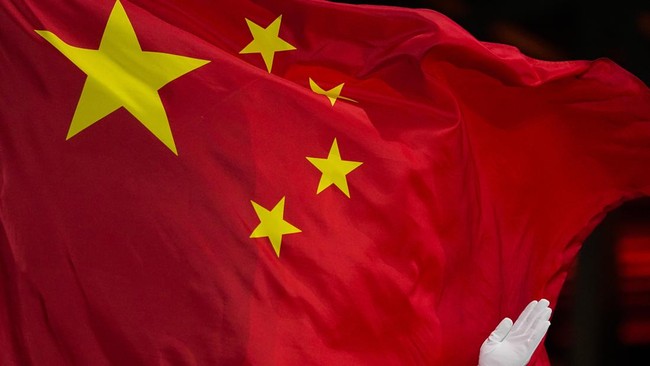
Amid tight global liquidity, China’s bond market appears to offer low-cost financing. However, a broader perspective is needed so that assessments are not based solely on low coupon rates.
Recalling President Prabowo Subianto’s message at the APEC Summit in Shenzhen on 19 November 2026, “Openness must also go hand in hand with fairness. Openness without fairness is not partnership, but dependency.”
This means the Government can diversify its sources of financing wherever they may be, but it must do so with careful risk management and a sovereign approach to competition between China and the United States.
Yuan versus the dollar
The Bank for International Settlements’ (BIS) triennial survey recorded the US dollar’s involvement in 89.2 per cent of global foreign-exchange transactions in 2025, while the yuan accounted for just 8.5 per cent, despite rising sharply from only 0.1 per cent in 2004.
In global foreign-exchange reserves, International Monetary Fund (IMF) data for the second quarter of 2026 put the US dollar’s share at 56.70 per cent, far ahead of the yuan’s 2.11 per cent. The dollar also remains the leading currency for trade invoicing and on the SWIFT global interbank transfer network.
On 12 March 2026, China’s parliament, the National People’s Congress (NPC), approved the 15th Five-Year Plan (2026-2030), which includes an agenda to promote the global use of the yuan, or renminbi (RMB), and strengthen cross-border payment systems.
This is reflected in the expansion of the overseas yuan-clearing bank network and the development of the yuan bond market. The use of local currencies is also being encouraged in the Shanghai Cooperation Organisation (SCO) and BRICS Plus, while the Regional Comprehensive Economic Partnership (RCEP) is intended to broaden the region’s trading base and the Asian Infrastructure Investment Bank (AIIB) to provide lending opportunities.
Meanwhile, the US National Security Strategy 2025 underscores Washington’s interest in maintaining the dollar’s status as the world’s primary reserve currency. Under its America First Investment Policy, the US has tightened screening of capital flows into China’s strategic sectors. President Donald Trump has also repeatedly threatened high tariffs against countries seen as seeking to displace the dollar, particularly BRICS members.
To safeguard the dollar ecosystem, US Treasury Secretary Scott Bessent has promoted the expansion of dollar swap facilities for partners in the Gulf and Asia to counter alternative payment systems. On the multilateral front, in a written statement for the IMF-World Bank Annual Meetings in Bangkok, Thailand, in October 2026, he urged the IMF to tighten scrutiny of non-market policies and exchange rates, and welcomed plans to end World Bank lending to China.
Opening alternative channels
Against this backdrop of competition, financial cooperation with China should be seen as diversifying financing and cross-border transaction channels. For development project loans, Indonesia has an AIIB financing commitment of US$17 billion for 2025-2029, providing an alternative to the World Bank and the Asian Development Bank (ADB).
As a buffer for trade liquidity and bilateral stabilisation, Indonesia also has a 400 billion yuan bilateral currency swap facility between Bank Indonesia and the People’s Bank of China (PBOC). Renewed in January 2025, it provides liquidity support beyond the IMF safety net.
A third channel covers yuan-rupiah transactions without conversion into dollars. Following a memorandum of understanding between Bank Indonesia and the PBOC on 11 June 2026, the Jakarta branch of Bank of China (Hong Kong) was appointed as a yuan-clearing bank, and Bank Indonesia officially launched its operations on 12 November 2026.
The move coincides with a surge in trade and investment transactions using local currencies (Local Currency Transactions, or LCT) between Indonesia and China. These reached US$43.89 billion from January to September 2026, well above the US$13.19 billion recorded throughout 2025.
Low coupons and exchange-rate risk
The Government first issued 6 billion yuan in offshore yuan-denominated bonds, known as Dim Sum bonds, in October 2025, followed by 9.25 billion yuan in February 2026. This was followed by two Panda Bond issuances in China’s domestic market: two tranches in July and three in November 2026, totalling 17 billion yuan, with coupons of 1.90-2.50 per cent and maturities of three to seven years.
Indonesia’s Panda Bonds entered the market under stringent technical requirements, including the highest credit rating (AAA) from China’s domestic rating agency Lianhe and approval from China’s National Association of Financial Market Institutional Investors (NAFMII) for a quota of 30 billion yuan over two years.
For the inaugural 7 billion yuan issuance, investor demand was 2.4 times the amount on offer. In the second round, worth 10 billion yuan, the subscription ratio was 1.73 times.
The main attraction of Panda Bonds is their coupon rate, which is far lower than the roughly 7 per cent rate on domestic debt securities. On paper, they are also cheaper than the US dollar global bonds issued in January 2026, which carried rates of 4.35 per cent for five-year maturities and 4.95 per cent for ten-year maturities.
Safeguarding fiscal sovereignty
The period from 1997 to 2003 taught Indonesia a costly lesson about the importance of having more than one source of financing. At the time, the Government had to sign a series of policy conditions, known as Letters of Intent, with the IMF under four presidents.
Bank closures without deposit guarantees, cuts to fuel subsidies and pressure to privatise state-owned enterprises (SOEs) triggered social unrest and increased the burden on the state budget. The US$9.1 billion IMF debt was not fully repaid until 2006, after the Government chose to settle it ahead of schedule.
Diversifying financing through Panda Bonds can widen the Government’s fiscal space, but the national debt portfolio must remain balanced to avoid creating new dependence on a single creditor bloc. The roughly two-percentage-point interest-rate difference compared with US dollar global bonds could save money for the state budget, provided the savings are not eroded by movements in the yuan-rupiah exchange rate before the bonds mature in 2029-2033.
Over the long term, natural foreign-exchange earnings from trade between the two countries will be crucial. Statistics Indonesia (BPS) data show that from January to September 2026, Indonesia’s non-oil and gas exports to China reached US$54.17 billion, led by processed basic products and commodities such as iron and steel, nickel, coal and vegetable oils. Imports from China topped US$76.16 billion over the same period, leaving Indonesia with a US$21.99 billion trade deficit with Beijing.
For this reason, the use of proceeds must be planned from the outset and aligned with the LCT channel established by Bank Indonesia and the PBOC, supported by a two-way foreign-exchange market. Natural hedging should be developed by directing state capital spending towards strengthening export-oriented industrial ecosystems and import substitution, thereby generating foreign exchange.
This should go hand in hand with efforts to maintain a balanced mix of major foreign currencies and domestic Government Securities. Yuan-denominated bond issuance should be treated as part of a portfolio risk-management strategy, not simply as a way to chase low coupons. Debt may be denominated in dollars, yuan, yen or euros, but fiscal policy must remain sovereign.
Source: jawawa.id (https://jawawa.id/newsitem/behind-the-appeal-of-panda-bond-coupons-1795495974)
Originally published by CNBC Indonesia (https://www.cnbcindonesia.com/opini/20261124110038-14-787892/di-balik-manisnya-kupon-panda-bond), translated from Indonesian