
Behind the Ahmadinejad Reports: The Battle of Narratives in the Iran War
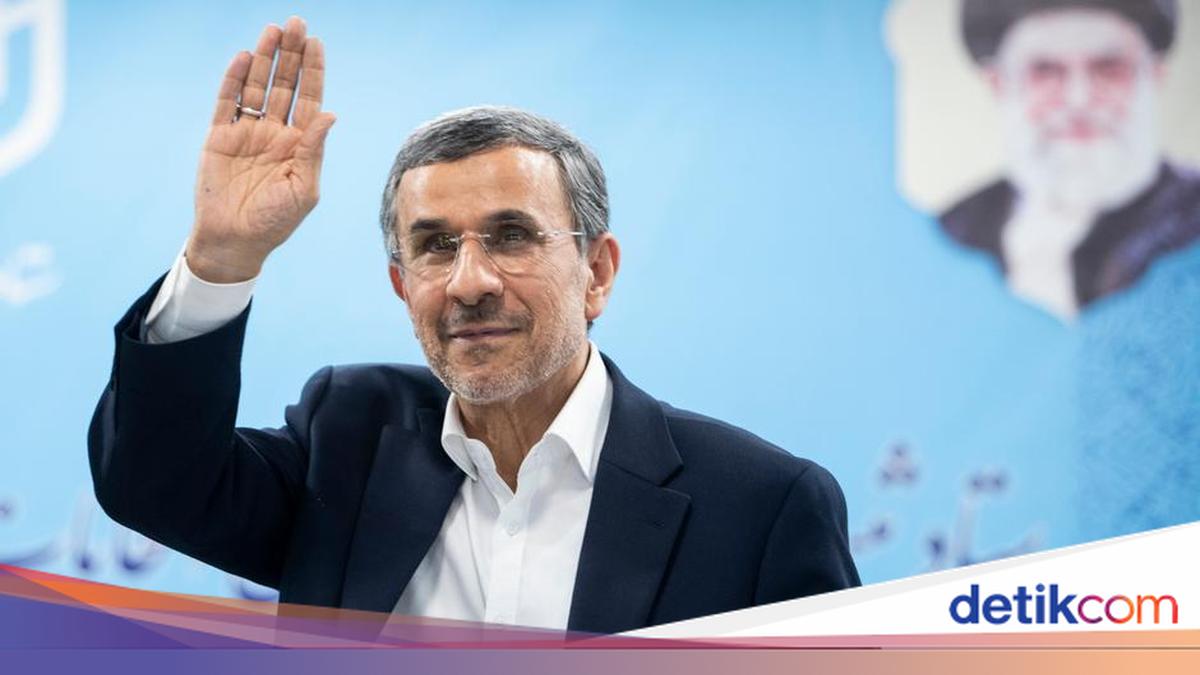
Citing two separate reports, one recently published by the New York Times and the other by the Israeli daily Haaretz, a debate has reignited over Israeli thinking on regime change in Iran.
Both have also raised questions about the role of the former ultraconservative President Mahmoud Ahmadinejad, who served two terms from 2005 to 2013, in Iranian politics today.
According to the reports, Israeli officials allegedly explored the possibility of positioning Ahmadinejad as a significant figure in a post-Islamic Republic scenario, with efforts reportedly intensifying during the war and involving secret contacts in Hungary.
The reports have attracted attention, among other reasons, because of their startling details.
Both claim that Ahmadinejad was moved to a safe house after his residence was struck in an Israeli air attack on 28 February 2026, and that David Barnea, the former head of Israel’s Mossad intelligence service, personally oversaw part of the contact efforts, which reportedly included meetings in Budapest.
Haaretz also reported that the operation was not solely about Ahmadinejad, but encompassed plans for infiltration inside Iran, contacts with minority groups, and discussions of a broader destabilisation strategy.
Denied by Iran’s former leader
These details have not been independently verified and remain unconfirmed. However, Ahmadinejad’s office reportedly rejected the claims, calling them “absurd” and “entirely untrue”.
Babak Dorbeiki, a London-based political analyst and former official at Iran’s Centre for Strategic Research, told DW that before answering anything, three questions must be separated: the accuracy of the reports themselves, Ahmadinejad’s actual position in current Iranian politics, and the political function of publishing stories of this kind.
“There is no public, independent evidence that can convincingly confirm or refute the details of this narrative,” he said. “So it cannot be accepted at face value, but it also cannot be dismissed simply because it has been denied.”
Dorbeiki argues that Ahmadinejad still retains a considerable social base and political ambition, but that should not be equated with real power.
According to him, the former president has been sidelined from the core institutions of the Islamic Republic since around 2010, including the Supreme Leader’s Office, the Islamic Revolutionary Guard Corps (IRGC), the Guardian Council, and much of the conservative camp.
Who benefits from this narrative?
Ahmadinejad, who has repeatedly failed to pass vetting as a presidential candidate in Iran, Dorbeiki said, demonstrates that the key players who determine Iran’s direction have no interest in returning him to the centre of decision-making.
According to Dorbeiki, the reports should not be understood solely as an Israeli effort to promote Ahmadinejad as a future ruler. “Even if we assume the reports are true, at most they show that at some point he was one of the options considered, not that he is about to return to power,” he said.
For him, the more revealing question is who benefits from such a narrative. One possibility, he said, is that the Iranian state could use it to reinforce the notion that even a former president is vulnerable to foreign penetration, helping to justify tighter security measures and deepen mutual suspicion at home.
Another possibility is that Ahmadinejad’s critics could use it to strengthen their argument that his political legacy has always been harmful to Iran.
And for Israel, Dorbeiki said, the publication of such stories could itself serve as an intelligence tool, namely signalling that Israel possesses the reach, access and capability to sow distrust and paranoia inside Iran, regardless of whether every operational detail is true.
Part of a wider information war?
Vahid Heroabadi, a former Shia cleric now living in Europe and a critic of the Islamic Republic, told DW that outside powers seeking regime change typically look for figures with the capacity to mobilise the masses.
But he does not believe Ahmadinejad is suitable for that role in Iran today. “Those who can play a part in Iran’s present or future are people connected to the IRGC,” he said. “Because Ahmadinejad no longer has those connections and does not have its backing, he cannot truly act as a decisive political player.”
Heroabadi, who says he was once close to Ahmadinejad’s government, argues that even in a regime collapse scenario, no foreign government would want to impose a transition dependent on a highly well-known and divisive populist figure such as Ahmadinejad.
In his view, Ahmadinejad is not a credible bridge, either for the Iranian public or for the security authorities who play an important role in any transfer of power.
The reports about the former president reveal much about the wider information war surrounding Iran, about the narratives intelligence services may wish to project, and about how outside parties imagine a post-Islamic Republic scenario in Iran, even if all of this remains far from political reality.
The reports show how the struggle over Iran has now become a struggle over narratives and perceptions. In that battle, even an implausible story can prove useful if it makes enough people feel uneasy.
Source: jawawa.id (https://jawawa.id/newsitem/behind-the-ahmadinejad-reports-the-battle-of-narratives-in-the-iran-war-1784202916)
Originally published by detikcom (https://news.detik.com/dw/d-8577332/di-balik-laporan-ahmadinejad-pertarungan-narasi-perang-iran), translated from Indonesian