
Behind Roadside Duco Painting: Cancer Threats Lurk for Workers
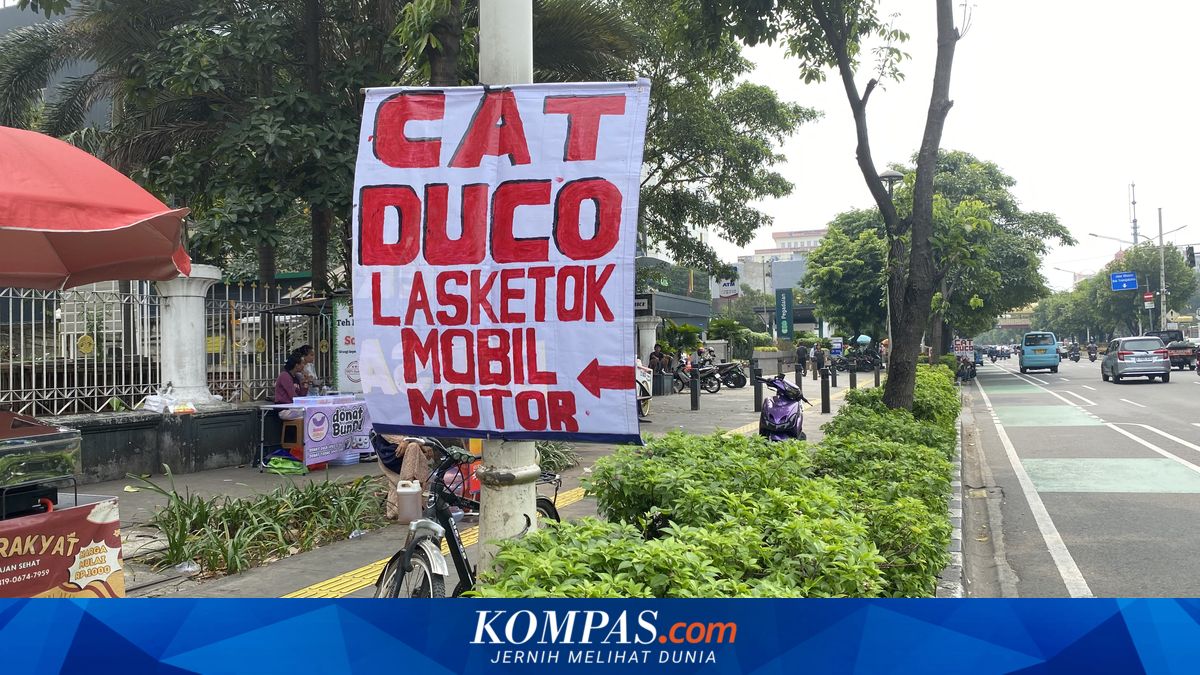
JAKARTA, KOMPAS.com - Duco painting services are frequently chosen by vehicle owners because they can restore cars or motorcycles to a smooth appearance at a relatively low cost and with rapid execution. Duco painting is known as a vehicle painting technique that produces a smoother and glossier surface, making it commonly used to repair scratches, scuffs, or light dents.
However, behind the glossy finish, the vehicle painting process hides serious health risks for both workers and nearby residents exposed to chemicals daily. Exposure to paint vapours, thinner, and chemicals in the duptco painting process can cause health hazards that are both acute (short-term) and chronic (long-term).
“There is a high risk for workers and those nearby who are continuously exposed to these vapours every day,” said Agus when contacted by Kompas.com on Friday (15/5/2026).
According to Agus, vapours from the duco painting process generally contain various hazardous chemicals that are irritating or carcinogenic. “Vapours from the duco painting process generally contain substances that are irritants, such as volatile organic compound (VOC) components including toluene, xylene, and formaldehyde, as well as other chemicals like isocyanates and carcinogenic substances,” he explained.
He explained that exposure to these chemicals can directly trigger health disturbances in a short period if inhaled. In the short term, workers or exposed individuals may experience respiratory tract irritation such as a runny nose, sore throat, coughing, phlegm, and shortness of breath. For asthma sufferers, this condition can even trigger asthma attacks.
In addition to respiratory disturbances, exposure to paint vapours and thinner can also cause neurological complaints such as dizziness, headaches, and nausea. Other complaints, including skin irritation, itching, and eye irritation, are also at risk of appearing due to contact with these chemicals.
Agus stated that health risks become more serious if exposure occurs continuously over many years. “The long-term impact of exposure to duco painting vapours can lead to various health problems,” he said.
Furthermore, vehicle paint chemicals can trigger dermatitis or eczema, kidney and liver disorders, chronic nerve disorders, and increase the risk of cancer.
Agus assessed that the use of ordinary masks is not sufficient to protect duco painters from exposure to dangerous chemicals. “The use of ordinary masks is not enough to reduce the health risks that may occur,” he said.
He explained that vehicle painters require specialised personal protective equipment (PPE) according to occupational health standards. For respiratory protection, workers are advised to use full-face respirators or half-masks capable of preventing the inhalation of solvent vapours from paint and thinner. Additionally, workers need to use eye protection such as goggles or full-face respirators, solvent-resistant gloves, and protective clothing that covers the entire body to prevent skin exposure to irritants.
According to Agus, the risk of lung damage for duco painters is very high if the work is performed in enclosed spaces with poor ventilation. “The risk or health impact on the lungs for workers in the duco painting process is generally very high in enclosed spaces with poor ventilation,” Agus noted.
“In open-air work, the risk of health impacts on the lungs remains high, influenced by other environmental factors such as wind, ambient air temperature during work, and whether good personal protective equipment is used,” Agus added. Therefore, Agus suggests that small-scale duco painting businesses must still implement basic preventive measures to minimise health risks for workers.