
Behind Danantara's Ambition
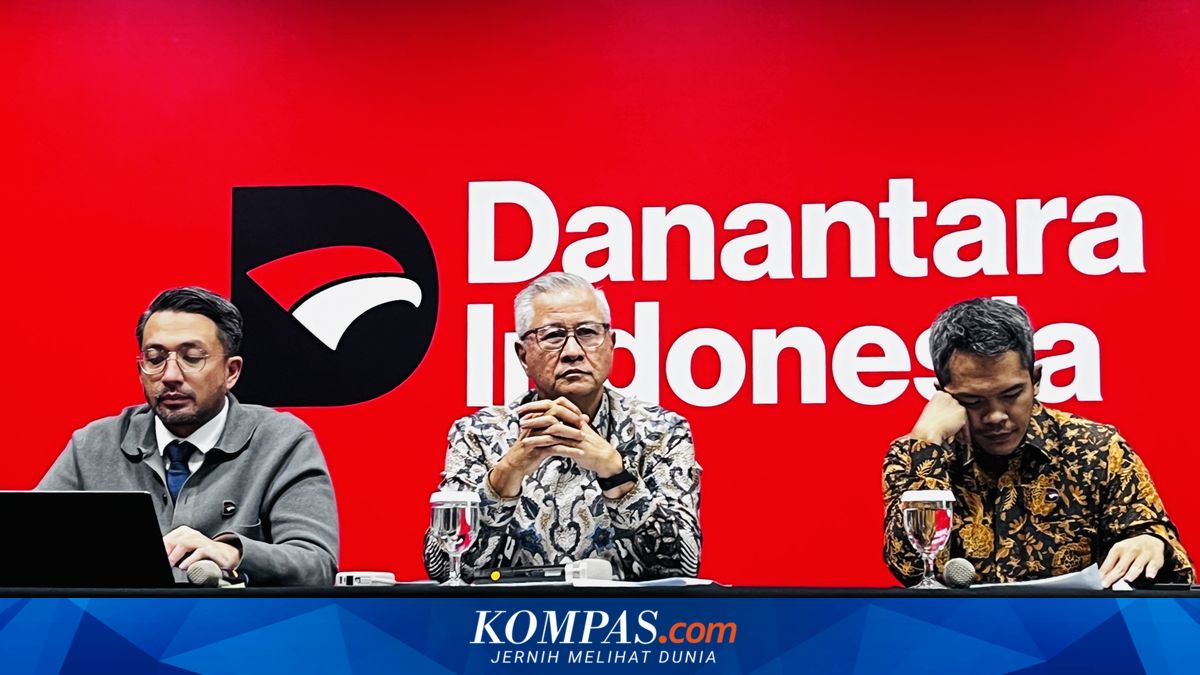
Amid a world moving towards economic fragmentation, trade wars, and global competition for natural resources, Indonesia appears to be shifting its economic policy direction. The state no longer wishes to merely act as a regulator standing on the sidelines of the market. It is now directly entering the arena of strategic commodity trading. This momentum was evident when President Prabowo Subianto announced the establishment of PT Danantara Sumberdaya Indonesia (DSI) during his speech at the House of Representatives on National Awakening Day, 20 May 2026. In front of parliament, the President revealed a startling figure: an estimated loss of $90.8 billion (approximately Rp15.4 trillion) over 33 years due to under-invoicing in natural resource exports. This figure is not merely an economic statistic; it serves as a constitutional alarm bell highlighting the state’s weak control over national natural wealth. It is within this context that the creation of DSI must be understood. It is not merely the birth of a new enterprise but a symbol of the state’s paradigm shift in managing Indonesia’s strategic natural resources. Coal, palm oil, ferroalloys, and even nickel are no longer viewed merely as market commodities but as instruments of national economic sovereignty. However, the fundamental question is not merely whether DSI is needed. The far more critical question is whether DSI’s establishment truly adheres to constitutional principles or risks creating a new economic power centralisation contrary to the economic democracy mandated by the 1945 Constitution. The formation of DSI cannot be separated from the spirit of Article 33 of the 1945 Constitution, which was designed by the nation’s founders as the foundation of Indonesia’s constitutional economy. The fourth paragraph of the Constitution’s preamble states the state’s aim to ‘advance public welfare’. Within this framework, natural resources are not merely business objects but instruments of public welfare. Article 33(3) stipulates that the land, waters, and natural resources within them are controlled by the state and utilised for the greatest prosperity of the people. Article 33(4) further clarifies that economic democracy must be implemented based on principles of togetherness, equitable efficiency, sustainability, and independence. For years, Indonesia has faced a major paradox. A nation rich in natural resources has repeatedly lost value addition, foreign exchange, and even control over its own commodity trade. The state often merely acts as a tax collector and royalty recipient, while global trade chains are controlled by international traders and multinational corporations. In various rulings, the Constitutional Court has emphasised that the phrase ‘controlled by the state’ must not be narrowly interpreted. The state is not merely an administrative regulator; it has functions of regulation, management, operation, supervision, and policy-making over strategic natural resources. The Court’s rulings on electricity, oil and gas, and water resources indicate a clear stance that the Indonesian Constitution rejects full liberalisation of strategic production sectors. The state must maintain effective control over natural resources vital to the people’s livelihoods.