
Begal Bounty Policy Must Not Displace Law Enforcement Authority
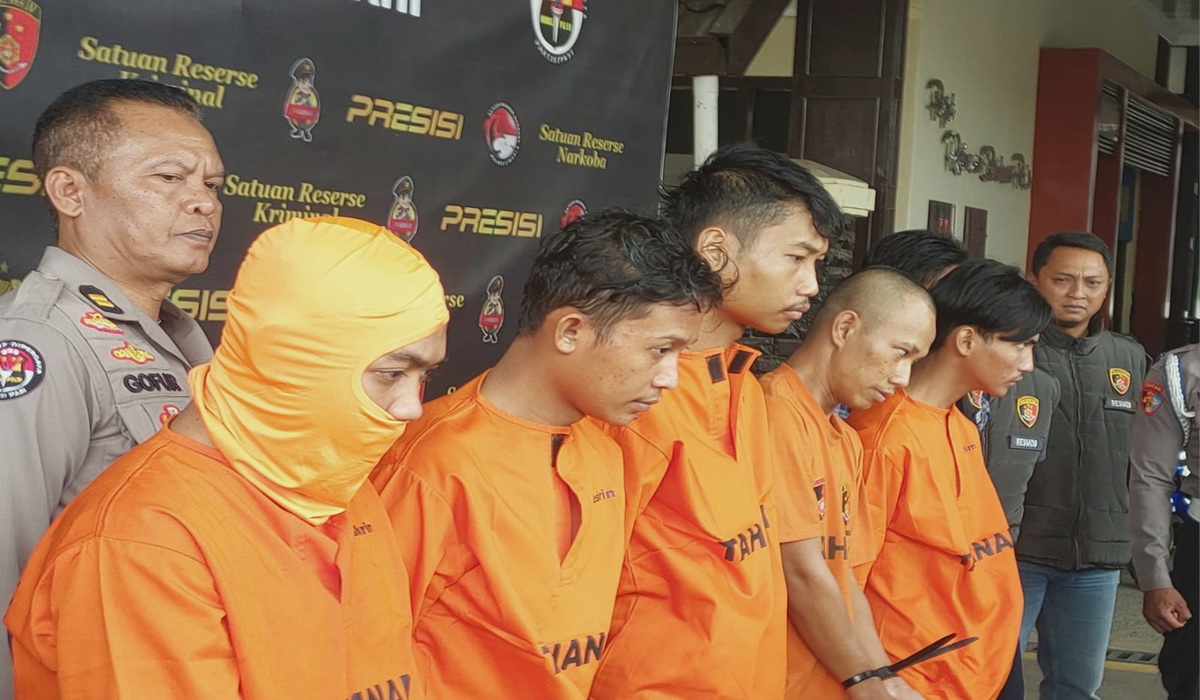
Trisakti University criminal law lecturer Abdul Fickar Hadjar has assessed that the policy of offering bounties for the capture of street criminals, initiated by West Java Governor Dedi Mulyadi, is an effort to encourage public participation in maintaining security, not an invitation to take over the functions of law enforcement officers. Fickar stressed that maintaining public safety and order is fundamentally the responsibility of the state, carried out by law enforcement and security apparatus. However, the state can, and indeed needs to, involve the community in efforts to maintain neighbourhood security. “Fundamentally, maintaining security and order is the state’s duty, executed by law enforcement and security officers. Yet, in the life of the nation and society, the state can also, and is even obliged to, involve the community to participate in maintaining collective security,” Fickar told Media Indonesia on Sunday. According to him, the biggest challenge in community involvement is ensuring that such participation does not turn into acts of violence against criminals. In practice, the public often oversteps boundaries by committing abuse when a perpetrator is caught red-handed. On that basis, Fickar believes the idea of giving rewards to residents who help catch criminals must be understood as an encouragement for the public to hand over perpetrators to the authorities, not to punish them themselves. “It is in this context that the idea of West Java Governor Dedi Mulyadi must be understood, namely encouraging the public not to take the law into their own hands and to hand over perpetrators to law enforcement officers, by providing incentives in the form of rewards for residents who help catch criminals. From this perspective, the policy can actually be understood as an effort to prevent acts of vigilantism,” he said. Nevertheless, Fickar reminded that the policy does not eliminate criminal liability if an abuse of authority by the public occurs during the arrest process. Excessive use of force, wrongful arrest, or abuse resulting in the victim being injured or dying can still be legally processed. “If during the arrest process there is excessive use of force, wrongful arrest, or abuse resulting in the victim suffering injuries or death, then the act must still be accounted for criminally,” he asserted. He also explained that criminal law does not only look at the consequences caused but also assesses the context of an event. Criminal liability will be influenced by various factors, such as whether the act was carried out as a form of self-defence, due to negligence, done intentionally, or in the course of carrying out an order. “These factors will affect a person’s criminal liability, ranging from the severity of the sentence to the possibility of the perpetrator being acquitted or released from all legal charges,” he said. Furthermore, Fickar emphasised that the bounty policy must be positioned as a crime prevention instrument, not as a substitute for law enforcement by the authorities. According to him, the main objective of the policy is to prevent the spread of criminal acts while providing protection to the community. “The appeal must be placed as a preventive measure to prevent the spread of crime that disrupts public safety and order, which is fundamentally the state’s responsibility,” he stated. “On one hand, this policy is a form of state protection for its citizens. On the other hand, the policy is also a prevention effort so that criminal acts do not spread further,” Fickar continued. He further assessed that the policy also has the potential to provide a deterrent effect for would-be criminals. “The knock-on effect is providing a deterrent effect to potential criminals, who are fundamentally also part of society,” Fickar said. It was previously reported that West Java Governor Dedi Mulyadi launched a bounty scheme with prizes ranging from Rp5 million to Rp50 million for residents who successfully catch perpetrators of robbery, bag snatching, theft, or mugging alive to then be handed over to the police. The policy is intended to increase public participation in maintaining security.