
Before the three billion rupiah bonus arrives
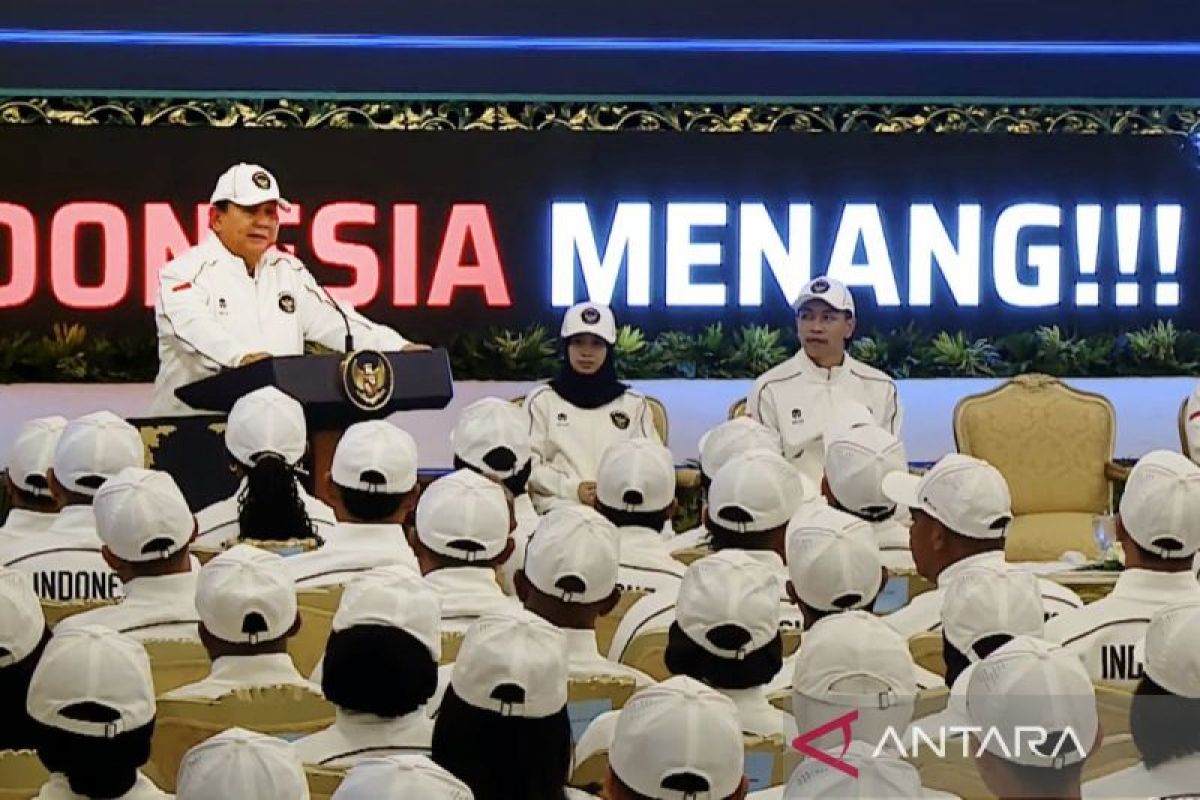
The 3 billion IDR bonus is only payable after an individual becomes a champion, whereas the primary duty of the sports system is to ensure more Indonesian athletes have a fair opportunity to achieve it.
Jakarta (ANTARA) - Three billion rupiah awaits Indonesian athletes at the conclusion of the 2026 Aichi-Nagoya Asian Games. This is the bonus prepared by the state for Indonesian athletes capable of winning individual gold medals at Asia’s largest sporting event. President Prabowo Subianto announced this when seeing off the Indonesian Contingent at the State Palace, Jakarta, on 9 September.
For athletes, such a bonus is well-deserved. Sporting careers are limited in duration. The risk of injury is always present, while years of training do not guarantee a podium finish. Therefore, when an athlete finally becomes the best in Asia, a significant reward from the state is not an exaggeration.
The 3 billion ID and is merely a figure seen at the end of the journey. Before an athlete stands on the podium, there are years that occur off-camera, such as repetitive training, losses that must be accepted, injuries that must be recovered from, and competitions that sometimes end far from expectations.
The journey towards Aichi-Nagoya has not always been smooth. In early June, the budget for the 2026 Asian Games national training camp (Pelatnas) was recorded at 81.04 billion IDR. This figure was significantly lower compared to the 389.82 billion IDR allocated for the previous Asian Games period.
Eight days later, the Ministry of Youth and Sports could not even provide certainty regarding the overall implementation of the Asian Games national training camp. Amidst these conditions, athletes continued to train, federations continued to organise programmes, and competition calendars did not wait for budget issues to be resolved.
The situation only became clearer in August. The government adjusted the budget from 81 billion IDR to 127 billion IDR, and subsequently obtained an additional 95 billion IDR, bringing the total budget for the 2026 Asian Games national training camp to 222 billion IDR. In addition to this amount, the government has also prepared 61 billion IDR for the deployment of the contingent.
This additional funding is clearly important. The issue, however, is timing. When the certainty of the 222 billion IDR was announced on 12 August, the Asian Games were only about one month away. In high-performance sports, one month is not a long time.
Training programmes, overseas training camps, selection of test tournaments, injury recovery, nutrition, sports science, and finding ideal sparring partners should ideally not be organised just a few weeks before a major competition. Athletes may reach peak performance on the day of the competition, but the process of reaching that peak is built over months or even years.
The impact of these limitations is not uniform across all disciplines. Athletics, for example, had to adjust programmes due to budget efficiency. Plans for several athletes to train abroad changed; two long-distance runners who were previously scheduled to train in Kenya ultimately underwent their programme in Indonesia. PB PASI also utilised self-funding to cover unmet needs.
Aquatics tells a different story. The Indonesian Aquatics Association stated that the national training camp continued despite efficiency measures because the clubs overseeing the athletes remained operational and the federation continued its programmes. Similarly, boxing, fencing, and table tennis eventually headed to the Asian Games using self-funding from federations and support from partners.
On one hand, these conditions demonstrate strong mutual cooperation. Federations, clubs, sponsors, and other parties are not merely waiting for the state; they are finding ways to ensure athletes can continue training and are able to compete.