
Before the Curtain Rises
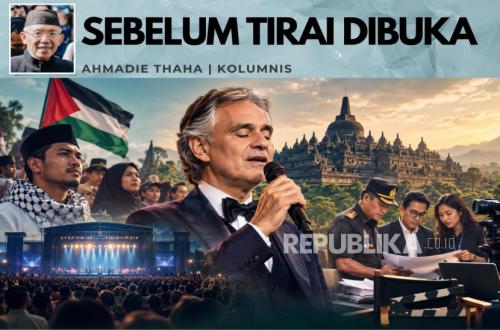
A grand stage is being prepared in the Borobudur Temple area of Magelang. Lighting, sound, promotion and ticket sales are all part of preparations for a concert by Italian tenor Andrea Bocelli on 31 October 2026.
But before his golden voice has a chance to ring out, controversy has already taken centre stage. Magelang City Police announced on 13 October that it had withdrawn its permit recommendation, while the Central Java Police Chief later denied that the concert permit had been revoked, saying licensing authority rests with National Police headquarters.
The controversy began with objections from several community groups, including the Indonesian Ulema Council (MUI). They questioned Bocelli’s alleged links to activities supporting Israel.
Bocelli was born in Italy on 22 September 1958. He became one of the world’s best-known tenors through a blend of opera and popular music.
The songs Con te partirò and its duet version with Sarah Brightman, Time to Say Goodbye, propelled him to fame. He is also known for The Prayer, a duet with Celine Dion, and Vivo per lei.
These songs are familiar to fans of romantic music and classical vocals in Indonesia. Bocelli also performed in Jakarta in 2011, so news of his planned return has naturally raised hopes among his fans.
But popularity does not always guarantee public acceptance. A major name makes it all the more important for organisers to consider every potential risk carefully.
The MUI has drawn attention to reports that Bocelli took part in a 2010 fundraising event in Los Angeles for Friends of the Israel Defense Forces, and performed in Tel Aviv in 2022.
The MUI says this record should be taken into account because Indonesia consistently opposes colonialism and supports the Palestinian people’s struggle.
We need to distinguish an artist performing in Israel from evidence that they support its government’s policies. However, alleged involvement in fundraising for the Israeli military certainly merits serious scrutiny before organisers make a decision.
The entertainment industry often focuses on popularity, ticket prices and potential profits. Some promoters, however, may not adequately account for political sensitivities and the humanitarian values held by the public.
This case is a warning to organisers of concerts, festivals, exhibitions and other artistic performances. They need to examine an artist’s record before signing a contract, announcing an event or selling tickets.
Imagine a promoter has already paid the artist, hired equipment, recruited workers and put up billboards. If opposition emerges shortly before the event, cancellation costs can soar, while workers and small traders also bear the consequences.
Promoters should therefore draw up a risk register at the planning stage. It should cover the artist’s record, funding sources, sensitivities surrounding the venue, permit certainty, the potential for opposition and cancellation scenarios.