
Before Local Governments, Social Minister Emphasises People's School for Special Children
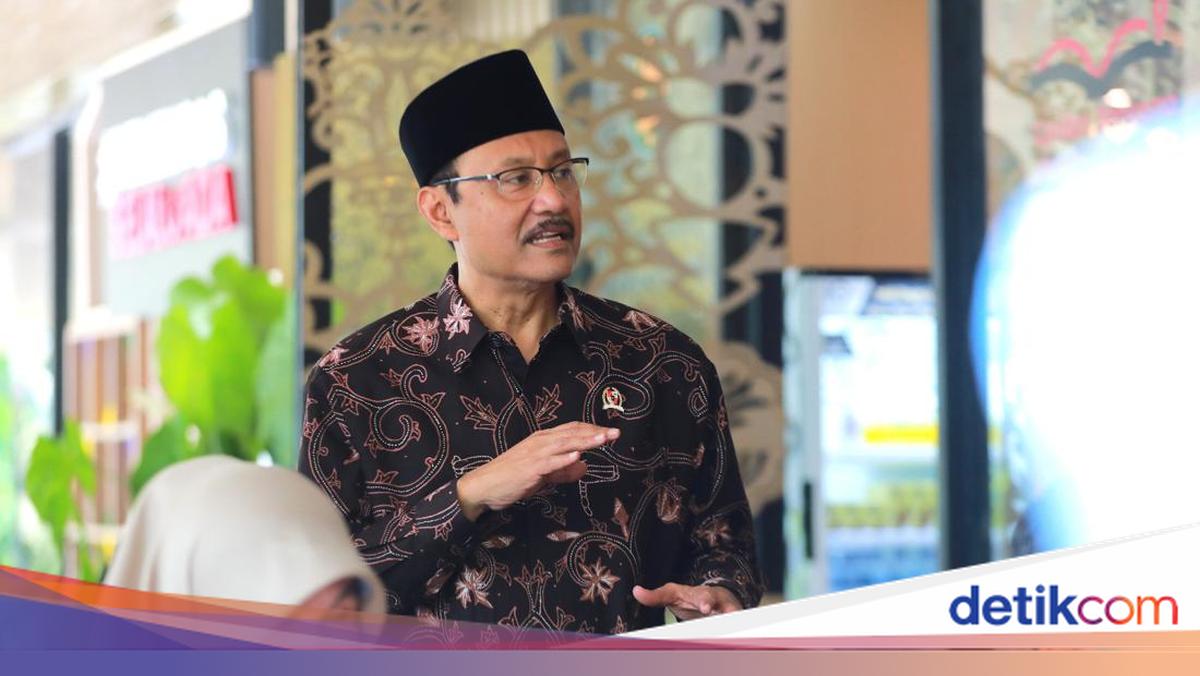
Social Minister Saifullah Yusuf (Gus Ipul) has emphasised that the People’s School is an affirmative education programme with a special approach, specifically targeted at children from underprivileged families, particularly those in deciles 1 and 2 of the Single Social and Economic Data (DTSEN).
“The People’s School is for children from ‘special’ families,” said Gus Ipul in a written statement on Thursday (2 April 2026). The statement was delivered during a Joint Secretariat (Sekber) meeting for the People’s School with the Maluku Provincial Government and the Bogor Regional Government at Selalu Ada Cafe, Ministry of Social Affairs (Kemensos) office.
Therefore, he said, the handling and policies implemented must also be of a special nature.
“The teachers must be special in terms of capacity, ability, and fulfilment of their rights. Everything must be special,” he stated.
He added that in terms of facilities, the People’s School is equipped with modern learning resources. Each student receives a laptop, uniform, and complete school supplies.
The learning process is also supported by a learning management system (LMS) and digital whiteboards, while teachers are provided with technological devices to support teaching.
“Each student gets a laptop, complete uniform, and full school equipment. The learning process uses LMS and the whiteboard is digital. This is a special school. For special children with special affirmation,” explained Gus Ipul.
From an infrastructure perspective, the school buildings are designed to special standards. Local governments are requested to provide the best land that meets the technical requirements from the Ministry of Public Works.
Furthermore, Gus Ipul explained that the programme not only focuses on education but also encompasses comprehensive interventions for students’ families.
Parents will be encouraged to be empowered, receive social assistance, and have their homes improved to make them more habitable.
“Because this is a special school. The children go to school, the parents are empowered. Their homes are assisted to be more habitable and given complete social assistance. Later (the parents) will be encouraged to become members of the Red and White Village Cooperative and intervened with President Prabowo’s strategic programmes. Later, when the children graduate, the parents also move up classes. That is the speciality of the President’s idea,” he said.
According to Gus Ipul, the majority of People’s School students have a strong interest in continuing their education. Of around 6,000 upper secondary level students, 74 per cent want to proceed to higher education, while the rest choose to become skilled workers.
The government ensures that all graduates will receive guidance, both for continuing studies and entering the workforce, through cross-ministerial collaboration in higher education and employment.
“The point is that People’s School graduates will be accompanied until they can truly become agents of change,” he said.
In the recruitment process, the People’s School does not open general registrations. Selection is carried out through direct outreach based on DTSEN, accompanied by field verification by social companions together with local governments.
He emphasised that the process must be free from corrupt practices.
“Ensure that this recruitment is far from collusion, bribery, and placements that are far from the purpose of the People’s School. To be honest, I have been entrusted (with the responsibility) by the President. (The People’s School) must be well guarded,” said Gus Ipul.
Also present at the meeting were Deputy Social Minister Agus Jabo Priyono, Deputy Chair II of the Joint Secretariat (Sekber) for the People’s School Juhari, Head of the Social Services of Maluku Province Affandi Z. Hassanusi, Head of the Social Empowerment Division Abidin Said, and representatives from the Bogor City Government.