
Before Global Imams, Al-Aqsa Imam Sheikh Hussein Emphasises Ummah Unity
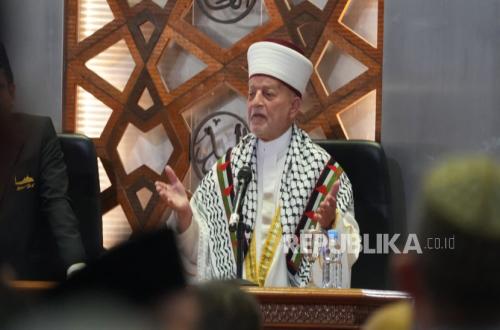
The Grand Imam of Al-Aqsa Mosque, Sheikh Muhammad Hussein, has asserted that the role of an imam extends far beyond merely leading prayer services. Imams also bear the responsibility of guiding the community, strengthening brotherhood, and conveying messages of peace amidst various humanitarian issues.
“The message of an imam is a grand message, and his mission is noble,” stated Sheikh Hussein while speaking at the International Grand Imams Conference (IGIC) 2026 at the Bidakara Hotel, Jakarta, on Saturday (26/09/2026).
Sheikh Hussein referred to Quranic teachings regarding the importance of speaking kindly to others and inviting humanity to the path of Allah with wisdom and good counsel. According to him, this principle serves as the foundation for imams in performing their roles within society.
He explained that while an imam’s responsibility begins with spiritual guidance, it does not end within the mosque. This role extends into the social life of the community.
He cited the teachings of Prophet Muhammad (PBUH) that every person is a leader and will be held accountable for those under their care. Sheikh Hussein shared that he has personally felt this weight of responsibility while serving as an imam and preacher at Al-Aaqsa Mosque.
He noted that serving as an imam in such a holy site is both an honour and a significant trust, particularly amidst the ongoing situation in Palestine under Israeli occupation. During the forum, Sheikh Hussein also reminded attendees of the historical function of mosques in the lives of Muslims.
Since the early days of Islam, mosques have served not only as places for religious rituals but also as centres for education, development, leadership, and the strengthening of social life. He cited the Quba Mosque, established by Prophet Muhammad, and the Nabawi Mosque in Madinah as examples. During the Prophet’s era, the Nabawi Mosque evolved into a centre for guidance, education, and community leadership.
Mosques also served as places to strengthen the brotherhood between the Muhajirin and Ansar. Therefore, according to Sheikh Muhammad Hussein, this broad function of the mosque shapes the role of the imam, making it inseparable from social and humanitarian issues.
“The message of the mosque is fundamental. More than just a place of worship, throughout history, the mosque has functioned as a centre for leadership, learning, and community guidance,” he said.
He assessed that imams play a vital role in ensuring that religious life remains connected to the challenges faced by society. Religious messages, he noted, must be present to provide guidance while encouraging goodness and peace.
Sheikh Hussein remarked that the hosting of IGIC 2026 serves as an important momentum for scholars and imams from various countries to exchange experiences and discuss the role of religious leadership in building peace.
“This conference arrives at the right moment for scholars and imams to gather in Indonesia to discuss the role of the imam’s message in achieving peace, not only in the Islamic world but globally. This is because Islam was sent as a mercy to all creation (rahmatan lil ’alamin),” he concluded.