
Becoming an Architect of Reason
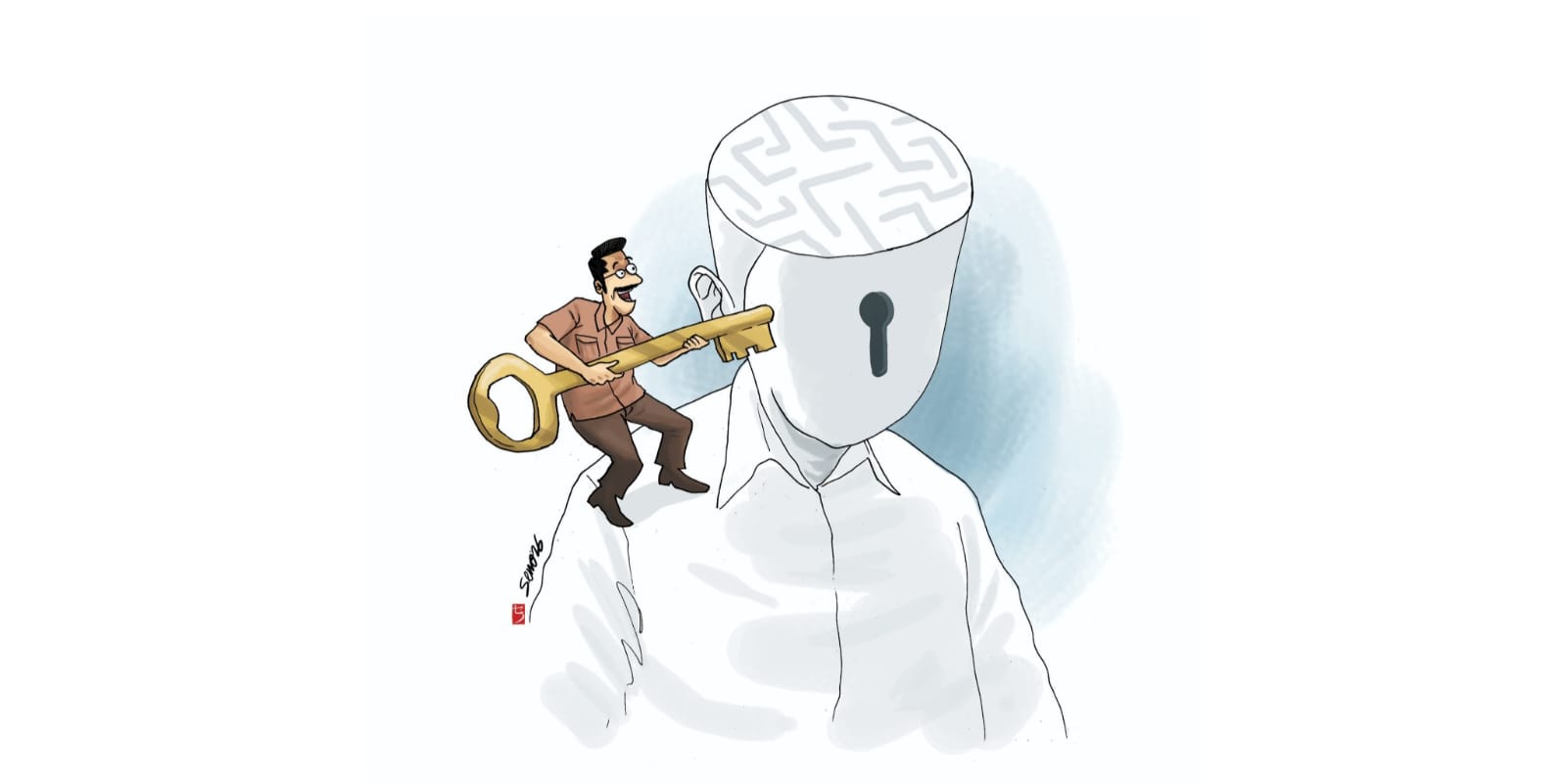
There is a simple question I have often asked myself lately before entering the classroom: if my students can get the correct answer from an artificial intelligence (AI) application in five seconds, do they still need me at the front of the class? That question has become a turning point for re-examining what teachers should actually teach when answers are no longer monopolised by humans.
Years of teaching mathematics have made me realise that learning in schools is often busier chasing answers than training ways of thinking. Now, when AI can produce answers in seconds, teachers must transform into guides of reason. This change is not merely a choice of teaching style, but a consequence of the changing way humans acquire knowledge.
ANSWERS BECOME CHEAP
For decades, Indonesian education was built on the assumption that the teacher is the main source of knowledge, so learning and examinations emphasised the accuracy of answers. Yet since 2021 the government has shifted the evaluation paradigm through the National Assessment, which focuses on literacy and numeracy. The National Assessment results show that our literacy and numeracy problems remain unresolved. This means that changes to the evaluation system have not automatically changed classroom learning practices.
The presence of AI actually sharpens the urgency of that change. When students can photograph a maths problem and receive a complete answer with solution steps in seconds, the economic value of ‘knowing the answer’ falls to nearly zero. What becomes increasingly important is no longer simply getting the answer, but understanding how the answer was obtained, testing whether the answer makes sense, and using that knowledge to make decisions. Even before all that, students must be able to ask the right questions. This is where reasoning skills become increasingly valuable.
The Ministry of Primary and Secondary Education is trying to answer this challenge through a deep learning approach that emphasises reflective, meaningful and collaborative learning, rather than mere memorisation. However, a good paradigm will only become a slogan if it is not realised in concrete change: teachers designing questions that challenge reasoning and schools changing how they assess student learning success. Policy changes, but policy change does not automatically change pedagogy.
As a mathematics teacher at SMA Sukma Bangsa Pidie, I see firsthand how heavy the demands of this change are for teachers in the regions. At the same time, the change is even more urgent in regions like Aceh. Many teachers, including in Pidie and surrounding districts, work within a long-rooted pedagogical tradition: teaching through lectures, giving example problems, then asking students to work on similar problems repeatedly. That method was once relevant when access to information was limited. Now, when even students in remote parts of Pidie are beginning to have access to AI applications through their devices, the old learning method is no longer merely less effective, but risks widening the learning gap. Students trained to think critically will use AI to deepen understanding, while students accustomed to memorising will make it a shortcut to get answers without ever truly understanding. AI does not automatically make students smarter or lazier. How schools educate students determines for what purpose and how the technology is used. Between those two paths, the teacher determines the direction.
ASSESSING, TEACHING, REASONING
The transformation of the teacher’s role from deliverer of answers to guide of ways of thinking cannot rely solely on the awareness of individual teachers. This change requires policies that provide space and support. The assessment system, for example, needs to move from merely measuring right and wrong towards appreciating the reasoning process. Students need to be given the opportunity to explain reasons, compare solution methods, test an answer, and justify the decisions taken. Because when answers can be obtained in seconds, what needs to be assessed is no longer merely what the student’s answer is, but how they arrived at that answer.
Improving teacher competence also cannot stop at the ability to use AI applications. What is more important is the pedagogical ability to design learning that makes students think. Teachers need to be able to ask questions that encourage students to analyse, test, doubt, and find reasons. In mathematics learning, students do not simply seek answers from AI, but need to test their truth, find errors, and understand the thinking process behind them. In this way, AI is not treated merely as a threat, but as part of the learning process that can actually strengthen students’ critical reasoning. This is where technology can become part of the learning process, not a substitute for the thinking process.
Therefore, education policy in the regions also needs to see technology not merely as devices to be distributed, but also as a means that must be used meaningfully. Laptops, tablets and various learning devices will not mean much without teachers who can turn them into learning experiences that cultivate reason. For regions like Pidie Regency and Aceh Province, the challenge is not only expanding students’ access to technology, but also equipping them with the ability to use it critically and responsibly.
In the end, the question I posed at the beginning of this article finds its answer. Students still need teachers, not because teachers have more answers than machines. In that race, humans have indeed long lost. But education has never been merely about who can provide answers the fastest. Education is about cultivating the ability to question, understand, doubt, weigh, and make decisions responsibly.
That is where the teacher’s role is irreplaceable. Artificial intelligence can present information in seconds, but it cannot replace humans in building understanding, cultivating wisdom, and shaping character. Therefore, the great work of education today is not defending the teacher as a source of answers, but strengthening them as an architect of reason.
Source: jawawa.id (https://jawawa.id/newsitem/becoming-an-architect-of-reason-1788735019)
Originally published by Media Indonesia (https://mediaindonesia.com/opini/930478/menjadi-arsitek-nalar), translated from Indonesian