
Becoming a Haji
By: Journalist Report from Madinah, Saudi Arabia.
‘In essence, Hajj is man’s evolution toward Allah… Hajj is the antithesis of aimlessness. It is the rebellion against a damned fate guided by evil forces’ (Ali Shariati, in his book ‘Hajj - The Pilgrimage’).
While listening to a religious sermon after Maghrib by Ustaz Ariful Bahri, an Indonesian preacher from the Islamic University of Madinah, at the Prophet’s Mosque in early May 2026, I first began to reflect on my existence and role in the 2026 Hajj administration.
In his sermon on Tuesday (5/5/2026), Ustaz Ariful Bahri, who has been conducting studies at Nabawi since 2019, delivered a stirring message regarding achieving a ‘mabrur’ (accepted) Hajj. ‘A mabrur Hajj is heavy, not light. It is not measured here (in the Holy Land), because here, it is easy for everyone to do good. The true measure is when we return to our hometowns,’ he stated during the lecture.
I found myself reflecting on those words. So many Indonesians save bit by bit and are willing to wait in queues for decades to perform the Hajj. What is their purpose in doing this? Is it merely to fulfil the fifth pillar of Islam? Is it just to obtain the title of ‘Hasting’? Is it solely so they can be addressed with the prefix ‘Haji’ before their names?
Certainly, these are not the right questions. The answer to the reason for performing the Hajj pilgrimage should be much deeper than merely ‘religious obligation’ or seeking a title. The responsibility after returning from Hajj is undoubtedly greater than simply ‘becoming pious,’ let alone just wanting to be addressed as ‘Pak Haji’.
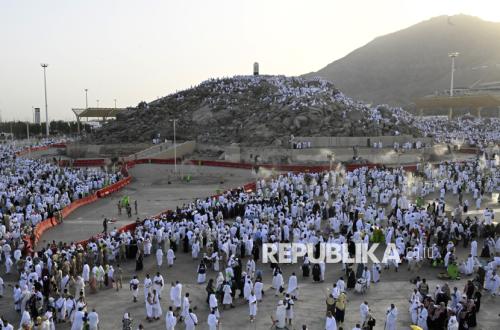
I found partial answers to these fundamental questions during the peak of the Hajj at Arafat, Muzdalifah, and Mina (Armuzna). In the place where the pillars of Hajj are performed by the pilgrims, I experienced firsthand the struggle of performing the pilgrimage. During the approximately four to five days of the Armuzna rituals, pilgrims must battle the scorching Saudi Arabian heat and various uncomfortable conditions, such as simple tents with limited capacity, basic food and drink, long queues for toilets, and the necessity of walking long distances to perform the stoning of the Jamarat.