
BCA Preserves Performing Arts Sustainability Through Organisational Development
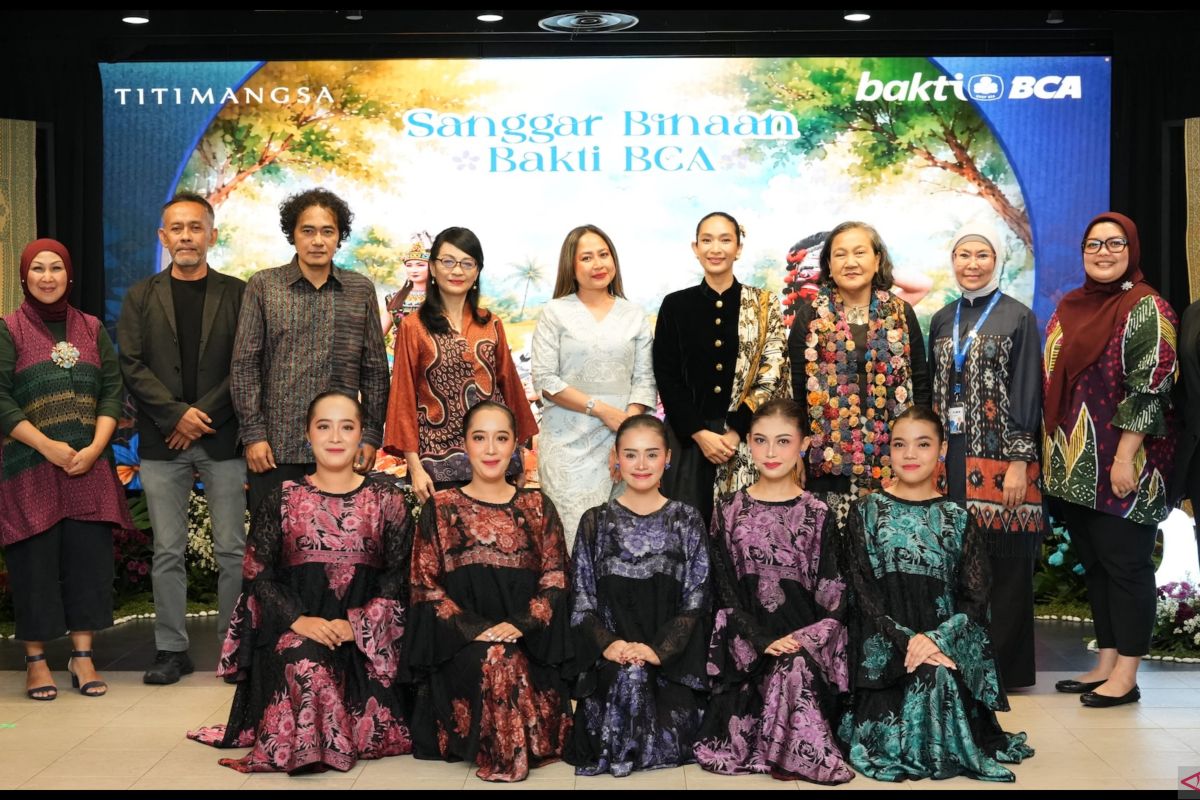
PT Bank Central Asia Tbk (BCA) is conducting organisational and governance training to maintain the sustainability of the performing arts ecosystem in Indonesia while encouraging the economic independence of art communities through the Sanggar Bakti BCA programme.
Hera F Haryn, Executive Vice President of Corporate Communication & Social Responsibility at BCA, stated that the programme is expected to strengthen the role of art studios as spaces for cultural preservation while opening up economic opportunities through better management.
“We hope the selected studios can utilise this programme to develop their potential, expand opportunities, and strengthen their sustainability. The mentoring we provide is intended to equip them to continue growing and reach a wider audience,” Hera said in a written statement received in Jakarta on Monday.
Hera explained that the programme is designed to address various challenges faced by art studios, such as limited funding, weak organisational management, and minimal access to mentoring and networks. Through this medium-term development initiative, BCA hopes art studios will not only be capable of producing high-quality works but also possess a more professional and sustainable organisational foundation.
Citra Art Studio has been selected as the first studio to participate in the programme. Founded in 2006 by Armen Suwandi and Siti Suryani, the studio is known for actively developing traditional dance, contemporary dance, and Nusantara performing arts, and has performed at various festivals both domestically and internationally.
She added that the development programme focuses not only on enhancing artistic quality but also on strengthening the organisation, performance management, work documentation, and human resource development. This approach is expected to improve the professionalism of art studios so they become more competitive and capable of generating economic value from cultural and artistic activities.
In implementing the programme, BCA has partnered with Titimangsa. Titimangsa founder Happy Salma views this collaboration as a way to strengthen the performing arts ecosystem by increasing the management capacity of art communities.
“This collaboration has been an invaluable experience for Titimangsa. We have met many art practitioners who work with great consistency and love for tradition. Our hope is that the selected studios can use this programme as an opportunity to exchange knowledge, develop new ideas, and become more confident in their artistic journey,” said Happy Salma.
The Sanggar Bakti BCA programme is implemented in two stages: an assessment and mapping phase to identify potential art communities, followed by an intensive mentoring phase focusing on strengthening artistic quality, organisational capacity, and the development of performance works. Previously, ten studios participated in a selection process conducted by a research team, which resulted in five top studios presenting their programmes before a panel of art practitioners and academics. This process is expected to produce studios that are not only artistically excellent but also ready to build independent organisations and contribute to the growth of the national creative economy.