
BBWS NT II Supports Kupang Farmers with Groundwater Irrigation Programme
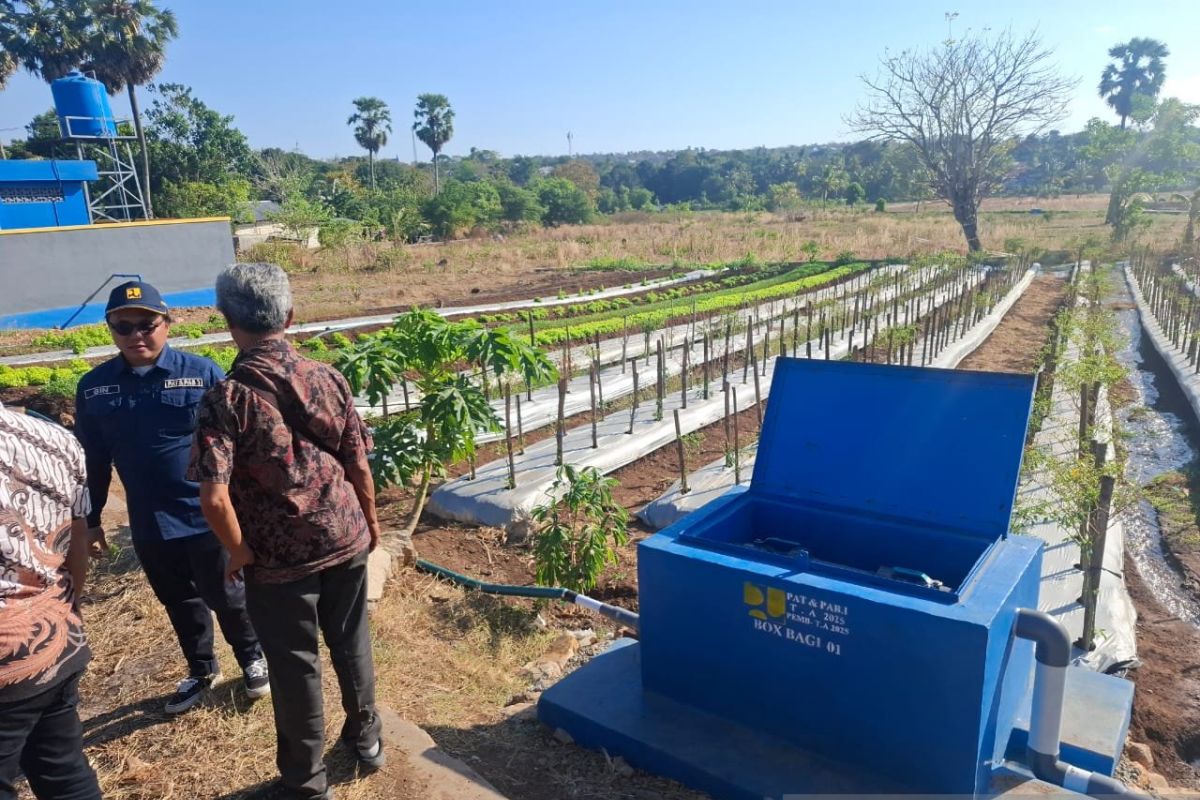
The Nusa Tenggara II River Basin Agency (BBWS NT II) is assisting farmers in Kupang City, East Nusa Tenggara, through the Groundwater Irrigation Network (JIAT) programme to enhance agricultural production in support of national food security. Djoni Doga, Head of the Groundwater and Raw Water Unit at BBWS NT II, stated that the JIAT borehole programme in Kupang City was only recently implemented in 2025, based on a Presidential Instruction. “This location is the only one in Kupang City operating in accordance with the 2025 Presidential Instruction,” he said, accompanied by the Commitment Making Officer for Eastern Region Groundwater and Raw Water, Daud Djami.
The JIAT programme is specifically intended for rain-fed land or dry areas not reached by river or dam irrigation. Through this programme, farmers can irrigate their fields year-round, allowing them to increase their cropping intensity from one or two harvests per year to three. Djoni explained that the agency is collaborating with local farmers in Manulai II Village, Alak District, Kupang City. Beyond rice cultivation, the JIAT facility is also being used by the Long Stone farmer group to create areas for secondary crops.
Djoni noted that the area in Manulai II Village was originally proposed by the Kupang City Government, specifically the Public Works and Spatial Planning Agency. The programme is equipped with a borehole pump house featuring solar cell panels and a connection to the state electricity grid. Mikael, the head of the Long Stone farmer group, reported that harvests have become abundant since the programme began in 2025, with rice harvests increasing from once to twice a year. “We are planting again now because the water flows continuously. We can also use the JIAT to open beds for vegetables like tomatoes and bird’s eye chillies,” he said. He added that horticultural yields, such as mustard greens, can now be harvested multiple times, and chilli production reaches 60 kilogrammes per week, which is sold at the local market. He hopes the borehole programme continues so the farming area can expand, as currently less than two of the available seven hectares are being utilised.