
BBSPJIKB Promotes Batik Sustainability in Yogyakarta, Highlighting Regeneration as a Key Challenge
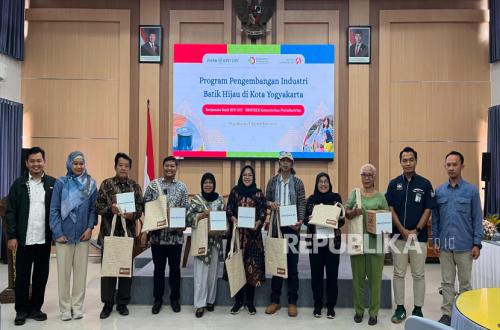
The regeneration of batik artisans remains a significant challenge in maintaining the sustainability of the batik industry in Yogyakarta. As an increasing number of artisans reach an advanced age, the interest among the younger generation to pursue the batik-making process seriously is considered to be low.
The Head of the Great Centre for Standardization and Service of Crafts and Batik Industry (BBSPJIKB), Zya Labiba, stated that this situation is a collective responsibility to ensure that batik survives not only as a cultural heritage but also maintains a continuous lineage of industry players.
“The challenge of regeneration is becoming more apparent, especially since the current condition of batik artisans is that they are mostly elderly,” said Zya during an interview at the Green Batik Industry Development Programme in Yogyakarta. The event was a collaboration between Bank BPD DIY and the Ministry of Industry’s BBSPJIKB on Wednesday (9/9/2026).
Zya ensured that BBSPJIKB continues to provide guidance and assistance while introducing batik to the younger generation. She did not deny that the batik-making process requires skill, patience, and focus—factors that present a challenge in attracting a younger generation accustomed to rapid processes.
Furthermore, the issue of artisan wages is a factor that needs attention to make the batik profession more attractive to future generations.
“From my perspective, the batik process may be seen as less appealing. I believe Gen Z might be less interested because the process requires skill, patience, and intense focus, whereas they are often accustomed to instant results,” she added.
Amidst these challenges, Zya noted that strengthening the capacity of currently active artisans is a vital part of maintaining the industry’s sustainability.
She expressed appreciation to Bank BPD DIY, which utilised its Corporate Social Responsibility (CSR) funds to provide Rp40 million worth of goods to BBSPJIKB. The assistance includes electric stoves, equipment, and production materials such as fabric, wax, and canting. The aid was distributed to eight beneficiary groups, including KKMP Ngampilan, KKMP Sosromenduran, KKMP Mantrijeron, KKMP Gunungketur, KKMP Patehan, KKMP Demangan, Koperasi Sati Batik Baik, and Koperasi JKM.
“We express our appreciation to Bank BPD DIY for this support through their social responsibility programme. The provision of equipment and materials is a significant form of support for SMEs as it can be directly utilised to support their production processes,” she said.
According to Zya, strengthening SMEs cannot be achieved through production assistance alone. Continuous collaboration is required to improve industry players’ capabilities in quality, standardisation, production efficiency, innovation, and market development.
“BBSPJIKB is ready to be part of this ecosystem. We offer various services and competencies, ranging from human resource competency enhancement to product testing, standardisation, and various batik certifications,” she stated.
Zya also hopes that the partnership with Bank BPD DIY will extend beyond this year’s aid, evolving into a collaboration that strengthens the batik ecosystem and provides artisans with better access to the financial ecosystem.
Representing Bank BPD DIY, Consumer Credit Supervisor Beni Primajaya stated that the assistance is intended to support the sustainability of the batik industry and SMEs in the Special Region of Yogyakarta.
“As a financial institution in Yogyakarta, we want to develop local SMEs sustainably. One way is by providing aid to artisans so that Yogyakarta’s batik can become more global and more beneficial for the artisans’ competitiveness,” he said.
He noted that the equipment, such as electric stoves, can help artisans increase productivity and efficiency. The use of electric stoves offers advantages including more stable temperature control, improved safety, and production efficiency.
“We hope that artisan productivity will increase with the use of these electric stoves. Production costs will also be more economical, ultimately leading to the improved welfare of the artisans and the eight batik cooperatives involved,” concluded Beni.
Source: jawawa.id (https://jawawa.id/newsitem/bbspjikb-promotes-batik-sustainability-in-yogyakarta-highlighting-regeneration-as-a-key-challenge-1789185297)
Originally published by Republika (https://rejogja.republika.co.id/berita/tl8db8291/bbspjikb-dorong-keberlangsungan-batik-di-yogyakarta-singgungregenerasi-masih-jadi-pr), translated from Indonesian